Main Blue Dome Hall
Tashkent, Uzbekistan
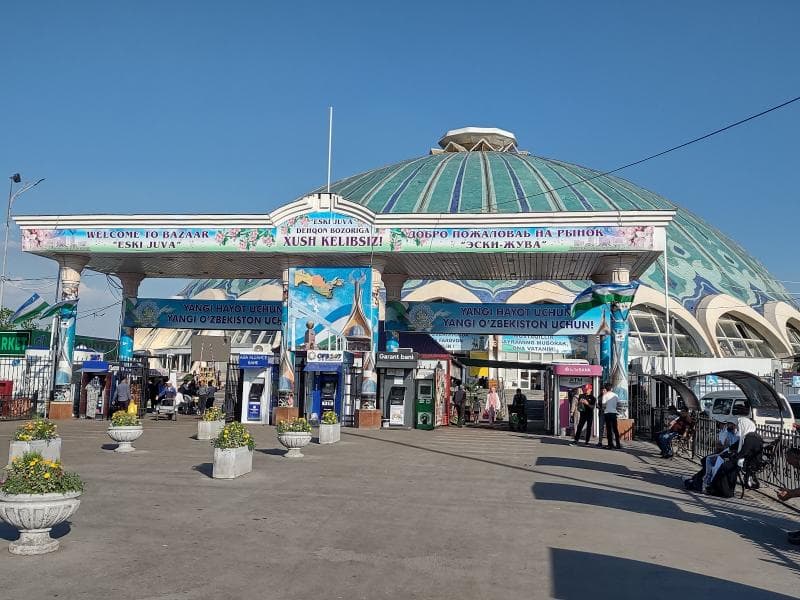
Explore the Main Blue Dome Hall at Chorsu Bazaar, Tashkent, Uzbekistan. Discover history, culture, and local life in this iconic market.
Overview
The Main Blue Dome Hall stands as the undeniable centerpiece of Chorsu Bazaar, a vibrant and historic marketplace nestled in the heart of Tashkent, Uzbekistan. More than just a place of trade, Chorsu Bazaar is a living tapestry of Uzbek culture, where centuries-old traditions meet the rhythms of modern life. The bazaar's name, 'Chorsu,' derived from Persian, poetically means 'crossroads' or 'four streams,' a testament to its enduring role as a pivotal trading hub. The iconic blue dome is not only a visual landmark but also a functional marvel, housing a bustling indoor market that serves as a vital artery for daily necessities in Tashkent's old town.
History & Cultural Background
Chorsu Bazaar's roots stretch back over two millennia, establishing it as one of Central Asia's oldest continuously operating markets. Throughout history, it flourished as a crucial nexus along the ancient Silk Road, facilitating the exchange of goods, ideas, and cultures from across Asia, the Middle East, and Europe. While the bazaar has seen countless transformations, its spirit as a dynamic marketplace has remained steadfast. The distinctive blue domes that define its contemporary appearance, including the grand Main Blue Dome Hall, were largely constructed during the Soviet era. The main dome, a notable example of Soviet Modernist style, was designed by architects such as Vladimir Azimov and Sabir Adylov in the 1980s or early 1990s. Its architectural significance was further cemented in July 2026 when the Chorsu domed market complex was inscribed on the UNESCO World Heritage List as part of 'Tashkent Modernist Architecture: Modernity and Tradition in Central Asia.'
What Makes It Special
The Main Blue Dome Hall is a breathtaking architectural achievement. Its monumental central dome, estimated to be about 80 meters in diameter and 30 meters high, dominates the skyline and is complemented by several smaller domes. These domes are famously clad in bright blue and azure ceramic tiles, often adorned with unique patterns that create a mesmerizing visual spectacle. This structure is more than just aesthetically pleasing; it's a unique architectural ensemble that ingeniously blends traditional Central Asian design motifs with the functional demands of Soviet-era engineering. The main hall functions as an impressive three-story winter building, even equipped with an elevator system, providing shelter from Tashkent's intense summer heat and cold winters. Stepping inside the dome is a complete sensory immersion, a vibrant kaleidoscope of sights, sounds, and aromas that encapsulate the essence of traditional Uzbek life.
Stories, Fun Facts & Local Details
Within the cavernous expanse of the Main Blue Dome Hall, visitors encounter an extraordinary array of local products and vibrant scenes. The main food pavilion beneath the dome is a treasure trove of culinary delights, offering a vast selection of dairy products like 'katyk' (sour milk), 'kurt' (salty dried cheese balls), and 'suzma' (fermented milk). The air is thick with the aroma of exotic spices, from saffron and cumin to black pepper and turmeric, meticulously arranged by vendors. Mountains of dried fruits and nuts, including amber-hued apricots and 'kishmish' (raisins), sit alongside traditional Uzbek sweets such as 'navat' (crystallized sugar), 'halva,' and 'kozinaki' (nut and honey bars). It's common to see bakers delivering warm 'lepeshka' (flatbread), stacked like edible architecture. Interactions with vendors are a highlight; many are hospitable, keen to offer samples of their wares, from succulent dried fruits to 'kazy' (horse meat sausage). This is where Tashkent truly comes alive; one can observe grandmothers skillfully haggling over fresh produce, and spice vendors expertly mixing custom blends for their loyal customers. Beyond the main dome, the market extends into 'Glutton's Row,' an outdoor section renowned for sizzling 'shashlyk' (grilled meat), fragrant 'pilaf,' and hearty 'shurpa' (soup).
Visitor Perspective
For any traveler seeking to delve into the authentic pulse of Uzbek culture, a visit to the Main Blue Dome Hall and the wider Chorsu Bazaar is indispensable. It is not merely a tourist attraction but a functioning market where daily life unfolds, offering a genuine immersion into the local way of being. There is no entry fee, allowing visitors to freely wander through its bustling aisles. To experience the bazaar at its most energetic, with vendors at their busiest and the freshest produce on display, it is advisable to visit in the first half of the day. Despite its immense size, Chorsu Bazaar is surprisingly manageable for visitors, especially given its convenient location near a metro station. It offers a unique window into the soul of Tashkent, providing a sensory-rich journey through its history, culinary traditions, and vibrant daily interactions.
Coordinates: 69.237, 41.326
View on Google Maps💬 How Travelers Describe This Place
Based on community votes
Unique
585Must See
550Interesting
546Photogenic
92Beautiful
56
Traveler Stories
Discover memorable experiences shared by travelers who have visited this place.
No traveler stories yet.
Be the first traveler to share what made this place memorable.

Tour
By
Spot
Discover amazing places around the world. Your journey starts here.
Explore
© 2026 TourBySpot. All rights reserved.