Main Auditorium
Odessa, Ukraine
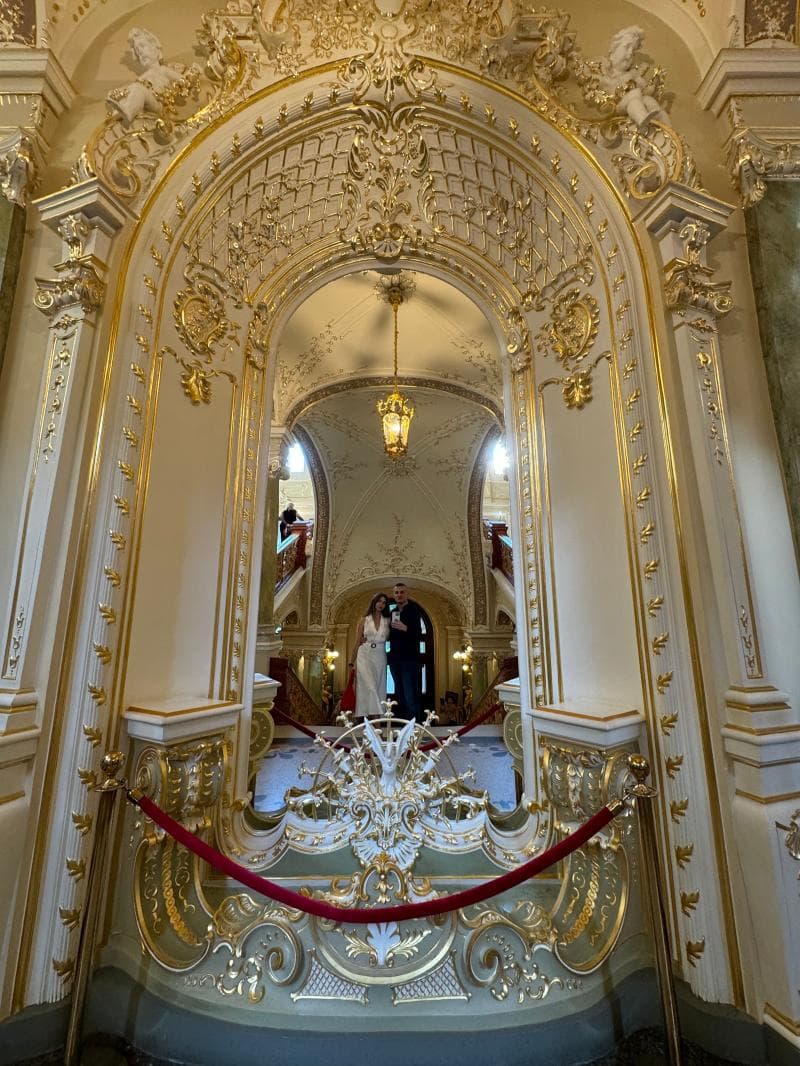
Discover the opulent Main Auditorium of the Odessa Opera and Ballet Theater in Odessa, Ukraine. Explore its stunning Rococo interior, unique acoustics, and rich history, making it a must-see cultural gem.
Overview
Stepping into the Main Auditorium of the Odessa Opera and Ballet Theater in Odessa, Ukraine, is like entering a lavish dreamscape. This architectural marvel, opened in 1887, stands as a testament to the city's rich cultural heritage and artistic ambition. It is widely considered one of the most beautiful theaters in the world, a true European pearl. Designed by the renowned Viennese architects Ferdinand Fellner and Hermann Helmer, the building captivates with its Neo-Baroque (Vienna Baroque) exterior, while the interior of the audience hall embraces the ornate late French Rococo style. The auditorium itself is a spectacle of luxury, adorned with rich red and gold decor, glistening crystal chandeliers, and intricate gilded ornamentation.
With a capacity for 1,636 spectators, the horseshoe-shaped hall is not only visually stunning but also acoustically remarkable. Its unique design ensures that even a whisper from the stage can be heard clearly in any part of the hall, a feature that performers and audiences alike cherish.
History & Cultural Background
The story of the Odessa Opera and Ballet Theater is deeply intertwined with the city's own development. The first opera house on this site, known as the City Theatre, opened its doors on February 10, 1810. Its initial design was conceived by Italian architect Francesco Frapolli and later modified by French architect Jean-François Thomas de Thomon. This original structure, however, met a tragic end when it was destroyed by fire in 1873.
Undeterred, the city commissioned a new, grander theater. Construction began in 1883, with the modern building officially opening on October 1, 1887. This new edifice was groundbreaking for its time, notably being the first building in Odesa to be equipped with electric illumination by the Edison Company. Over the decades, the theater has hosted a constellation of legendary artists, including Pyotr Ilyich Tchaikovsky, Feodor Chaliapin, Enrico Caruso, and Anna Pavlova, solidifying its place as a pivotal cultural institution. The theater underwent its most recent significant renovation in 2007, preserving its historical grandeur for future generations. Its importance is such that Forbes magazine once listed it among the 11 most interesting sights in Eastern Europe.
What Makes It Special
The Main Auditorium's exceptional qualities extend beyond its visual appeal. Its horseshoe design is not merely aesthetic; it's a marvel of acoustic engineering, allowing sound to project flawlessly from the stage to every seat. This 'unique acoustics' means a performer's softest tone can captivate the entire audience, a feature that distinguishes it from many other venues.
The interior's opulent late French Rococo style is characterized by an abundance of gilded stucco ornamentation, which is never repeated, making each section uniquely intricate. The large hall is specifically modeled after the grandeur of Louis XVI's style, giving it a regal and timeless feel. Overhead, the ceiling frescoes are exquisite works of art, depicting scenes from Shakespeare's 'A Midsummer Night's Dream,' adding a poetic layer to the theatrical experience. Dominating the center of the hall is a magnificent crystal chandelier, weighing an impressive 2.5 tons, casting a soft, warm glow over the entire space. The theater is truly a temple of European arts, masterfully blending imperial grandeur with raw artistic talent.
Stories, Fun Facts & Local Details
Beyond its grand performances, the theater holds many intriguing stories. The destruction of the first opera house in 1873, for instance, was reportedly caused by a gas horn illuminating a clock. To combat the summer heat before modern air conditioning, workers devised an ingenious method: wagonloads of ice and straw were lowered down a 35-foot shaft into a basement, and the cool air would then rise through vents beneath the seats, a testament to 19th-century innovation.
The current auditorium was designed with practicality in mind, incorporating twenty-four exits to ensure quick evacuation in case of an emergency, a forward-thinking safety measure for its time. Visitors might be surprised to learn that a former opera singer, who was also a geologist, played a crucial role in repairing the building's foundation after early cracks appeared. A symbol of resilience, the theater famously escaped demolition during World War II; a flag signifying the city's liberation was raised on its balcony on April 10, 1944, thwarting German plans to destroy it. The theater is also home to what is claimed to be the world's largest theatrical chandelier, measuring 9 meters high and 4 meters in diameter, further adding to its unique charm.
Visitor Perspective
For the curious traveler, the Main Auditorium of the Odessa Opera and Ballet Theater offers an unforgettable experience. Visitors often describe the ambiance as opulent and grand, a truly stunning spectacle. Guided tours provide an excellent opportunity to explore the exquisite interiors and delve into the theater's rich history, often allowing guests to sit within the main auditorium to fully appreciate its scale and beauty.
While the theater and its surroundings can be quite crowded, especially during peak tourist seasons and performances, the experience of attending a show or taking a tour is often considered well worth it. Ticket prices, particularly for performances, are frequently noted as being more accessible than those in many Western European venues. For a more serene visit, late spring or early autumn are often recommended, offering milder weather and fewer crowds, allowing for a more intimate appreciation of this magnificent cultural landmark.
Coordinates: 30.741667, 46.485556
View on Google Maps💬 How Travelers Describe This Place
Based on community votes
Beautiful
680Photogenic
653Unique
588Interesting
566Must See
432
Traveler Stories
Discover memorable experiences shared by travelers who have visited this place.
No traveler stories yet.
Be the first traveler to share what made this place memorable.

Tour
By
Spot
Discover amazing places around the world. Your journey starts here.
Explore
© 2026 TourBySpot. All rights reserved.