Magic Fountain
Barcelona, Spain
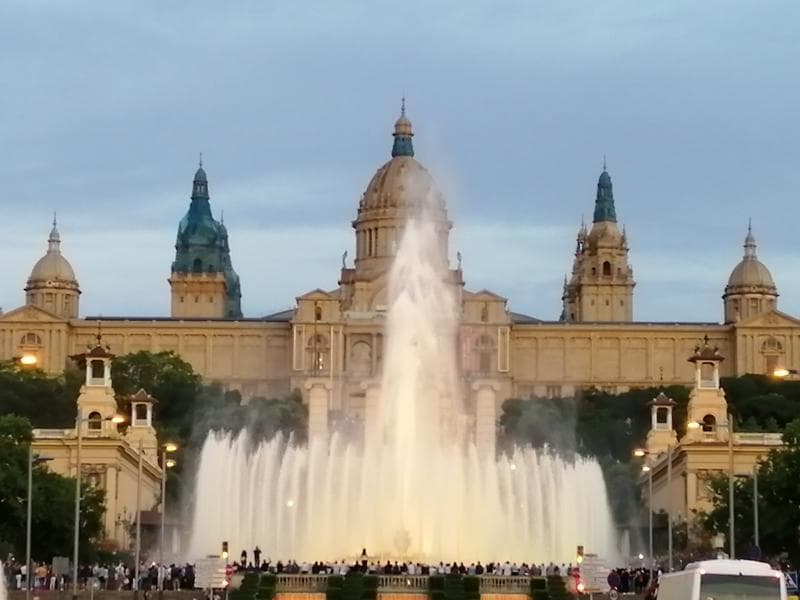
Experience the enchanting Magic Fountain of Montjuïc in Barcelona, Spain. Witness a spectacular show of synchronized water, light, and music.
Overview
Nestled at the foot of Montjuïc hill in Barcelona, Spain, the Magic Fountain of Montjuïc, known locally as Font Màgica de Montjuïc, is a captivating spectacle of water, light, and music. This iconic landmark draws millions of visitors annually, transforming the evening sky with its choreographed displays. Situated at the head of Avinguda Maria Cristina, beneath the grand Palau Nacional, the fountain offers a free and enchanting experience for all ages. Even in daylight, its impressive architecture and surroundings, leading up to the National Art Museum of Catalonia (MNAC), make it a worthwhile visit.
History & Cultural Background
The Magic Fountain was conceived and built for the 1929 International Exposition, a world's fair hosted by Barcelona to showcase art, technology, and architecture. Its visionary designer was Carles Buïgas, an engineer who had experimented with illuminated fountains since 1922. Buïgas's proposal for a 'colossal, daring, and costly' fountain was met with skepticism due to the ambitious timeline of less than a year for its completion. Nevertheless, with the dedication of over 3,000 workers, the fountain was inaugurated on May 19, 1929, just one day before the exposition officially began. The site where the fountain now stands previously held the Four Columns, symbols of the Catalanism movement, which were controversially demolished in 1928 but re-erected nearby in 2010.
Over the decades, the fountain has undergone significant transformations. Severely damaged during the Spanish Civil War, it lay dormant until its restoration in 1955, overseen by Buïgas himself. A major leap came in the 1980s when music was incorporated into the light and water show, elevating it to the mesmerizing 'hydro-musical' performance known today. The fountain played a central role during the 1992 Barcelona Olympic Games, serving as a prominent symbol of the city's resurgence. More recently, Barcelona has prioritized sustainability, with upgrades in 2010 shifting to groundwater use instead of potable water, and further technical enhancements in 2025, including new telecontrol systems and energy-efficient LED lighting, ensuring its legacy continues.
What Makes It Special
The Magic Fountain's uniqueness lies in its breathtaking synchronization of water acrobatics, vibrant lights, and a diverse musical score. It features an intricate system of 3,620 water jets that can circulate 2,600 liters of water per second, with some spouts reaching up to 52 meters (170 feet) high. Coupled with 4,760 lights, the fountain can produce billions of combinations of water and light, creating a truly immersive and dynamic experience. The musical selections are varied, ranging from classical and opera to film soundtracks, pop hits, Disney melodies, and even traditional Catalan tunes, ensuring there is something to captivate every visitor.
Stories, Fun Facts & Local Details
The very name 'Magic Fountain' perfectly encapsulates the wonder it inspires. One memorable moment in its history was the presentation of 'Barcelona,' the iconic Olympic anthem performed by Freddie Mercury and Montserrat Caballé, right at this fountain during the 1992 Games. The fountain's ability to combine so many elements into a cohesive, artistic narrative was considered revolutionary for its time, blending engineering prowess with theatrical artistry. Locals often embrace a charming tradition of bringing picnic blankets and tapas to the steps around the fountain, turning the evening shows into an impromptu communal celebration. This adds a truly authentic local flavor to the experience, transforming a tourist attraction into a vibrant community gathering spot.
Visitor Perspective
Experiencing the Magic Fountain is a sensory journey best enjoyed as evening falls. The shows typically last around 20 minutes, with intervals between performances. For the most iconic views, head to the steps leading up to the Palau Nacional. This elevated position provides a panoramic vista of the fountain with the city skyline as a stunning backdrop. It's advisable to arrive early, especially during peak seasons or weekends, to secure a good viewing spot, as the area can become quite crowded. While the nighttime show is the main draw, visiting during the day offers a different perspective, allowing you to appreciate the fountain's architectural grandeur and explore the surrounding Montjuïc area, which is rich with cultural attractions like the MNAC museum, Poble Espanyol, and the Montjuïc Castle. The Magic Fountain is easily accessible via public transport, with metro lines L1 and L3 stopping at Plaça Espanya, just a short walk away.
Coordinates: 2.15174, 41.37116
View on Google Maps💬 How Travelers Describe This Place
Based on community votes
Photogenic
680Must See
514Interesting
432Unique
316Beautiful
196
Traveler Stories
Discover memorable experiences shared by travelers who have visited this place.
No traveler stories yet.
Be the first traveler to share what made this place memorable.

Tour
By
Spot
Discover amazing places around the world. Your journey starts here.
Explore
© 2026 TourBySpot. All rights reserved.