Madrasa
Sarajevo, Bosnia and Herzegovina
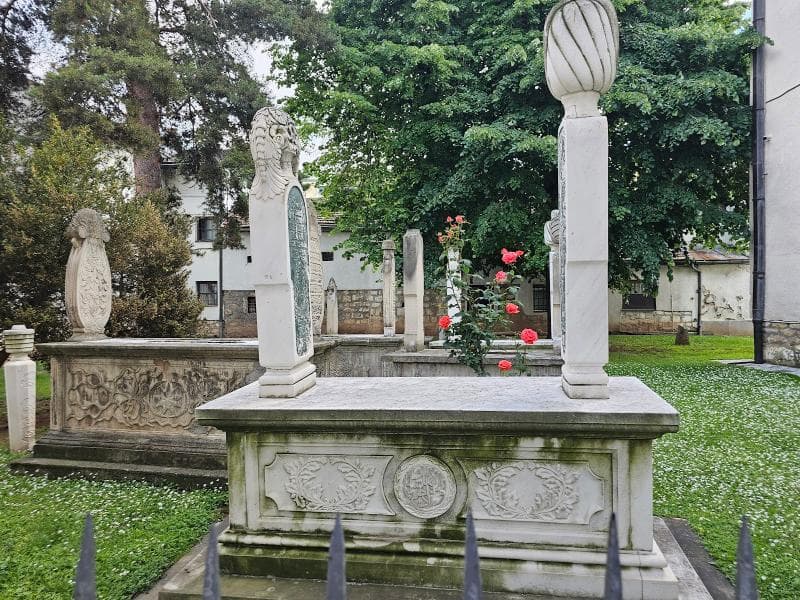
Discover the Gazi Husrev-beg Madrasa in Sarajevo, Bosnia and Herzegovina – a 16th-century Ottoman educational institution, known as Kuršumlija, that has continuously fostered knowledge and culture for nearly 500 years.
Overview
Nestled in the bustling heart of Sarajevo's historic Baščaršija district, the Gazi Husrev-beg Madrasa stands as a profound testament to Bosnia and Herzegovina's rich Ottoman heritage. Officially known today as the Gazi Husrev-beg Public Institution and Madrasa, this venerable institution is often referred to by locals as 'Kuršumlija' – a charming nickname derived from the Turkish word 'kurşun,' meaning lead, referencing its distinctive lead-covered roof. More than just an architectural marvel, the madrasa is an integral component of the sprawling Gazi Husrev-beg complex, a charitable endowment or 'waqf' established by its namesake founder. It sits directly opposite the magnificent Gazi Husrev-beg Mosque, creating a cohesive historical and spiritual center that has shaped Sarajevo's identity for centuries.
From its inception as a pioneering educational establishment, the madrasa has served as a beacon of learning, cultivating generations of scholars, leaders, and thinkers. Today, it continues its legacy as a vibrant high school and college, representing one of the few madrasas worldwide that have maintained continuous operation since their founding. Visitors stepping into its tranquil courtyard are transported to an era where knowledge and faith intertwined, offering a unique window into the enduring cultural and academic spirit of Bosnia and Herzegovina.
History & Cultural Background
The story of the Gazi Husrev-beg Madrasa begins on January 8, 1537, when it was founded by Gazi Husrev-beg, a formidable Ottoman governor of Bosnia and a grandson of Sultan Bayezid II. As a visionary leader, Gazi Husrev-beg was not only a military and political figure but also a great benefactor, dedicating much of his wealth to developing Sarajevo through various institutions. The madrasa was a cornerstone of his ambitious 'waqf' (charitable endowment), alongside the mosque, a library, a hammam (public bath), and a marketplace, all designed to foster community welfare and intellectual growth. Remarkably, the madrasa was also named Seljukija, in honor of Gazi Husrev-beg's mother, Seljuka.
Designed in the classical Ottoman style, similar to those found in Istanbul, the Kuršumli Madrasa was originally built to be Bosnia's premier educational institution. Its curriculum was comprehensive, extending beyond religious studies to include subjects such as the interpretation of the Qur'an (tefsir), oral tradition (hadith), legal philosophy (sharia law and fiqh), metaphysical dogmatics (kalam), and even subjects like medicine, law, and engineering. This broad approach aimed to produce well-rounded individuals capable of contributing to society in various capacities. Throughout its long history, the madrasa has endured numerous trials, from political shifts during the Communist era to the devastating siege of Sarajevo during the Bosnian War in the 1990s. Yet, through each challenge, it remarkably maintained its educational activities, symbolizing resilience and the unwavering commitment to knowledge.
What Makes It Special
What truly sets the Gazi Husrev-beg Madrasa apart is its remarkable continuity and architectural elegance. It is recognized as one of the world's oldest educational institutions that has operated without interruption for nearly five centuries. This unbroken lineage of learning makes it a living historical artifact, actively shaping minds as it has for generations. Architecturally, the madrasa is a fine example of 16th-century Ottoman design, characterized by its arcaded square courtyard, which is surrounded by twelve student rooms and features a domed classroom (dersane) on one side. The building's distinctive lead-covered domes, which give it the 'Kuršumlija' moniker, and its pointed chimneys contribute to its unique silhouette against Sarajevo's skyline.
The entryway itself is a work of art, adorned with six-tiered muqarnas decoration and an inscription plaque dating its construction. Beyond its physical form, the madrasa's enduring role as a national monument of Bosnia and Herzegovina underscores its profound cultural significance. It serves as a tangible link to the Ottoman Empire's legacy in the Balkans and a powerful symbol of Sarajevo's dedication to education and the preservation of its Islamic heritage.
Stories, Fun Facts & Local Details
The Gazi Husrev-beg Madrasa is steeped in stories that bring its ancient stones to life. One intriguing detail is its alternative name, Seljukija, bestowed in homage to Gazi Husrev-beg's beloved mother. This personal touch highlights the founder's deep familial ties and the devotional aspect embedded within his philanthropic endeavors. Historically, the madrasa's library, established in 1537, housed one of the most important collections of Islamic manuscripts in Bosnia and Herzegovina, many originally donated by Gazi Husrev-beg himself. This priceless collection remarkably survived the Bosnian War and the Siege of Sarajevo, a testament to the community's determination to preserve its intellectual treasures.
Visitors today might notice that the old madrasa building also houses the Gazi Husrev-bey Museum, which opened in 2015. This museum provides fascinating insights into the Islamic traditions of Bosniaks, displaying over 1,200 artifacts that depict various aspects of daily life, religious practices, and craftsmanship through the centuries. Exploring these exhibits offers a deeper understanding of the cultural context in which the madrasa thrived. The presence of such a historically rich institution in the heart of Baščaršija further solidifies Sarajevo's reputation as a city where history is not just remembered but actively lived and shared.
Visitor Perspective
For the curious traveler, a visit to the Gazi Husrev-beg Madrasa offers a compelling journey through time and culture. Located centrally within the Gazi Husrev-beg complex, it's easily accessible while exploring the old town. While the madrasa primarily functions as an active high school and college, its historical sections, including the museum housed within the original Kuršumlija building, are open to the public. Walking through its arcaded courtyard, one can almost hear the echoes of centuries of students and scholars who once sought knowledge within its walls. The architectural details, from the lead-covered domes to the intricate muqarnas, offer a feast for the eyes and a glimpse into the sophisticated artistry of the Ottoman era.
When visiting, remember that this is an active educational and religious institution. Modest dress is respectful and appreciated. Engaging with the exhibits at the Gazi Husrev-bey Museum within the madrasa provides invaluable context to the historical and cultural significance of the entire complex. It's a place not just to observe, but to reflect on the continuous flow of knowledge and tradition, and to appreciate the resilience of a heritage that has withstood the test of time in the vibrant city of Sarajevo, Bosnia and Herzegovina. The madrasa truly offers a meaningful, immersive experience that transcends mere sightseeing.
Coordinates: 18.429028, 43.85917
View on Google Maps💬 How Travelers Describe This Place
Based on community votes
Photogenic
961Must See
804Beautiful
733Unique
404Interesting
336
Traveler Stories
Discover memorable experiences shared by travelers who have visited this place.
No traveler stories yet.
Be the first traveler to share what made this place memorable.

Tour
By
Spot
Discover amazing places around the world. Your journey starts here.
Explore
© 2026 TourBySpot. All rights reserved.