Lysicrates Monument
Athens, Greece
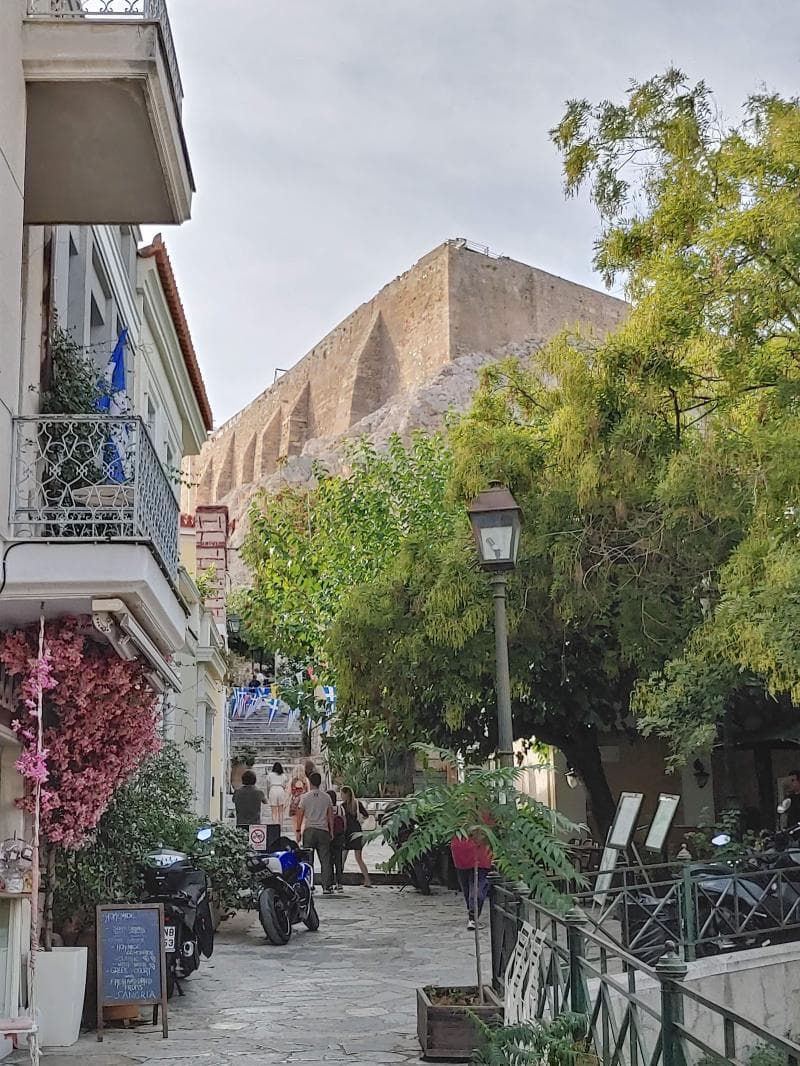
Discover the Lysicrates Monument in Plaka, Athens, Greece – an ancient choragic monument from 335/334 BC, famous for its pioneering Corinthian architecture.
Overview
Nestled in the vibrant heart of Plaka, Athens, the Lysicrates Monument stands as a remarkably preserved testament to ancient Greek artistry and civic pride. Erected in 335/334 BC, this circular structure is a choragic monument, commemorating the theatrical victory of a chorus sponsored by a wealthy Athenian named Lysicrates. It is distinguished as the first known example of the Corinthian order being used on the exterior of a building in Greek architecture, a design choice that would profoundly influence future architectural styles. Often referred to informally as the 'Lantern of Demosthenes' or 'Lantern of Diogenes,' this small but significant landmark offers a tangible link to the cultural tapestry of ancient Athens, situated along the historic Street of the Tripods (Tripodon Street).
History & Cultural Background
In ancient Athens, theatrical competitions were central to religious festivals like the City Dionysia. Wealthy citizens, known as 'choregoi,' bore the costs of training and equipping choruses for these performances. A choregos who sponsored a winning troupe was awarded a bronze tripod as a prize. While many choregoi would simply place their tripods on simple pedestals, Lysicrates, a successful choregos, commissioned this elaborate monument to display his prize, thus immortalizing his achievement and generosity.
The monument's inscription proudly details its purpose: 'Lysicrates son of Lysitheides of Kikynna was sponsor, Akamantis was victorious in the boys' competition, Theon was pipe-player, Lysiades of Athens directed, Euainetos was archon'. Originally, the monument was crowned with an ornate floral support for the bronze tripod. The Street of the Tripods, which led to the Theatre of Dionysus, was once lined with similar monuments, yet the Lysicrates Monument is the only one to survive largely intact, a stroke of historical fortune.
Its preservation owes much to its later history. In 1658, a French Capuchin monastery was established on the site, and by 1669, the monks acquired the monument, incorporating it into their monastery as a library and reading room. This protected the structure for centuries. However, during the Greek War of Independence against the Ottomans, the monastery was tragically destroyed by fire in 1821 or 1824, leaving the monument exposed once more. It was eventually restored in the late 19th century by French archaeologists and architects.
What Makes It Special
The Choragic Monument of Lysicrates holds immense architectural significance as the earliest known use of the Corinthian order on the exterior of a Greek building. Prior to this, Corinthian columns were primarily reserved for interior spaces or less prominent religious structures. Lysicrates' decision to employ them externally marked a pivotal moment, showcasing their potential for public display and influencing subsequent Greek and Roman architecture.
The monument's cylindrical 'tholos' structure rests on a square limestone podium. Its six fluted Corinthian columns of Pentelic marble are not free-standing but are engaged with curved panels, creating a striking visual effect. Above the columns, a frieze in bas-relief vividly depicts scenes from the myth of Dionysus, the god of theatre and wine, transforming Tyrrhenian pirates into dolphins after they attempted to abduct him. The cupola, a single block of marble, is exquisitely carved to resemble laurel leaves, a traditional symbol of victory, and once supported the prized bronze tripod. The monument's unique survival and innovative design have made it a widely admired and copied structure, inspiring countless Neo-classical buildings around the world.
Stories, Fun Facts & Local Details
Beyond its architectural grandeur, the Lysicrates Monument is steeped in intriguing stories. Its fortunate survival is largely credited to the Capuchin monks who used it as a library, even making modifications like removing a panel to create an entrance. During his second visit to Greece, the renowned poet Lord Byron famously stayed at this very monastery between 1810 and 1811, reportedly writing poetry within the monument's chamber. Another charming anecdote tells of a monk who, in 1818, planted the first tomato plants in Greece within the monastery's gardens, right beside the monument.
The Street of the Tripods was essentially ancient Athens' version of a 'Hollywood Walk of Fame,' where winning choregoi displayed their triumphs for all to admire. Lysicrates' monument, though smaller than many contemporary structures, is considered an architectural jewel due to its innovative use of the Corinthian order and its rich sculptural detail. It’s a remarkable piece of history that tells a story of personal achievement, civic duty, and the enduring power of the arts in ancient Greek society.
Visitor Perspective
Today, the Lysicrates Monument is a tranquil oasis amidst the bustling streets of Plaka, Athens' oldest neighborhood. Situated in a small garden square, it offers visitors a peaceful spot to pause and reflect on centuries of history. Its central location makes it an easy and rewarding stop for travelers exploring the ancient wonders of Athens. The square itself is flat and paved, allowing for easy navigation. Whether you visit during the day to appreciate its intricate details or in the evening when it is often beautifully illuminated, the monument provides a captivating glimpse into ancient Athenian cultural life and the spirit of competition that drove its citizens. It stands as a profound, enduring symbol of human aspiration and artistic innovation, inviting modern travelers to connect with a glorious past.
Coordinates: 23.72994, 37.97108
View on Google Maps💬 How Travelers Describe This Place
Based on community votes
Beautiful
623Interesting
545Unique
343Must See
302Photogenic
20
Traveler Stories
Discover memorable experiences shared by travelers who have visited this place.
No traveler stories yet.
Be the first traveler to share what made this place memorable.

Tour
By
Spot
Discover amazing places around the world. Your journey starts here.
Explore
© 2026 TourBySpot. All rights reserved.