Lower Station
Zagreb, Croatia
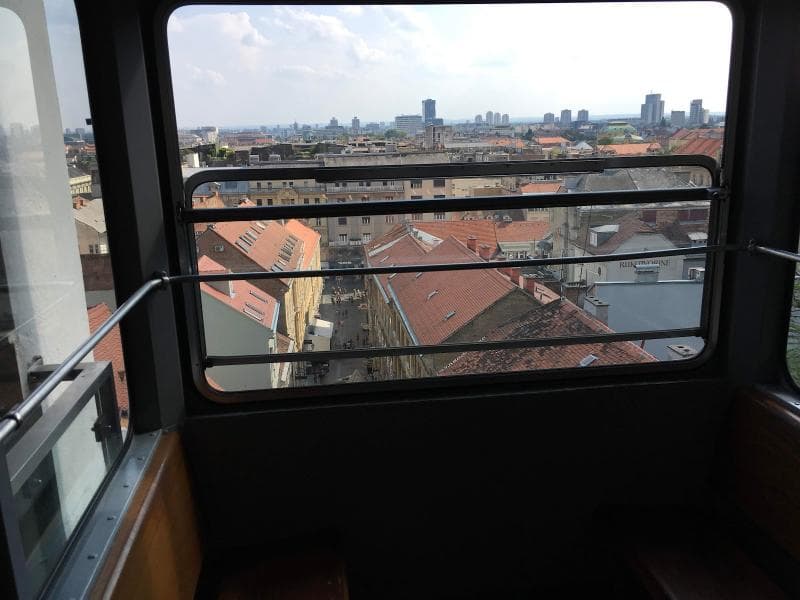
Discover the historic Lower Station of the Zagreb Funicular in Zagreb, Croatia – the world's shortest public transport funicular connecting Lower and Upper Town.
Overview
Nestled at the heart of Zagreb's vibrant Lower Town, the Lower Station of the Zagreb Funicular stands as a charming gateway to the historic Upper Town. Located on Tomićeva Street, just a short distance from the bustling Ilica Street, this station marks the starting point of what is famously known as the world's shortest public transport funicular. It serves not only as a functional link between two distinct parts of the city but also as a cherished cultural monument, inviting travelers to embark on a brief yet memorable journey up the steep incline.
Connecting Donji Grad (Lower Town) with Gornji Grad (Upper Town), the Funicular's Lower Station provides convenient access to a myriad of Zagreb's attractions. The ride itself is a fleeting experience, lasting only about 64 seconds, yet it offers a unique perspective of the cityscape, transitioning from the lively commercial district to the tranquil, cobblestoned Upper Town.
History & Cultural Background
The story of the Zagreb Funicular begins in 1888 when entrepreneur D.W. Klein recognized the high pedestrian traffic between Zagreb's upper and lower settlements. He envisioned a funicular to replace the existing public staircase on Bregovita Street (now Tomićeva Street), drawing inspiration from similar systems across Europe.
Officially commissioned on October 8, 1890, and commencing operation on April 23, 1893, the funicular initially ran on a steam engine. However, these early years were plagued by frequent breakdowns due to low steam pressure, leading to the funicular being out of service much of the time. This unreliability earned it the affectionate local nickname 'Zapinjaca,' meaning 'Stucker.' In 1934, a significant modernization replaced the steam propulsion with a more dependable electric motor, greatly improving its efficiency and reducing downtime.
The funicular's enduring design and most of its original technical features have been meticulously preserved, leading to its designation as a protected cultural monument. Both the upper and lower station buildings were constructed in the Neo-Renaissance architectural style, maintaining their historical charm.
What Makes It Special
What truly sets the Zagreb Funicular apart, and its Lower Station by extension, is its status as the shortest public transport funicular globally. With a track length of just 66 meters (217 feet) and a height difference of 30.5 meters, the entire journey takes less than a minute. This brevity does not diminish its significance; instead, it highlights its unique charm and efficiency in connecting two distinct urban landscapes.
Beyond its record-breaking length, the funicular is also the oldest organized public transportation in Zagreb, predating even the horse-drawn tram. Its uninterrupted operation for over a century, despite initial technical challenges, underscores its resilience and importance to the city's infrastructure and identity. It has maintained its original exterior appearance, construction, and much of its technical character, contributing to its protected cultural monument status.
Stories, Fun Facts & Local Details
Local lore tells of the funicular's early days when passengers sometimes had to literally push the stuck wagons due to the unreliable steam engine, solidifying its 'Zapinjaca' nickname. While this is a playful anecdote from its past, today's electric-powered funicular boasts an impeccable safety record, having never experienced an accident in its long history, earning it the title of one of the safest public transportation vehicles.
The original passenger cars were divided into three sections: the front sections with the best views were reserved for first-class passengers, while the middle part was for common people. Today, the blue-colored cars are a recognizable symbol of Zagreb, carrying up to 28 passengers each—16 seated and 12 standing.
From the Upper Station, located near the Lotrščak Tower, visitors can experience another charming Zagreb tradition: the daily firing of the Grič Cannon at noon. This centuries-old tradition adds a dramatic soundtrack to the funicular experience, connecting passengers to a living piece of the city's past.
Visitor Perspective
For a curious traveler, the Lower Station offers an authentic introduction to Zagreb's unique character. Stepping onto a funicular car here is more than just a ride; it is a brief immersion into the city's history and a delightful shortcut between the lively commercial hub of the Lower Town and the medieval charm of the Upper Town. The station's location on Tomićeva Street places it within easy reach of Ilica Street, a major shopping and social thoroughfare, making it a convenient and picturesque starting point for exploration.
The funicular operates regularly, with rides scheduled every 10 minutes, ensuring minimal waiting time for both locals commuting and tourists sightseeing. This efficient service makes it an ideal way to ascend to the Upper Town's Strossmayer Promenade, offering panoramic views and access to attractions like the Lotrščak Tower and St. Mark's Church without the steep climb. It is a symbol of Zagreb, often included in walking tours, and provides a quaint, memorable experience that resonates with the city's blend of history and modern life.
Coordinates: 15.972992, 45.813952
View on Google Maps💬 How Travelers Describe This Place
Based on community votes
Interesting
910Unique
755Photogenic
374Must See
183Beautiful
28
Traveler Stories
Discover memorable experiences shared by travelers who have visited this place.
No traveler stories yet.
Be the first traveler to share what made this place memorable.

Tour
By
Spot
Discover amazing places around the world. Your journey starts here.
Explore
© 2026 TourBySpot. All rights reserved.