Lower Chapel
Paris, France
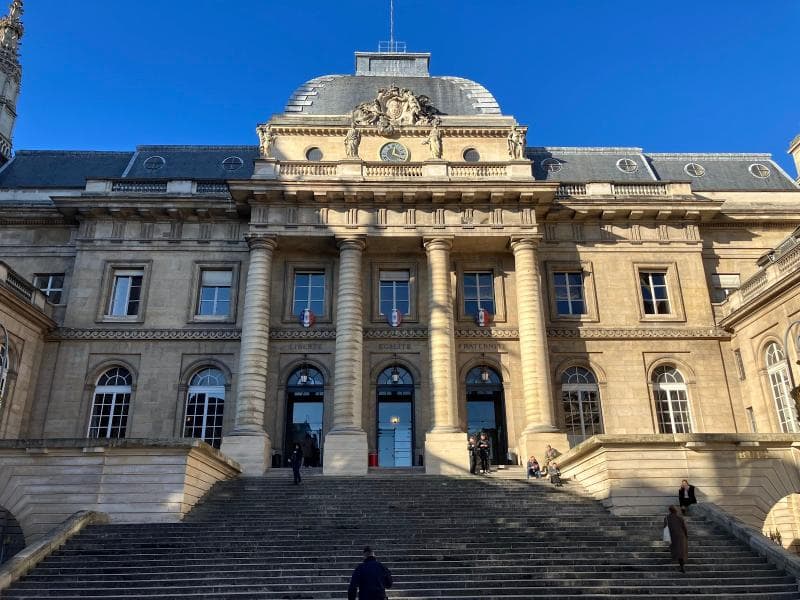

Explore the Lower Chapel of Sainte-Chapelle in Paris, France. Discover its rich history, unique Gothic architecture, and role for medieval palace staff.
Overview
Deep within the historic heart of Paris, nestled on the Île de la Cité, lies the magnificent Sainte-Chapelle, a true masterpiece of Rayonnant Gothic architecture. While many visitors are drawn immediately to the dazzling stained glass of its upper level, the journey truly begins in the often-understated but equally significant Lower Chapel. This foundational space, dedicated to the Virgin Mary, served as the parish church for the vast staff of the royal palace during its medieval heyday. It offers a striking contrast to the celestial Upper Chapel, providing a more intimate and grounded experience before ascending to the light-filled sanctuary above. As you step inside, you are enveloped by a sense of history, a whisper of the daily life and devotion that once filled these ancient stones. The Lower Chapel is the initial threshold, preparing the curious traveler for the wonders that lie beyond, yet possessing its own unique charm and rich narrative. Its robust construction hints at its vital role in supporting the immense structure above, a testament to medieval engineering and spiritual dedication.
History & Cultural Background
The Sainte-Chapelle, including its foundational Lower Chapel, was commissioned by the devout King Louis IX of France, later canonized as Saint Louis, in the mid-13th century. Construction began sometime after 1238, and the entire chapel was consecrated on April 26, 1248, a remarkably swift undertaking for such an ambitious project. Its primary purpose was to house an extraordinary collection of Passion relics, which Louis IX had acquired at great expense, including what was believed to be Christ's Crown of Thorns and a fragment of the True Cross. However, these precious relics were destined for the private adoration of the king and his court in the Upper Chapel. The Lower Chapel, by design, fulfilled a different, yet equally essential, function. It was the place of worship for the numerous servants, guards, and administrative personnel who populated the bustling royal Palais de la Cité, the main residence of the Kings of France until the 14th century. This separation of spaces underscored the hierarchical nature of medieval society, providing a functional and spiritual division within a single, sacred building. The chapel's survival through centuries, including damage during the French Revolution and extensive 19th-century restorations, speaks to its enduring cultural and architectural significance.
What Makes It Special
What truly sets the Lower Chapel apart is its distinctive architectural character and decorative richness, which often goes unnoticed in anticipation of the Upper Chapel's famed stained glass. Unlike the soaring, ethereal space above, the Lower Chapel boasts a lower, more intimate scale, creating an atmosphere reminiscent of a crypt. This deliberate contrast in design was not merely aesthetic but functional, providing a sturdy base for the delicate 'wall of glass' that defines the upper level. The robust and powerful architecture of the lower chapel acts as a structural marvel, skillfully distributing the thrust of the vaults through its small interior buttresses, known as 'étrésillons'. The vaulted ceiling is adorned with vibrant blues and gilded fleurs-de-lis, symbols of the French monarchy, creating a sense of royal dignity. One of its most captivating features lies in the 140 capitals that crown its columns, each intricately carved with a diverse array of delicate floral motifs, characteristic of early 13th-century Gothic flora. These detailed carvings, along with remaining polychromy and sculptures of apostles, demonstrate the chapel's original rich embellishment and the exceptional craftsmanship of its medieval artisans. The dedicatory relief of the chapel to the Virgin Mary is also notable, further cementing its spiritual identity. This lower level, therefore, is not merely a passageway but a significant work of art and engineering in its own right, offering a tactile and historically grounded experience.
Stories, Fun Facts & Local Details
One fascinating aspect of Sainte-Chapelle, and particularly its Lower Chapel, is the sheer speed of its construction. Built in less than seven years, it was a record time for a Gothic structure of its complexity and artistry. This rapid completion was a testament to the immense resources and political will of King Louis IX, who spared no expense in creating a fitting reliquary for his treasured acquisitions. Imagine the hundreds of craftsmen, masons, sculptors, and glassmakers working simultaneously to bring this vision to life. A 'fun fact' for those curious about the daily life in the medieval palace: the existence of the Lower Chapel for staff highlights the sheer scale of the royal household. It wasn't just the king and his family; it was a small city of administrators, guards, and servants, all requiring their own spiritual space. While the Upper Chapel provided a direct, private connection for the king to his relics, accessed via a gallery from his apartments, the Lower Chapel served as the spiritual anchor for the entire operational hub of the kingdom. The artistic choices in the Lower Chapel, such as the numerous fleurs-de-lis and royal monograms, subtly reinforced the Capetian monarchy's divine right to rule and its connection to the sacred. Even in the more 'humble' chapel, the message of royal power and piety was ever-present, interwoven into the very fabric of the architecture. The contrast between the two levels can be seen as a metaphor for the heavenly (Upper Chapel) and earthly (Lower Chapel) realms, yet both are united under the sacred purpose defined by Louis IX.
Visitor Perspective
Today, visitors enter Sainte-Chapelle through the Lower Chapel, making it the essential starting point for the entire experience. Stepping into this space, one immediately senses a shift in atmosphere from the bustling streets of Paris. The air often feels cooler, and the light is subdued compared to the explosion of color awaiting upstairs. This initial impression allows for a gradual immersion into the sacred and historical context of the chapel. Take a moment to appreciate the intricate details of the carved capitals and the painted vaulting, which might otherwise be overshadowed by the more famous upper level. It is here that you can truly grasp the architectural ingenuity required to support the massive stained-glass walls above. The experience of moving from the relatively dimly lit, earthly solidity of the Lower Chapel, up a narrow spiral staircase, to the radiant, almost otherworldly brilliance of the Upper Chapel is transformative. It's a deliberate progression, designed to elevate the spirit and prepare the viewer for the vision of heaven on earth that Louis IX intended. The Lower Chapel, therefore, is not just an entrance; it is an integral part of the narrative, a grounding prelude to an unforgettable architectural and spiritual ascent. It encourages a slower appreciation, a moment to absorb the historical foundations before being dazzled by the light.
Coordinates: 2.345, 48.85528
View on Google Maps💬 How Travelers Describe This Place
Based on community votes
Photogenic
623Must See
363Interesting
302Beautiful
250Unique
88
Traveler Stories
Discover memorable experiences shared by travelers who have visited this place.
No traveler stories yet.
Be the first traveler to share what made this place memorable.

Tour
By
Spot
Discover amazing places around the world. Your journey starts here.
Explore
© 2026 TourBySpot. All rights reserved.