Louvre Pyramid
Paris, France
Discover the iconic Louvre Pyramid in Paris, France. Explore its history, unique design, and cultural impact as the grand entrance to the Louvre Museum.
Overview
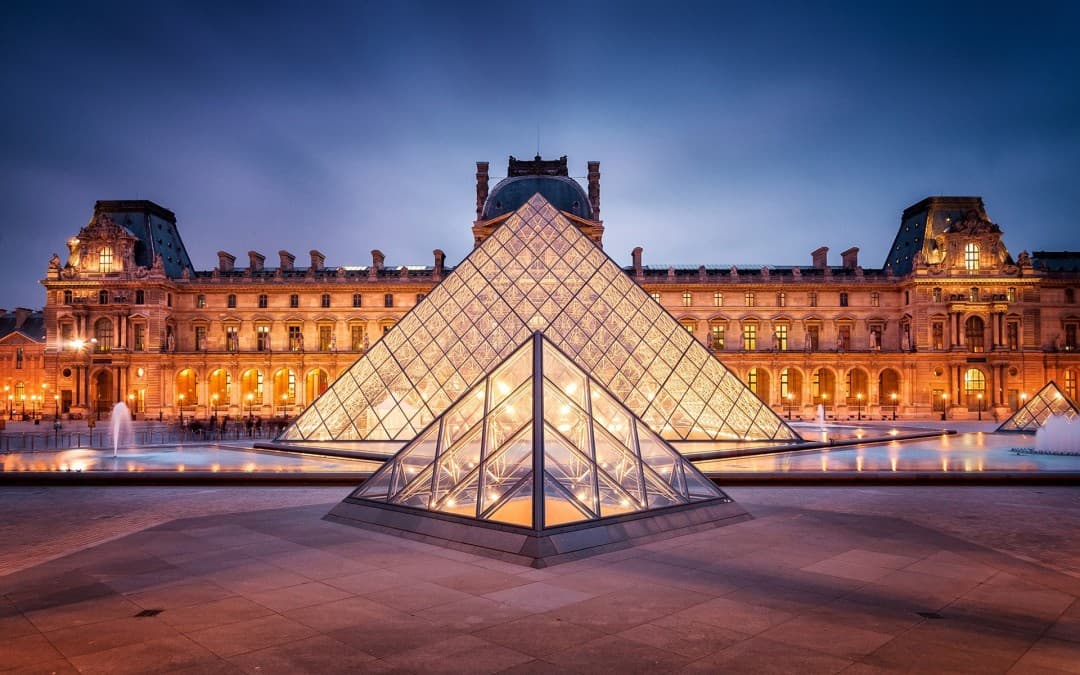
The Louvre Pyramid, a striking glass and metal structure, serves as the iconic main entrance to the world-renowned Louvre Museum in Paris, France. Situated prominently in the Cour Napoléon, this architectural marvel seamlessly blends contemporary design with the historical grandeur of the former royal palace. Designed by the visionary Chinese-American architect I.M. Pei, the pyramid has become an instantly recognizable symbol of both the Louvre and the city of Paris itself.
Its transparent structure allows natural light to flood the vast underground reception area, significantly enhancing the visitor experience and modernizing access to one of the globe's most visited cultural institutions. Far from merely a functional entrance, the Louvre Pyramid stands as a powerful statement, embodying a dialogue between centuries of history and an embrace of innovative architecture.
History & Cultural Background
The story of the Louvre Pyramid begins in the early 1980s when French President François Mitterrand launched the ambitious 'Grand Louvre' project. The existing museum, housed in a palace whose history dates back to a 12th-century fortress, was struggling to accommodate a rapidly increasing number of visitors. Its layout was inefficient, and visitor facilities were inadequate.
Mitterrand's vision was to modernize and expand the museum, making it more accessible and user-friendly. In 1983, I.M. Pei was controversially chosen for the project, becoming the first foreign architect to undertake such a significant renovation of a major French landmark. His proposal for a central underground lobby with a pyramid-shaped entrance sparked considerable public and political debate upon its unveiling in 1984.
Critics argued that the futuristic glass and metal structure was an anachronistic intrusion, clashing with the classical French Renaissance architecture of the Louvre Palace. Terms like 'architectural joke' and 'Pharaoh François' Pyramid' were coined. However, Pei, drawing inspiration from French landscape design principles, aimed for a transparent and light structure that would harmonize with the existing lines and perspectives of the palace. Construction commenced in 1985, and the main pyramid was inaugurated on March 29, 1989.
What Makes It Special
The Louvre Pyramid is a triumph of engineering and design. Standing 21.6 meters (71 feet) tall with a square base of 35.4 meters (112 feet) per side, it is composed of 603 rhombus-shaped and 70 triangular glass segments, totaling 673 panes as confirmed by the Louvre. A key innovation was the development of a special extra-clear laminated glass by Saint-Gobain, which eliminated the greenish tint typical of glass at the time, ensuring optimal transparency and allowing unobstructed views of the historic facades from within and outside the pyramid.
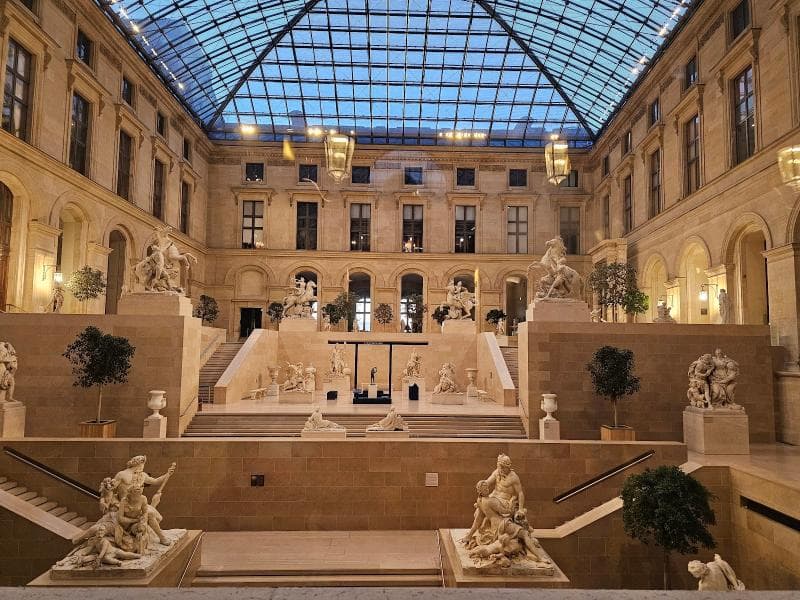
Beyond its striking exterior, the pyramid's true genius lies beneath the surface. It acts as a monumental skylight for a vast underground reception hall, which revolutionized visitor flow by providing direct access to the museum's three wings (Denon, Richelieu, and Sully). This central hub solved long-standing issues of congestion, transforming the museum's operational efficiency. The main pyramid is complemented by three smaller pyramids that also serve as skylights and an inverted pyramid (Pyramide Inversée) located beneath the Carrousel du Louvre shopping center, further integrating light and space into the underground complex.
Stories, Fun Facts & Local Details
One of the most persistent rumors surrounding the Louvre Pyramid, popularized by Dan Brown's novel 'The Da Vinci Code', is that it was constructed with exactly 666 panes of glass, often associated with 'the number of the beast'. While an official brochure during construction once cited this number, the Louvre and Pei's office have confirmed the actual count to be 673 panes (603 rhombi and 70 triangles).
Its initial detractors, who dubbed it 'Pharaoh François' Pyramid' after President Mitterrand, felt its Egyptian form was out of place in Paris. Ironically, the Louvre houses one of the world's largest collections of Egyptian antiquities, making the pyramid a resonant, if controversial, symbol. The delicate structure, made of 200 tonnes of steel and aluminum, is so unique that a remote-controlled robot was developed in 2002 to clean its sloping glass surfaces, ensuring its continued pristine appearance.
Visitor Perspective
For millions of travelers, approaching the Louvre Pyramid is an awe-inspiring moment. Its precise geometric form, set against the ornate backdrop of the historic palace, creates a captivating visual contrast. Upon entering, visitors descend into a spacious, light-filled underground lobby – a surprisingly serene and organized start to what could otherwise be an overwhelming museum visit.
The pyramid serves as a gateway, elegantly funneling visitors to the various exhibition wings, ticket counters, and other facilities, all while maintaining a sense of openness and direction. It offers unique vantage points, allowing glimpses of the palace facades through its transparent panels and connecting the underground world with the Parisian sky. Today, the Louvre Pyramid is not just an entrance; it's an integral part of the Louvre experience, a beloved icon for photographs, and a lasting testament to how bold architecture can revitalize cherished heritage.
Coordinates: 2.33579, 48.86098
View on Google Maps💬 How Travelers Describe This Place
Based on community votes
Beautiful
965Photogenic
743Unique
629Must See
184Interesting
176
Traveler Stories
Discover memorable experiences shared by travelers who have visited this place.
No traveler stories yet.
Be the first traveler to share what made this place memorable.

Tour
By
Spot
Discover amazing places around the world. Your journey starts here.
Explore
© 2026 TourBySpot. All rights reserved.