Livu Square
Riga, Latvia
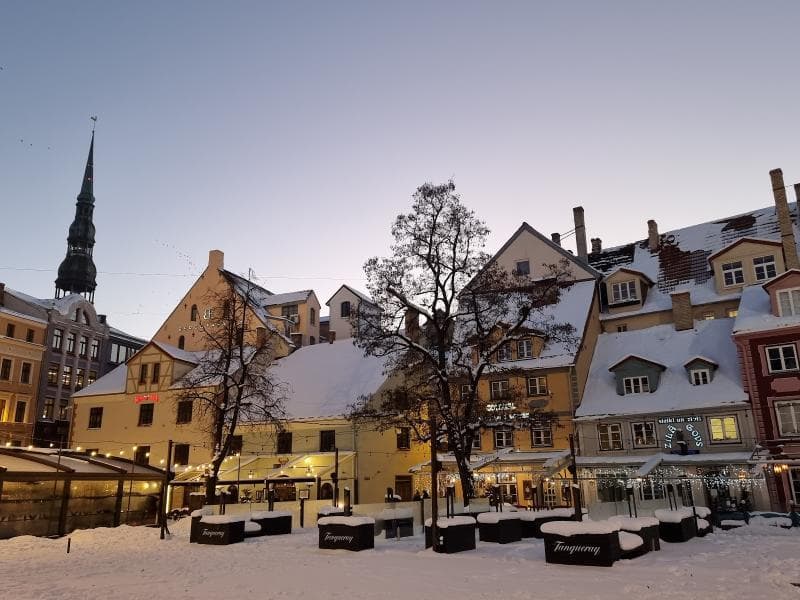
Discover Livu Square, the vibrant heart of Riga Old Town, Latvia. Explore its rich history, unique wave-like flowerbeds, iconic architecture like the Cat House, and lively atmosphere.
Overview
Livu Square, or Līvu laukums as it's known locally, is a vibrant public space nestled in the heart of Riga's Old Town, Latvia. This picturesque square serves as a bustling hub for both residents and visitors, blending centuries of history with a lively contemporary atmosphere. It is strategically located, bordered by Zirgu, Meistaru, and Kaļķu streets, and forms an integral part of Riga's historic center, a UNESCO World Heritage Site recognized for its exceptional architectural value.
Often described as one of the most famous and beautiful squares in Riga, Livu Square is renowned for its colorful buildings, charming outdoor cafes, and seasonal attractions. It offers a dynamic setting for relaxation, people-watching, and cultural events, making it a focal point within the densely packed medieval streetscape of Vecrīga.
History & Cultural Background
The origins of Livu Square are deeply intertwined with Riga's historical development and post-World War II reconstruction. Remarkably, the land where the square now stands was once the path of the Rīdzene River, a vital waterway that served as a shipping route for transporting Latvian grain from the 13th to the 16th century. Over time, as the city expanded, the river gradually narrowed and was eventually covered over, transforming the area into a densely built residential and commercial zone.
During World War II, heavy bombing devastated this part of Old Riga, destroying several buildings and creating an open space amid the rubble. In 1950, this cleared area was officially established as a public square, initially named Philharmonic Square, honoring the adjacent Latvian Philharmonic concert hall housed in the historic Great Guild building. The square underwent reconstruction in 1974. In February 2000, the Riga authorities renamed it Livu Square, commemorating the Livonians (Līvi), an ancient Finno-Ugric Baltic tribe indigenous to the region, whose cultural heritage is an important thread in Latvia's history.
What Makes It Special
Livu Square's distinctiveness lies in its seamless blend of historical reminders and modern vibrancy. One of its most striking features is the design of its flowerbeds, which are laid out in undulating, wave-like patterns. These artful beds serve as a poignant reminder of the lost Rīdzene River, which once flowed beneath the square, offering a subtle nod to Riga's watery origins.
The square is framed by an impressive collection of historic buildings that showcase Riga's diverse architectural styles. These include the stately Great Guild Hall, a 19th-century structure with eclectic forms of English Gothic architecture, now a concert venue, and the equally significant Small Guild. Adding to the unique character is the Riga Russian Drama Theatre and, perhaps most famously, the whimsical Cat House (Kaķu nams), an early 20th-century Art Nouveau building known for its distinctive rooftop cat sculptures. In winter, the square often transforms into a city skating rink, while in summer, it's filled with inviting outdoor cafes and souvenir stalls, offering a dynamic experience regardless of the season.
Stories, Fun Facts & Local Details
Among the many tales associated with Livu Square, the legend of the Cat House stands out as a fascinating piece of local lore. This Art Nouveau building, constructed in 1909, features two black cat sculptures perched on its turrets. The story goes that a wealthy Latvian merchant, who was allegedly denied membership in the prestigious Great Guild, sought revenge. In an act of defiance, he commissioned the cat statues and initially placed them with their tails turned defiantly towards the Great Guild Hall, symbolizing his disdain for its members. This act sparked a court battle, which the merchant eventually won. Though the cats were later repositioned to face the 'right' angle, the legend endures, adding a mischievous charm to the square's rich history.
The square's evolution from a riverbed to a war-torn site and then a lively public space encapsulates Riga's resilience and capacity for reinvention. The architectural ensemble around Livu Square, with its mixture of medieval guild halls, Art Nouveau buildings, and the Russian Drama Theatre, creates a harmonious and visually rich environment, making it a compelling spot for architectural enthusiasts.
Visitor Perspective
For the curious traveler, Livu Square offers a quintessential Riga experience. Its central location in Old Town makes it easily accessible on foot, perfect for leisurely strolls between other historic landmarks. Visitors can immerse themselves in the lively atmosphere, whether enjoying a coffee at one of the many outdoor cafes during warmer months or experiencing the festive ambiance of a winter ice rink.
The square is an ideal spot for people-watching, allowing one to observe the rhythms of local life amidst the backdrop of historic grandeur. Its openness and lack of a dominant central monument make it a flexible gathering space that hosts various events throughout the year. With its blend of architectural beauty, historical depth, and vibrant activity, Livu Square provides a memorable and engaging stop on any exploration of Riga Old Town, inviting visitors to pause, appreciate, and soak in the unique character of this Latvian capital.
Coordinates: 24.10909, 56.94957
View on Google Maps💬 How Travelers Describe This Place
Based on community votes
Interesting
934Beautiful
879Unique
741Must See
396Photogenic
276
Traveler Stories
Discover memorable experiences shared by travelers who have visited this place.
No traveler stories yet.
Be the first traveler to share what made this place memorable.

Tour
By
Spot
Discover amazing places around the world. Your journey starts here.
Explore
© 2026 TourBySpot. All rights reserved.