Lion Statues
Budapest, Hungary
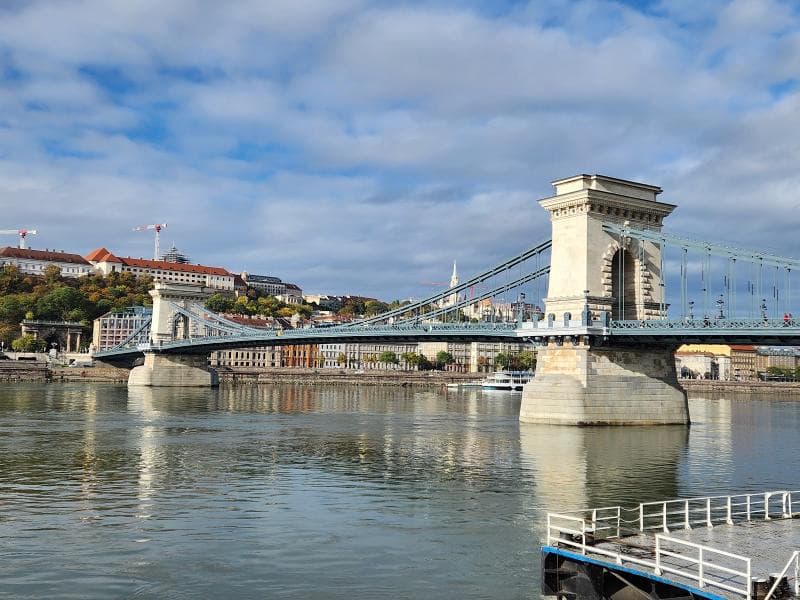
Discover the iconic Lion Statues guarding Budapest's Chain Bridge in Hungary. Explore their history, legendary 'missing' tongues, and powerful symbolism.
Overview
As you approach the majestic Széchenyi Chain Bridge in Budapest, Hungary, your gaze is immediately drawn to its formidable guardians: the magnificent Lion Statues. These four stone lions stand proudly at each end of the bridge, two on the Buda side and two on the Pest side, serving not merely as decorative elements but as powerful symbols deeply interwoven with the city's identity and history. They are among Budapest's most iconic landmarks, silently overseeing the constant flow of life across the Danube River.
These imposing sculptures, with their powerful paws and open jaws, imbue the grand architecture of the Chain Bridge with a mythical dimension, offering a sense of security and protection to all who cross. Their gaze seems to follow the river's path, connecting the historic Buda Castle District with the bustling Pest side, encapsulating the spirit of a unified city.
History & Cultural Background
The Széchenyi Chain Bridge itself was a monumental feat of 19th-century engineering, inaugurated on November 20, 1849, as the first permanent bridge to connect Buda and Pest. The vision for this vital link came from Count István Széchenyi, and it was designed by English engineer William Tierney Clark, with Scottish engineer Adam Clark overseeing its on-site construction. It marked a pivotal moment in Budapest's development, symbolizing progress and the connection between East and West.
The celebrated Lion Statues were added to the bridge's design in 1852, three years after the bridge's completion. They were sculpted by János Marschalkó, a talented artist trained in Vienna and inspired by classical symmetry. Each lion was carved from Sóskút limestone blocks, weighing over ten tons, and placed on prominent granite plinths. Sadly, during World War II, the Chain Bridge was blown up by retreating German troops in 1945, leaving only its towers intact. However, the bridge, along with its enduring lion guardians, was painstakingly rebuilt and reopened in 1949, precisely one hundred years after its initial inauguration, demonstrating Budapest's remarkable resilience.
What Makes It Special
What truly distinguishes the Lion Statues of the Chain Bridge is their profound symbolic weight and the exceptional craftsmanship they embody. Marschalkó's attention to detail is evident in every muscle and hair, creating an impression of realism and life. Their expressions convey a powerful blend of strength and serenity, reflecting the qualities these magnificent creatures symbolize. Often referred to as the 'guardians of Hungary,' a legend suggests they would come to life if the country were ever threatened.
Beyond their artistic merit, these statues represent an enduring spirit. They miraculously survived the devastation of World War II, when the bridge around them was destroyed, standing as testaments to the city's unbroken will. Their survival transformed them from mere ornaments into powerful embodiments of Budapest's resilience and history.
Stories, Fun Facts & Local Details
Perhaps the most famous legend associated with the Chain Bridge's lions concerns their 'missing' tongues. According to popular lore, after the statues were unveiled, a critic pointed out that the lions appeared to lack tongues, allegedly causing sculptor János Marschalkó such despair that he jumped into the Danube.
The truth, however, is far less tragic and much more charming. The lions do, in fact, have tongues, but they are deliberately sculpted to lie flat and recessed within their mouths, making them invisible from street level. Marschalkó, confident in his work, once reportedly made a wager, stating that if a real lion held its mouth the way his stone lions did, its tongue would also be unseen. He won the wager, proving his anatomical precision and donating his winnings to charity. This anecdote highlights Marschalkó's skill and foresight, turning a supposed flaw into one of Budapest's most beloved urban myths.
Visitor Perspective
For visitors, encountering the Lion Statues is an essential part of the Chain Bridge experience. As you walk across the bridge, you'll find them positioned majestically at the entrances, inviting closer inspection. Many tourists make a point of trying to spot the famously 'hidden' tongues, adding an element of playful discovery to their visit. These statues are not only magnificent photo opportunities but also silent witnesses to centuries of Budapest's story. Looking up at their stoic faces, one can't help but feel a connection to the city's past and its enduring spirit. They remind you that you are crossing more than just a bridge; you are traversing a piece of living history, guarded by these magnificent stone beasts. Observing them at different times of day, from the morning mist to their glowing presence at night when the bridge is illuminated, offers varied perspectives on their timeless grandeur.
Coordinates: 19.0395, 47.4927
View on Google Maps💬 How Travelers Describe This Place
Based on community votes
Interesting
898Photogenic
667Beautiful
618Must See
449Unique
308
Traveler Stories
Discover memorable experiences shared by travelers who have visited this place.
No traveler stories yet.
Be the first traveler to share what made this place memorable.

Tour
By
Spot
Discover amazing places around the world. Your journey starts here.
Explore
© 2026 TourBySpot. All rights reserved.