Lion Sculpture
Lucerne, Switzerland
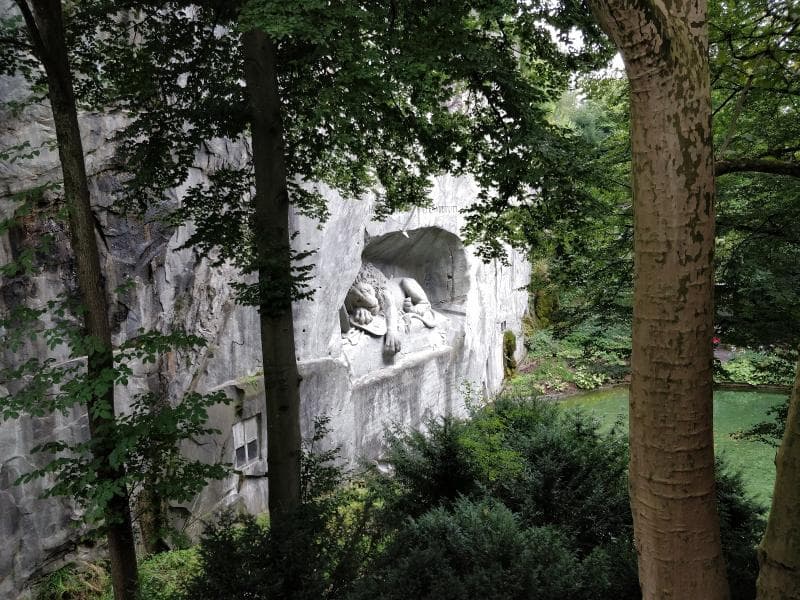
Explore Lucerne's poignant Lion Sculpture, carved into a rock face, commemorating Swiss Guards of the French Revolution. Discover its history in Switzerland.
Overview
The Lion Sculpture, an integral part of the renowned Lion Monument, stands as a profound symbol in Lucerne, Switzerland. Carved directly into a sandstone cliff face, this colossal rock relief depicts a mortally wounded lion, serving as a poignant memorial. It is considered one of Switzerland's most famous monuments, attracting approximately 1.4 million visitors annually. The monument is nestled within a charming park setting, featuring a tranquil pond, offering a serene, yet powerful, experience for those who visit.
History & Cultural Background
The Lion Monument commemorates a tragic event from the French Revolution. It honors the Swiss Guards who were massacred on August 10, 1792, during the storming of the Tuileries Palace in Paris. These loyal soldiers were defending King Louis XVI when revolutionaries attacked the royal residence. The idea for this memorial originated with Karl Pfyffer von Altishofen, a Swiss Guards officer who was on leave in Lucerne during the fateful event. Deeply affected by the loss of his comrades, he initiated the collection of funds and commissioned the monument. The design was created by the acclaimed Danish sculptor Bertel Thorvaldsen, and the carving into the sandstone rock was executed by Lukas Ahorn between 1820 and 1821. The monument was inaugurated in 1821, nearly three decades after the massacre. Below the sculpture, a Latin inscription reads 'Helvetiorum Fidei ac Virtuti', which translates to 'To the loyalty and bravery of the Swiss', a testament to the soldiers' unwavering commitment.
What Makes It Special
What truly distinguishes the Lion Sculpture is its powerful artistic representation and profound emotional resonance. The lion is portrayed in its dying moments, pierced by a spear, its head slumped and an expression of pain etched onto its face. One paw rests upon a shield bearing the fleur-de-lis, the symbol of the French monarchy it defended, while another shield next to it displays the Swiss coat of arms. This vivid depiction of sacrifice and courage moved American author Mark Twain to describe it as 'the most mournful and moving piece of stone in the world'. The monument's sheer scale, measuring ten meters in length and six meters in height, further enhances its impact. In 2006, its significance was formally recognized when it was placed under Swiss monument protection.
Stories, Fun Facts & Local Details
Beyond its historical weight, the Lion Monument carries intriguing tales and details. The Roman numerals inscribed below the lion, 'DCCLX' (760) and 'CCCL' (350), represent the numbers of Swiss Guards who perished and those who survived the Tuileries massacre, respectively. A recurring fun fact, albeit a myth, suggests that the grotto in which the lion lies was deliberately carved in the shape of a pig. This theory, often attributed to a disgruntled sculptor, Bertel Thorvaldsen, who was allegedly underpaid or not fully paid for his work, is a popular piece of local lore. While widely discussed, it is considered an example of pareidolia, where people see patterns in random shapes. Nevertheless, this story adds an interesting layer to the monument's rich narrative. The monument has also been featured in literature, including works by Thomas Carlyle and Brad Thor, further solidifying its cultural footprint.
Visitor Perspective
Visiting the Lion Sculpture offers a deeply contemplative experience. Situated in a picturesque park, the monument is freely accessible year-round. The peaceful setting, with the dying lion carved into the rock above a serene pond, invites quiet reflection on the sacrifices it memorializes. Information boards, available in multiple languages, provide historical context, allowing visitors to delve deeper into the monument's story while on site. It is approximately a 20-minute walk from Lucerne train station, making it easily reachable. Many suggest visiting during off-peak hours, such as early morning, to experience its solemn beauty without large crowds. Adjacent to the Lion Monument is the Glacier Garden, offering an additional attraction to explore, showcasing geological wonders and a fascinating mirror labyrinth. The Lion Monument is more than just a historical landmark; it is a powerful work of art that continues to move and inspire visitors from around the globe.
Coordinates: 8.31075, 47.05835
View on Google Maps💬 How Travelers Describe This Place
Based on community votes
Must See
491Photogenic
443Beautiful
414Interesting
310Unique
277
Traveler Stories
Discover memorable experiences shared by travelers who have visited this place.
No traveler stories yet.
Be the first traveler to share what made this place memorable.

Tour
By
Spot
Discover amazing places around the world. Your journey starts here.
Explore
© 2026 TourBySpot. All rights reserved.