Library
Istanbul, Turkey

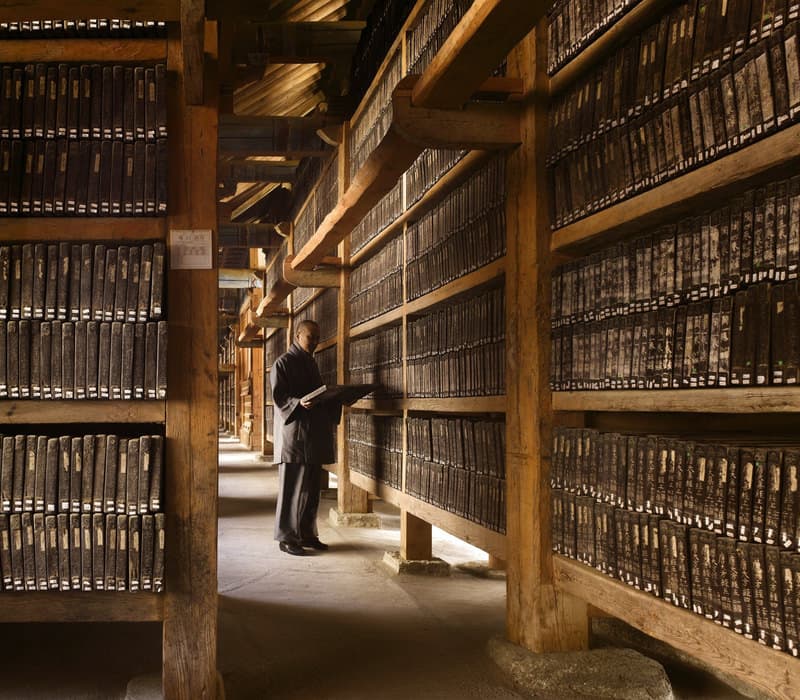
Explore the Süleymaniye Library in Istanbul, Turkey – a historic sanctuary of Islamic manuscripts and Turkey's largest collection of written heritage.
Overview
Nestled within the majestic Süleymaniye Mosque complex in Istanbul, Turkey, lies the Süleymaniye Library (Süleymaniye Kütüphanesi), a treasure trove of Islamic intellectual heritage. It stands as Turkey's largest manuscript library and is renowned globally for preserving one of the most extensive collections of Islamic manuscripts ever compiled. More than just a repository of old books, this esteemed institution is a vital research hub, attracting scholars from across the globe who seek to delve into centuries of knowledge.
The library is an integral part of the grand külliye, or complex, commissioned by Sultan Süleyman the Magnificent and brought to life by the legendary architect Mimar Sinan in the 16th century. While the Süleymaniye Mosque itself is an architectural marvel dominating Istanbul's skyline, the library, housed within former madrasa buildings, offers a quieter, profound journey into the Ottoman Empire's scholarly past.
History & Cultural Background
The origins of the Süleymaniye Library can be traced back to the establishment of the Süleymaniye Mosque complex itself in 1557. Libraries were an inherent part of the medreses (religious schools) within the complex from its inception. However, the modern public research institution, known as the Süleymaniye Umumi Kütüphanesi, was formally established in 1918, though some sources cite 1927.
Its creation was a significant outgrowth of the First World War, consolidating various scattered collections. Further enrichment occurred in 1924 with the closure of traditional religious learning institutions, leading to the transfer of considerable holdings from numerous mosques, Sufi lodges, and other medreses throughout Istanbul to the Süleymaniye. This continuous consolidation and the bequest of private collections have allowed the library to amass its unparalleled wealth of knowledge, transforming it into a central archive for Turkish-Islamic culture.
What Makes It Special
What truly sets the Süleymaniye Library apart is the sheer depth and breadth of its collection. It is home to approximately 100,000 manuscript volumes and 50,000 printed books, with some estimates even higher, reaching around 80,000 manuscripts and 115,000 books. These incredible numbers represent collections from 117 different libraries, making it a unique compilation of intellectual heritage.
The manuscripts span a vast historical period, from the 11th to the 20th centuries, with a strong concentration from the 17th to early 19th centuries. The texts cover virtually every field of Islamic knowledge: law, jurisprudence, literature, ethics, sermons, and sciences such as logic, rhetoric, and grammar. A significant portion of the collection is in Arabic (around 50,000 volumes), alongside Turkish (about 12,000 volumes) and Persian (approximately 3,680 volumes), showcasing the diverse linguistic tapestry of the Islamic world. Visitors can also admire exquisite examples of traditional arts like binding, illumination, miniature painting, calligraphy, and ebru (paper marbling) within these ancient texts.
Stories, Fun Facts & Local Details
The Süleymaniye Mosque complex, including the library, was not merely a religious site but a testament to Sultan Süleyman the Magnificent's vision and the Ottoman Empire's golden age. It was designed to symbolize the empire's power and cultural influence, intentionally linking Sultan Süleyman to the legendary King Solomon through its grandeur and architectural ambition. The library itself is housed in two of the original madrasa buildings, giving researchers a direct connection to the historical scholarly environment of the Ottoman era.
In a remarkable effort to preserve and make this vast heritage accessible, the library undertook a comprehensive digitization project between 2002 and 2011. Its entire manuscript collection was digitized, making it one of the first libraries in the world to systematically digitize its holdings. While the quality of earlier digital copies may vary, due to the pioneering nature of the project, this initiative ensures the long-term survival and study of these invaluable documents.
Visitor Perspective
For the curious traveler, visiting the Süleymaniye Library offers a unique glimpse into the heart of Islamic scholarship. While primarily a research institution, the sheer atmosphere of being surrounded by centuries of written history is profoundly moving. The library's location within the Süleymaniye Mosque complex means visitors are immersed in one of Istanbul's most significant historical and architectural landmarks.
For those intending to conduct research, it's important to note that access to the reading rooms requires an official government ID, such as a passport for foreign visitors. The library aims to be an open and friendly research institution, with its reading room hours often extending from 9 AM to 11 PM daily, including holidays, allowing ample time for study. Though the digitized manuscripts are not available online, they can be viewed at computer stations within the library, connecting modern research methods with ancient texts. Stepping into the Süleymaniye Library is not just about seeing old books; it is about experiencing the living legacy of a civilization's dedication to knowledge.
Coordinates: 28.963844, 41.016099
View on Google Maps💬 How Travelers Describe This Place
Based on community votes
Interesting
494Must See
242Photogenic
193Unique
125Beautiful
82
Traveler Stories
Discover memorable experiences shared by travelers who have visited this place.
No traveler stories yet.
Be the first traveler to share what made this place memorable.

Tour
By
Spot
Discover amazing places around the world. Your journey starts here.
Explore
© 2026 TourBySpot. All rights reserved.