Library Spaces
Sarajevo, Bosnia and Herzegovina
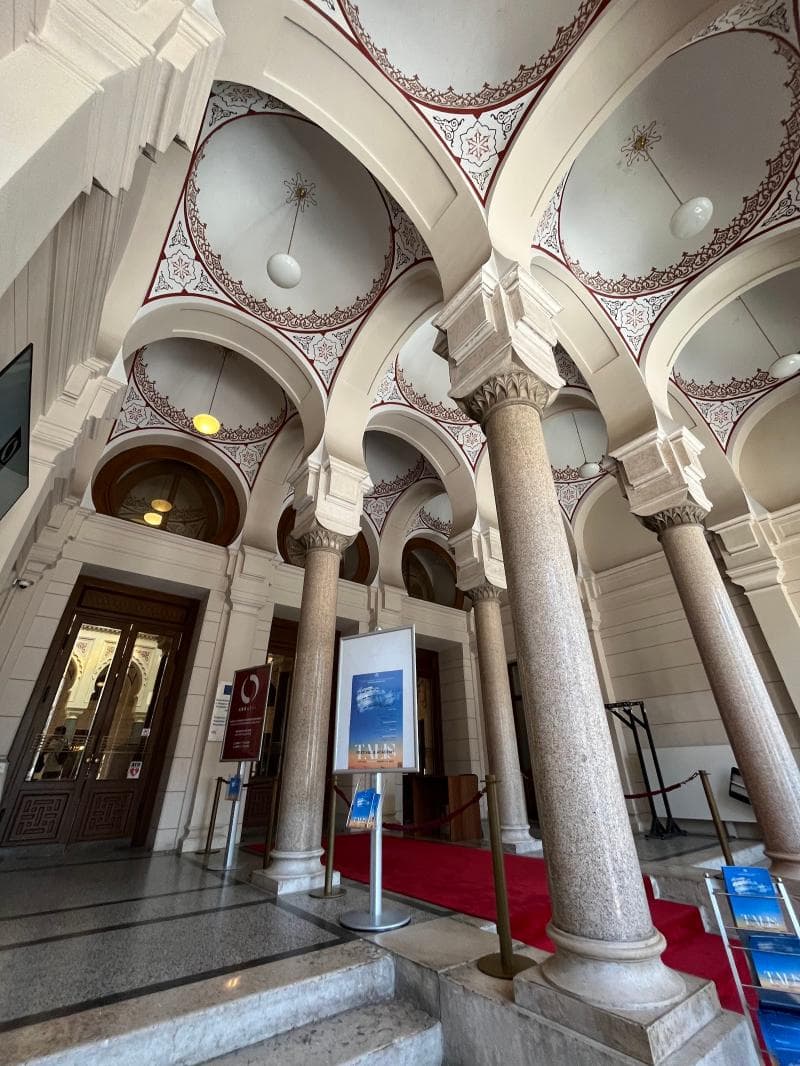
Explore the Library Spaces of Sarajevo City Hall, Vijećnica, a stunning pseudo-Moorish architectural marvel in Sarajevo, Bosnia and Herzegovina, rich in history and resilience.
Overview
Stepping into the Sarajevo City Hall, locally known as Vijećnica, is to enter a magnificent structure that embodies centuries of history and enduring resilience. While today it serves as a city hall, museum, and vibrant cultural venue, its grand interior spaces once housed the National and University Library of Bosnia and Herzegovina, holding invaluable collections that reflected the region's rich multicultural heritage. The building's striking pseudo-Moorish architecture, with its intricate details and vibrant colors, immediately captures the eye, standing proudly on the banks of the Miljacka River as a prominent symbol of Sarajevo.
These ‘Library Spaces’ within Vijećnica, though no longer a functioning library in the traditional sense, resonate deeply with the weight of knowledge and the tragic loss it once endured. Visitors can explore the beautifully reconstructed halls, marvel at the ornate architecture, and engage with exhibitions that narrate its profound story, reminding everyone of its pivotal role as a guardian of Bosnian culture and history.
History & Cultural Background
Sarajevo City Hall was originally completed in 1896 during the Austro-Hungarian period, designed by Karel Pařík, Alexander Wittek, and Ćiril Iveković. Its design was a deliberate blend of European ambition and local aesthetic traditions, resulting in its distinctive pseudo-Moorish style.
For over four decades, from 1949 until 1992, this architectural gem transformed into the National and University Library of Bosnia and Herzegovina, becoming the central repository of Bosnian culture and knowledge. It housed an extraordinary collection of approximately two million volumes, including rare manuscripts and documents, making it a vital cultural institution.
Tragically, during the Siege of Sarajevo in 1992, Vijećnica was deliberately targeted by artillery shelling and set ablaze. The fire, which raged for 14 hours, consumed nearly 90% of the library's vast collection, including countless irreplaceable works, an act widely regarded as a cultural catastrophe.
After years of painstaking reconstruction, restoring the building to its original 1896 appearance, Vijećnica officially reopened on May 9, 2014.
What Makes It Special
What makes the former Library Spaces of Sarajevo City Hall truly special is not just their architectural splendor but the profound narrative they embody. The building's magnificent pseudo-Moorish architecture, characterized by ornate stained glass, grand spiraling staircases, and vibrant tilework, is a visual spectacle.
However, beyond its aesthetic appeal, Vijećnica stands as an international symbol of endurance and the human spirit's ability to rebuild after devastation. Its past as a library and its deliberate destruction underscore the critical importance of cultural heritage. The meticulously reconstructed interior, with its elegant central atrium and glass dome, now serves as a poignant reminder of the irreplaceable loss and the subsequent triumph of restoration.
Stories, Fun Facts & Local Details
One of the most heart-wrenching stories associated with Vijećnica is the courageous, yet often futile, efforts of librarians and citizens during the 1992 fire. Under sniper fire and shelling, many risked their lives to form human chains, attempting to salvage as many books and manuscripts as possible from the burning building. Though only a fraction was saved, their bravery remains a powerful testament to the value placed on knowledge and culture.
A notable historical anecdote, unrelated to its library function but part of its city hall history, is its connection to the assassination of Archduke Franz Ferdinand in 1914, which triggered World War I. He visited the City Hall shortly before the fateful event.
Today, while the National and University Library of Bosnia and Herzegovina operates from a different location, Vijećnica continues to host exhibitions that honor its library past and the tragic events of the war, ensuring that the memory of its former function and the cultural treasures it once held are never forgotten.
Visitor Perspective
Visiting the former Library Spaces of Sarajevo City Hall offers a deeply moving and enriching experience for any curious traveler. Located conveniently on the Miljacka River, at the entrance to the historic Baščaršija (Old Town), Vijećnica is easily accessible.
An entrance fee, typically 10 Bosnian Marks, grants access to explore its magnificent interior, allowing visitors to appreciate both the architectural beauty and the historical exhibitions. Most visitors spend between 30 to 60 minutes exploring the main hall, central atrium, and upper galleries, absorbing the atmosphere of a place that has witnessed so much.
The grandeur of the architecture, combined with the powerful stories of its past, leaves a lasting impression, providing a unique perspective on Sarajevo's enduring spirit and its commitment to preserving its cultural identity. It's a place where history feels alive, echoing both sorrow and inspiring resilience.
Coordinates: 18.4333, 43.8592
View on Google Maps💬 How Travelers Describe This Place
Based on community votes
Beautiful
804Unique
733Must See
563Interesting
404Photogenic
336
Traveler Stories
Discover memorable experiences shared by travelers who have visited this place.
No traveler stories yet.
Be the first traveler to share what made this place memorable.

Tour
By
Spot
Discover amazing places around the world. Your journey starts here.
Explore
© 2026 TourBySpot. All rights reserved.