Library Space
Nice, France
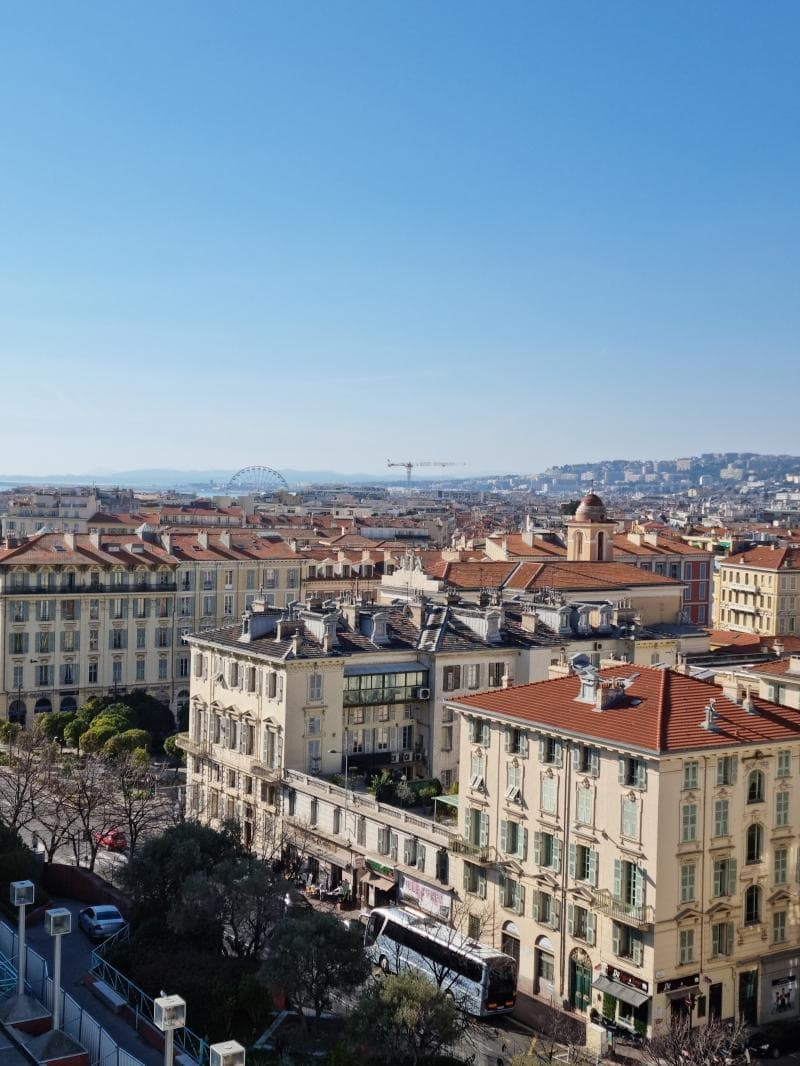
Explore the specialized Library Space within MAMAC in Nice, France, a crucial documentation center for post-war international art research.
Overview
Deep within the Modern And Contemporary Art Museum (MAMAC) in Nice, France, lies the Library Space – more formally known as the museum's documentation center. Far from a typical public library, this specialized archive is a treasure trove dedicated to the post-war international art scene, serving as an indispensable resource for scholars, curators, and art professionals. It stands as a silent engine, fueling the intellectual and creative endeavors that bring MAMAC's renowned collections to life for visitors worldwide.
While MAMAC itself is currently undergoing significant renovation and is closed to the public until 2028, its Library Space continues its vital work behind the scenes. It houses a rich collection crucial for understanding the artistic movements and figures that define modern and contemporary art from the 1950s to the present day.
History & Cultural Background
The Library Space was established as an integral part of MAMAC's mission when the museum opened its doors on June 21, 1990. From its inception, MAMAC has been a pivotal institution in Nice, dedicated to collecting, preserving, and exhibiting art from the latter half of the 20th century and beyond. The museum's collections primarily highlight European New Realism, American Pop Art, and minimalism, featuring works by iconic artists such as Yves Klein and Niki de Saint Phalle.
This documentation center evolved alongside the museum, growing into a specialized archive that reflects MAMAC's core artistic focus. Its existence underscores the profound connection between artistic creation, scholarly research, and public engagement. The Library Space is not merely a storage facility; it is a living repository of knowledge that supports the curatorial staff in preparing future exhibitions, enriching the cultural narrative, and ensuring the historical accuracy of the art presented. It acts as the institutional memory, preserving the context and dialogue around the artworks that shaped modern artistic thought.
What Makes It Special
What sets MAMAC's Library Space apart is its highly specialized collection, singularly focused on the post-war international art scene. It contains more than 13,000 exhibition catalogues, essays, monographs, and magazines, along with documentation directly related to the museum's activities, artist's prints, and booklets. This depth of material makes it an unparalleled resource for anyone delving into the intricacies of this dynamic period in art history.
Unlike many public libraries, its curated nature means every item within its shelves directly contributes to a comprehensive understanding of MAMAC's celebrated collections and the broader movements they represent. It is a quiet sanctuary of knowledge, where the narratives of European New Realism, American Pop Art, and various avant-garde movements are meticulously documented and preserved. The Library Space provides the essential academic bedrock upon which the museum's public face is built, offering a unique opportunity for in-depth study and critical analysis.
Stories, Fun Facts & Local Details
While a documentation center might not immediately conjure 'fun facts,' its very existence tells a compelling story of dedication to cultural heritage. Imagine the countless hours spent by curators and researchers poring over rare exhibition catalogues, uncovering forgotten details about an artist's early works, or tracing the evolution of a particular artistic movement through the very publications housed here. This quiet pursuit of knowledge is what ultimately enriches the experience for every visitor to MAMAC, even if they never step foot inside the library itself.
The Library Space plays a behind-the-scenes role in ensuring the accuracy and depth of information accompanying the museum's prestigious holdings, including the substantial collection of Niki de Saint Phalle's works – one of the most important in France – and the significant presence of Yves Klein's pieces. Its work helps to contextualize these artists within the vibrant artistic landscape of the French Riviera, which from the late 1950s, became a hub of artistic emulation. It is important to note that this specialized library within MAMAC is distinct from the public Bibliothèque Louis Nucéra, although the latter is a prominent structure nearby, known for its distinctive 'Tête Carrée' (Square Head) sculpture by Sacha Sosno and often associated with the museum's vicinity.
Visitor Perspective
For the curious traveler or art enthusiast, it's important to understand the specific access policies of MAMAC's Library Space. This is not a general public library; access is strictly by appointment and reserved for researchers and museum professionals. This ensures that its specialized resources are optimally utilized by those engaged in serious academic or curatorial work.
Furthermore, it's crucial to remember that MAMAC itself is currently closed for a major renovation project, with an anticipated reopening in 2028. During this closure, while direct access to the physical museum is not possible, MAMAC has initiated 'MAMAC outside the walls' and 'MAMAC online' programs. These initiatives allow the public to continue engaging with its rich collections through off-site exhibitions and digital resources, providing alternative avenues to explore the museum's artistic legacy while its home undergoes transformation. For those passionate about modern and contemporary art, the Library Space remains a foundational element, silently supporting the museum's enduring cultural impact.
Coordinates: 7.2785, 43.7014
View on Google Maps💬 How Travelers Describe This Place
Based on community votes
Beautiful
953Unique
658Photogenic
585Interesting
69Must See
22
Traveler Stories
Discover memorable experiences shared by travelers who have visited this place.
No traveler stories yet.
Be the first traveler to share what made this place memorable.

Tour
By
Spot
Discover amazing places around the world. Your journey starts here.
Explore
© 2026 TourBySpot. All rights reserved.