Library
Milan, Italy
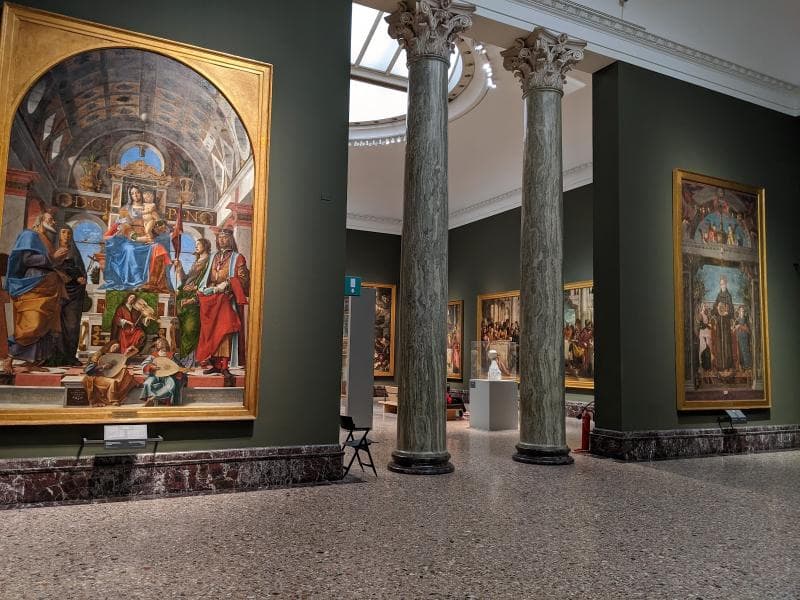
Explore the Biblioteca Nazionale Braidense, a historic national library within Milan's Pinacoteca di Brera. Delve into its vast collections and rich cultural heritage.
Overview
Nestled within the grand Palazzo di Brera in the vibrant heart of Milan, Italy, lies the Biblioteca Nazionale Braidense, often simply referred to as the Brera Library. Far more than just a repository of books, it stands as a cornerstone of Italian culture and one of the nation's most significant public libraries. Sharing its historic abode with the renowned Pinacoteca di Brera, the Brera Academy, the Astronomical Observatory, and the Botanical Garden, the library forms a vital part of a comprehensive cultural complex that has enriched Milanese life for centuries. Since 2015, the library has been integrated into the museum system of the Pinacoteca di Brera, further cementing its role within this celebrated cultural hub.
As a national library, the Biblioteca Nazionale Braidense boasts a vast collection, meticulously curated over generations. It serves as both a scholarly resource and a testament to Italy's profound literary and intellectual heritage, inviting curious minds to delve into its extensive archives. Its presence in the Brera district, known for its artistic and bohemian ambiance, enhances the library's allure as a place where history, art, and knowledge converge.
History & Cultural Background
The origins of the Biblioteca Nazionale Braidense trace back to the intellectual fervor of the 18th century, formally established in 1770 by the visionary Empress Maria Theresa of Austria. Her decree sought to create a public library, breaking from the tradition of private aristocratic or ecclesiastical collections, and making knowledge accessible to a wider populace. This progressive initiative aimed to cultivate intellectual growth and public enlightenment.
The library first opened its doors to the public in 1786 within the Palazzo di Brera. This magnificent building, originally constructed by the Jesuits in the 17th century, became state property after the dissolution of the Society of Jesus in 1773. The library's initial holdings were a rich amalgamation, including the personal collection of Count Carlo Pertusati, alongside books from the Collegio Braidense and various Jesuit houses. Over time, its collection expanded significantly, incorporating volumes from other dissolved religious orders and even duplicates from the Imperial Library in Vienna. A pivotal moment arrived in 1788 when the Braidense became a legal deposit archive, mandated to receive all publications from the State of Milan. This policy ensured its continuous growth and its status as the regional legal deposit for Lombardy. By 1880, its importance was formally recognized with its designation as a national library, affirming its enduring role in preserving Italy's printed legacy.
What Makes It Special
What truly distinguishes the Biblioteca Nazionale Braidense is not only its sheer scale but also the depth and diversity of its collections. Ranking among the largest libraries in Italy, it houses an estimated 1.5 million volumes, making it an invaluable resource for scholars and enthusiasts alike.
The library's treasures span a wide spectrum of subjects and formats. Visitors can explore ancient illuminated choral works, an extensive array of historical, literary, theological, and legal publications, and comprehensive general reference works. Beyond printed books, its specialized collections include approximately 2,367 manuscripts, 40,000 autograph documents, 2,368 incunabula (books printed before 1501), and 24,401 16th-century editions.
The architectural splendor of its interior spaces also contributes to its unique character. The Maria Teresa Hall, for instance, with its elegant bookshelves designed by the acclaimed architect Giuseppe Piermarini, offers a truly inspiring environment for study and contemplation. Another notable space is the Sala Manzoniana, dedicated to the celebrated Italian Romantic writer Alessandro Manzoni, which preserves his manuscripts, correspondence, and various editions of his works. Furthermore, the library's role as a legal deposit means it continually receives new publications from Milan and its province, ensuring its collection remains dynamic and comprehensive, reflecting contemporary intellectual output.
Stories, Fun Facts & Local Details
The Palazzo di Brera itself, the library's home, carries a fascinating etymology; its name, 'Brera', derives from the Germanic 'braida,' meaning a grassy, cleared expanse of land. This hints at the area's historical landscape before it evolved into the bustling cultural quarter we know today.
A less-known gem within the Brera complex, closely linked to the library's mission of knowledge, is the Photo Library. Established in 1899, it was conceived as a state-of-the-art tool for study and consultation, gathering artistic reproductions of Italian and foreign works and monuments. This initiative, driven by figures like Corrado Ricci and Giuseppe Fumagalli, aimed to provide advanced resources for art historical research, paralleling similar developments in major European and American museums.
Maria Theresa's original vision for the library was groundbreaking for its time, aiming to democratize access to learning and culture. This progressive spirit continues to permeate the institution, which now actively participates in the 'Grande Brera' project. This ambitious initiative seeks to integrate the various cultural institutions within the Palazzo di Brera, including the Pinacoteca and the Braidense Library, enhancing Milan's overall artistic and cultural offering and creating a more cohesive visitor experience.
Visitor Perspective
Visiting the Biblioteca Nazionale Braidense offers a profound immersion into Milan's intellectual heart. Located at Via Brera 28, it shares the same address as the Pinacoteca di Brera, making it easily accessible for those exploring the broader cultural complex.
The library warmly welcomes both Italian and international visitors aged 16 and above who wish to consult its vast resources. To access the library's services, individuals are required to present a valid photo ID and complete an entry form. For the comfort and security of all users, bags and backpacks must be stored in lockers provided at the entrance. The library provides several reading rooms, including specialized ones, offering quiet and conducive environments for study and research. While some sections may require pre-registration for borrowing or specific consultations, the main reading areas are generally accessible for on-site reference. It is important to remember that this is an active research library, and visitors are encouraged to maintain a respectful and quiet demeanor, allowing others to fully engage with its scholarly atmosphere. Whether you are a dedicated researcher or simply a curious traveler, the Biblioteca Nazionale Braidense offers a unique window into Italy's rich intellectual past and present.
Coordinates: 9.187408192393892, 45.47100158669917
View on Google Maps💬 How Travelers Describe This Place
Based on community votes
Must See
826Photogenic
494Beautiful
242Interesting
125Unique
82
Traveler Stories
Discover memorable experiences shared by travelers who have visited this place.
No traveler stories yet.
Be the first traveler to share what made this place memorable.

Tour
By
Spot
Discover amazing places around the world. Your journey starts here.
Explore
© 2026 TourBySpot. All rights reserved.