Library
Sarajevo, Bosnia and Herzegovina
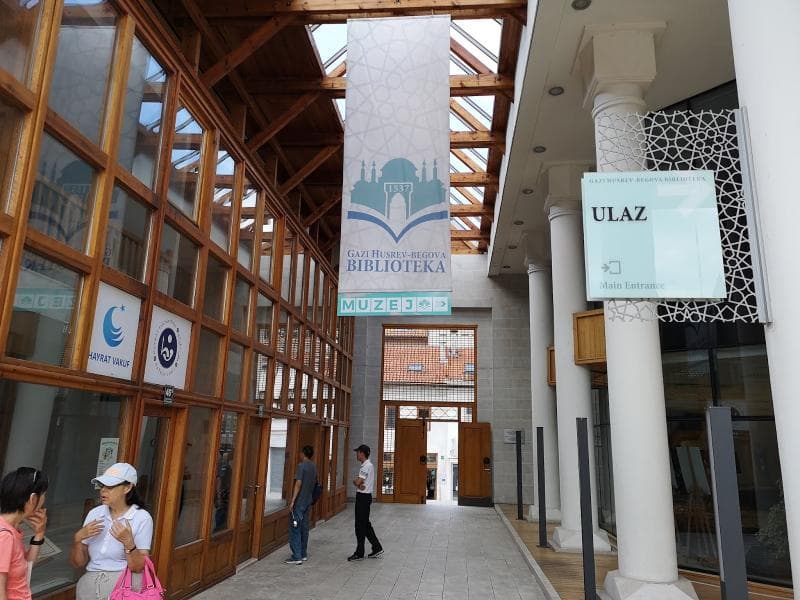
Explore the Gazi Husrev-beg Library in Sarajevo, Bosnia & Herzegovina, housing ancient Islamic manuscripts and a rich history of learning.
Overview
Tucked within the venerable complex of the Gazi Husrev-beg Mosque in Sarajevo, Bosnia and Herzegovina, lies the Gazi Husrev-beg Library, a beacon of knowledge and cultural heritage. Established in 1537, it holds the distinction of being one of the oldest public libraries in Bosnia and Herzegovina and the oldest known library in the Balkans. More than just a repository of books, it is a living testament to centuries of intellectual and spiritual endeavor in the heart of the Old Town, Baščaršija. The library’s impressive collection, particularly its invaluable Islamic manuscripts, offers a profound glimpse into the rich history of the region and beyond, drawing scholars and curious travelers alike.
History & Cultural Background
The library’s origins are deeply intertwined with the philanthropic vision of Gazi Husrev-beg, the Ottoman governor of Bosnia, who established a comprehensive *waqf* (charitable foundation) in the 16th century. His endowment charter for the madrasa stipulated that surplus funds from its construction should be used to acquire 'good books' for readers and those engaged in science, effectively founding the library simultaneously with the madrasa in 1537. For over three centuries, the library functioned as an integral part of the Kuršumlija Madrasah. Over time, as its collection grew, it relocated several times within Sarajevo, moving to a larger room near the Bey's Mosque in 1863 and later to premises in front of the Careva Mosque. The library’s commitment to preserving knowledge shone brightest during the tumultuous Siege of Sarajevo from 1992 to 1995. Its entire collection, including its most precious manuscripts, was meticulously moved multiple times to various locations, with the most valuable items hidden in bank vaults, ensuring their survival against immense odds.
What Makes It Special
The Gazi Husrev-beg Library is particularly distinguished by its extraordinary collection of Islamic manuscripts. Recognized by UNESCO in its Memory of the World Programme, the manuscript collection consists of over 10,500 units, comprising approximately 20,000 texts. These works cover a vast array of subjects, from Islamic sciences, Oriental languages, belles-lettres, philosophy, and logic to history, medicine, veterinary science, mathematics, and astronomy. Many of these manuscripts originated from major centers of Islamic learning across the world, including Mecca, Medina, Cairo, Baghdad, and Istanbul. The oldest preserved manuscript is a copy of Abu Hamid Muhammad al-Ghazali's 'Ihya' Ulum al-Din', copied in 1105 A.D., remarkably during the author's lifetime. Beyond its manuscripts, the library houses an estimated 200,000 library units, including printed books in Oriental and European languages, journals, and various historical documents. In 2014, the library reopened in a magnificent new three-story building made of glass and marble, constructed with significant financial support from Qatar, providing a modern home for its priceless treasures.
Stories, Fun Facts & Local Details
The tale of the library's survival during the Bosnian War is a testament to the dedication of its staff and the community's resolve to protect its cultural heritage. The clandestine efforts to move and secure thousands of invaluable texts, often under perilous conditions, ensured that this intellectual legacy would endure. The new building itself, opened in 2014, boasts reading rooms, a conservation area, and even a 200-seat auditorium with simultaneous translation capabilities, blending historical preservation with modern accessibility. Within the library, a dedicated museum offers visitors a curated journey through the history of literacy and Islamic culture in Bosnia and Herzegovina. Exhibits include exquisite examples of Islamic calligraphy, ancient writing tools, traditional 19th-century attire, handmade globes from 1881, and 'kibletname' – tools used to determine the direction of the Qibla for prayer. The library is not just a historical site; its quiet reading rooms are a favorite study spot for students from the University of Sarajevo and other institutions, who contribute to its vibrant academic atmosphere.
Visitor Perspective
For those curious to delve into centuries of knowledge, the Gazi Husrev-beg Library offers a unique and enriching experience. While the main reading rooms are primarily for registered members, the library's museum is open to the public, providing an accessible way to appreciate its cultural significance. Visitors can explore the museum's fascinating exhibits, which beautifully display artifacts related to Islamic art, education, and daily life throughout history. The museum is open daily from 9:00 to 18:00, with an entrance fee of 3 KM. Group visits can also be arranged by booking in advance. Located centrally in Sarajevo's Old Town, it is easily reachable on foot, inviting travelers to step into a space where the past and present of Bosnian intellectual and spiritual life converge. A small cafeteria is also available for visitors and students.
Coordinates: 18.42917, 43.85917
View on Google Maps💬 How Travelers Describe This Place
Based on community votes
Beautiful
982Interesting
876Photogenic
648Unique
235Must See
197
Traveler Stories
Discover memorable experiences shared by travelers who have visited this place.
No traveler stories yet.
Be the first traveler to share what made this place memorable.

Tour
By
Spot
Discover amazing places around the world. Your journey starts here.
Explore
© 2026 TourBySpot. All rights reserved.