Liberty Statue
Budapest, Hungary
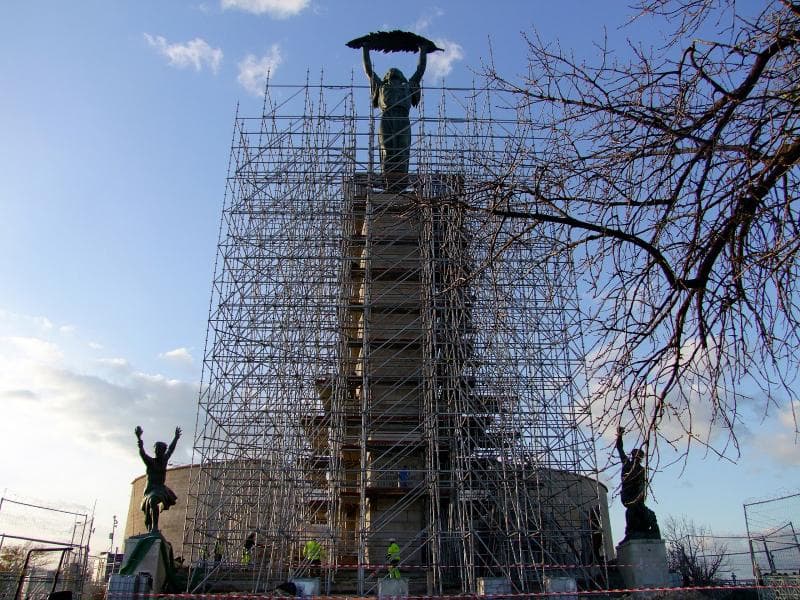
Explore Budapest's iconic Liberty Statue on Gellért Hill, a powerful symbol of Hungary's freedom. Discover its rich history and panoramic city views.
Overview
Standing proudly atop Gellért Hill, the Liberty Statue, known in Hungarian as Szabadság-szobor, is one of Budapest's most iconic and recognizable landmarks. Visible from nearly every corner of the city, this monumental bronze figure serves as a powerful symbol of Hungary's enduring quest for freedom and independence. The statue, depicting a female figure holding a large palm leaf aloft, commands breathtaking panoramic views of the Danube River, the historic Buda Castle, the majestic Parliament Building, and the sprawling Pest side of the city. Its commanding presence high above the urban landscape makes it a beacon that has witnessed and reflected much of Hungary's complex modern history.
History & Cultural Background
The Liberty Statue was first erected in 1947, following the end of World War II. It was originally commissioned to commemorate the Soviet Red Army's role in liberating Hungary from Nazi occupation. The renowned Hungarian sculptor, Zsigmond Kisfaludi Strobl, designed the monument. Originally, the monument bore an inscription dedicated to 'the liberating Soviet heroes' and included additional statues, such as a Soviet soldier, at its base. However, as Hungary transitioned from communist rule to democracy after 1989, the monument underwent a significant reinterpretation. The original Soviet-specific inscriptions were removed, and the statue was rededicated to commemorate all those who sacrificed their lives for Hungary's independence, freedom, and prosperity. The accompanying statues symbolizing Soviet influence were relocated to Memento Park, leaving the central female figure to stand as a broader emblem of national liberty. Interestingly, the design for the main figure was reportedly initially conceived for a different memorial, possibly for István Horthy, and would have featured a different object in her hands.
What Makes It Special
What truly sets the Liberty Statue apart is its profound symbolic evolution coupled with its unparalleled vantage point. It stands not merely as a piece of art but as a living testament to Hungary's tumultuous yet resilient spirit. Its prominent location on Gellért Hill, a UNESCO World Heritage Site, offers visitors one of Budapest's most spectacular and encompassing panoramas. From this elevated perspective, the city unfolds beneath you, showcasing its architectural grandeur and the picturesque curve of the Danube. The statue's artistic design, with the female figure's flowing drapery and the raised palm leaf, conveys a sense of dynamic grace and victory. Despite its contentious origins, the statue has transcended its initial political context to become a universally accepted symbol of freedom, peace, and hope for the Hungarian people, making it a powerful and moving landmark.
Stories, Fun Facts & Local Details
The Liberty Statue is surrounded by interesting anecdotes that add to its character. One lesser-known fact is that the sculptor, Zsigmond Kisfaludi Strobl, initially conceived the main figure for a different memorial, possibly for István Horthy (Regent Horthy's son), and it was originally intended to hold something other than a palm leaf, perhaps even an airplane propeller. The palm leaf, symbolizing peace and victory, was a Soviet addition. The model for the iconic female figure was a young woman named Erzsébet Gaál, whom Strobl reputedly spotted by chance. She posed for the sculptor in challenging conditions, standing motionless for long periods while a fan created the effect of wind blowing her dress and hair, without receiving payment for her work. The original monument included a Soviet soldier figure, a torchbearer, and a dragon slayer (symbolizing victory over fascism), which were all removed from Gellért Hill after the fall of communism and are now preserved at Memento Park. The hill itself is also steeped in legend, named after Bishop Gellért, who was martyred here in 1046 AD.
Visitor Perspective
Visiting the Liberty Statue offers an unforgettable experience, combining physical activity with historical reflection and awe-inspiring views. The most popular way to reach the statue is by walking up Gellért Hill, with several well-maintained paths leading to the summit from various points, such as Gellért Square. The climb typically takes about 20-30 minutes and, while involving a sustained incline and some steps, is highly rewarding. Comfortable footwear is recommended. From the top, beside the statue, you can spend considerable time soaking in the panoramic vista, identifying major Budapest landmarks, and capturing stunning photographs. The area around the statue and the adjacent Citadella fortress is open 24/7, and there is no entrance fee to see the monument itself. Many visitors recommend coming at sunset or in the evening to witness the city lights twinkling across the Danube, offering a truly magical perspective. Early mornings are ideal for avoiding crowds.
Coordinates: 19.04815, 47.48668
View on Google Maps💬 How Travelers Describe This Place
Based on community votes
Beautiful
898Unique
667Must See
308Photogenic
190Interesting
32
Traveler Stories
Discover memorable experiences shared by travelers who have visited this place.
No traveler stories yet.
Be the first traveler to share what made this place memorable.

Tour
By
Spot
Discover amazing places around the world. Your journey starts here.
Explore
© 2026 TourBySpot. All rights reserved.