Lausanne Cathedral
Lausanne, Switzerland
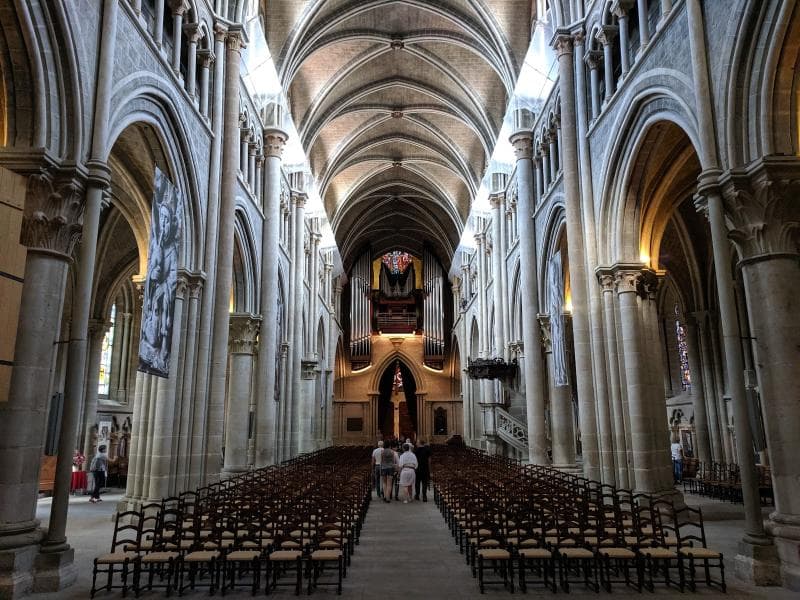
Explore Lausanne Cathedral in Lausanne, Switzerland, a stunning Gothic masterpiece boasting a rich history, iconic rose window, and a unique night watchman tradition.
Overview
Perched majestically atop a hill in the historic heart of Lausanne, Switzerland, the Lausanne Cathedral, officially known as the Cathedral of Notre-Dame, stands as a magnificent testament to early Gothic architecture. It is recognized as the largest and most significant Gothic church in Switzerland, offering breathtaking views over the city, Lake Geneva, and the distant Alps. Construction of this iconic edifice began around 1170, with its official consecration taking place in 1275. Since the Reformation in 1536, the cathedral has served as a prominent Swiss Reformed church, while meticulously preserving its rich historical and cultural heritage. Entry to the main areas of the cathedral is free, inviting curious travelers to explore centuries of history and architectural grandeur.
History & Cultural Background
The origins of Lausanne Cathedral trace back to 1170, when construction commenced to replace an earlier Romanesque church. The majority of the building was completed by 1235, showcasing the evolving Gothic style. A pivotal moment in its history occurred on October 20, 1275, when the cathedral was solemnly consecrated by Pope Gregory X. This grand event was attended by Rudolf I of Germany, the first Habsburg King, underscoring the cathedral's profound spiritual and political importance in the region. Throughout the Middle Ages, it was a vital pilgrimage destination, drawing faithful from across the region.
However, the year 1536 marked a significant turning point with the arrival of the Reformation and the Bernese occupation. The cathedral transitioned to Protestant worship, leading to substantial changes in its interior. To align with Reformed principles, many of its Catholic relics, altars, statues, and vibrant mural paintings were removed or covered, giving the interior a more austere appearance. In the 19th century, extensive restoration efforts were undertaken to address centuries of wear. The renowned French architect Eugène Viollet-le-Duc, known for his work on other medieval monuments, notably added the current 80-meter spire, shaping the cathedral's distinctive silhouette against the Lausanne skyline.
What Makes It Special
Lausanne Cathedral's allure lies in its remarkable architectural harmony and unique historical elements. Its interior impresses with soaring vaulted ceilings, delicate pointed arches, and elegant Gothic details that guide the eye upwards. One of its most captivating features is the 'Painted Portal' (Portail Peint), an early 13th-century masterpiece of sculpture. While originally the main entrance, it is now closed off and accessed from inside the church to protect its intricately painted sandstone figures, which depict biblical scenes and give the portal its name.
The south transept houses the breathtaking Rose Window, a Gothic masterpiece dating from 1220-1235, with a diameter of 8.05 meters. Its 105 medallions beautifully illustrate the medieval cosmos, featuring representations of God, creation, the four seasons, the twelve months, the Zodiac, rivers of paradise, and various winds. This intricate work is not solely religious in theme, but also a complex artistic depiction of the world as understood in the 13th century. Another modern marvel is the Fisk Organ, inaugurated in 2003. This unique instrument boasts 7000 pipes and is notable as the first American-made pipe organ installed in a European cathedral, combining four principal organ styles.
Stories, Fun Facts & Local Details
Among the cathedral's most cherished and peculiar traditions is that of the 'Guet,' or night watchman. Since 1405, following a devastating fire in the city, a watchman has ascended the belfry every night to call out the hour. From 10 PM to 2 AM, the watchman's voice echoes across the city, announcing 'C'est le guet! Il a sonné l'heure!' ('This is the watchman! The hour has struck!'). This tradition originally served the vital purpose of warning citizens of fires and potential invaders. Lausanne proudly stands as one of the few European cities, and the only one in Switzerland, to continuously maintain this living medieval custom. The perseverance of this role, particularly when automation threatened its existence, highlights the deep affection and community spirit Lausanne's residents hold for their unique heritage. The post has been held by Renato Häusler for many years, and more recently, a woman joined the ranks of this historic tradition in August 2021.
Visitor Perspective
A visit to Lausanne Cathedral is an enriching journey through history and art. The experience often begins with a charming ascent through Lausanne's medieval lanes, with the cathedral's spire gradually revealing itself. For those undeterred by heights, climbing the 224 steps to the top of the belfry is highly recommended. From this vantage point, you are rewarded with a spectacular 360-degree panorama of Lausanne, the shimmering Lake Geneva, and the majestic Alpine peaks beyond. Most visitors find that 45 minutes to an hour and a half is sufficient to explore the cathedral, depending on whether they undertake the tower climb. While entry to the main church is free, there may be a small fee to access the tower, though it is often free for those under 25 or with a City Pass. It's advisable to check seasonal opening hours, as they vary, and to note that sightseeing is generally not permitted during church services. The cathedral also frequently hosts organ concerts, offering another dimension to its cultural appeal. Visitors should also be aware that certain areas, such as windows and vaults, may be undergoing renovation, so checking for current accessibility is a good idea.
Coordinates: 6.63556, 46.5225
View on Google Maps💬 How Travelers Describe This Place
Based on community votes
Must See
539Unique
517Interesting
422Photogenic
394Beautiful
251
Traveler Stories
Discover memorable experiences shared by travelers who have visited this place.
No traveler stories yet.
Be the first traveler to share what made this place memorable.
Things to see at Lausanne Cathedral



Tour
By
Spot
Discover amazing places around the world. Your journey starts here.
Explore
© 2026 TourBySpot. All rights reserved.