Last Supper refectory
Milan, Italy
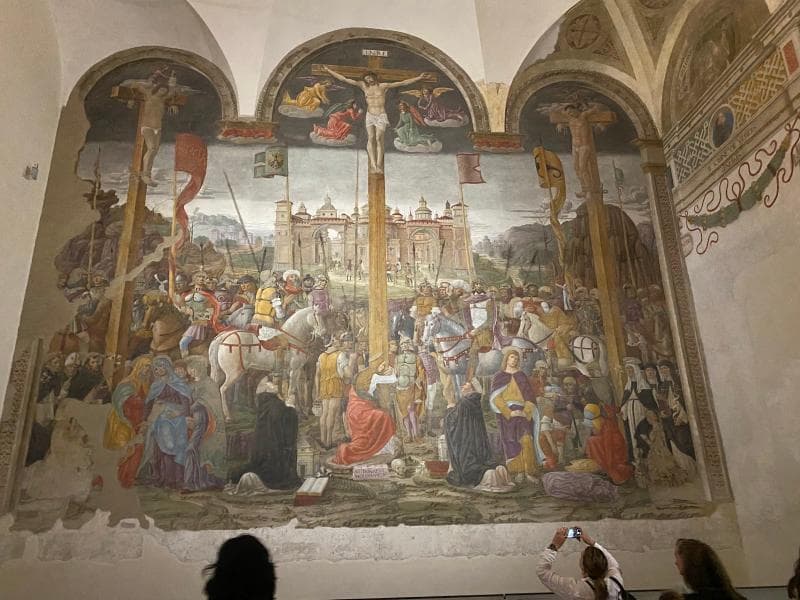
Discover Leonardo da Vinci's 'The Last Supper' in its original refectory at Santa Maria delle Grazie, Milan, Italy. Explore its history, unique artistry, and emotional impact.
Overview
Stepping into the Last Supper refectory, nestled within the magnificent Santa Maria delle Grazie complex in Milan, Italy, offers a profound encounter with one of humanity's greatest artistic treasures. This former dining hall of a Dominican convent is home to Leonardo da Vinci's iconic mural, 'The Last Supper'. Far from being a mere painting, it is a pivotal work that transformed Western art, drawing visitors from across the globe to witness its emotional depth and revolutionary technique. Designated a UNESCO World Heritage site, the refectory provides an intimate setting to experience Leonardo's genius, where time seems to stand still before the monumental depiction of a singular, dramatic moment.
Unlike artworks displayed in traditional galleries, 'The Last Supper' remains in its original location, integrated into the very fabric of the historic building for which it was created. This allows for a deeper appreciation of its intended purpose and the context of its creation, making the visit not just an art viewing, but a journey into Renaissance history and spirituality.
History & Cultural Background
The story of the Last Supper refectory and its masterpiece begins in the late 15th century. Ludovico Sforza, the Duke of Milan, commissioned Leonardo da Vinci to adorn the wall of the refectory at the Dominican convent of Santa Maria delle Grazie. The painting, created between approximately 1495 and 1498, was intended to beautify the dining hall where monks would gather for their meals, presenting them with the profound image of Christ's final repast.
Crucially, Leonardo did not employ the traditional fresco technique, which involves painting on wet plaster and demands rapid execution. Instead, he chose an experimental method using tempera and oil paint directly on a dry plaster base. This innovative approach allowed him greater freedom for detail and revision, but it also had a significant drawback: the painting began to deteriorate relatively quickly, even within the artist's lifetime, posing a continuous challenge for its preservation through the centuries.
What Makes It Special
What sets Leonardo's 'The Last Supper' apart is not only its subject matter but his groundbreaking approach to its depiction. Leonardo chose to capture the intense psychological drama immediately following Jesus' announcement that one of his disciples would betray him. He masterfully portrays the apostles' diverse reactions of shock, disbelief, sorrow, and questioning, making each figure a study in human emotion.
The painting is a triumph of perspective, creating an astonishing illusion of depth that extends the actual space of the refectory. Leonardo is said to have used a hammer and nails to string lines on the wall, meticulously mapping out the vanishing point to achieve this remarkable sense of realism and draw the viewer into the scene. His innovative composition, with Jesus at the calm center framed by a window, profoundly influenced subsequent artistic movements and marked a new era in art history, moving away from more static, traditional representations.
Stories, Fun Facts & Local Details
- Not a True Fresco: Despite popular belief, 'The Last Supper' is not a true fresco. Leonardo's experimental tempera and oil technique on dry plaster gave him artistic flexibility but contributed to its fragility from the outset.
- Survival Against Odds: The painting miraculously survived the Allied bombings of Milan in August 1943 during World War II. The refectory roof and much of the building were destroyed, but the wall bearing 'The Last Supper' was protected by sandbags and remained largely intact.
- Intense Restoration: Due to its fragile nature, the mural has undergone numerous restoration attempts over centuries. The most recent major restoration, lasting over two decades and completed in 1999, meticulously removed layers of grime and previous repaintings to reveal as much of Leonardo's original work as possible.
- Mysterious Figures: Some scholars and enthusiasts have debated the identity of certain figures, with one popular theory suggesting the figure next to Jesus might be Mary Magdalene rather than the Apostle John, though the latter is the more widely accepted interpretation.
- Perspective Genius: Leonardo's meticulous use of one-point perspective, possibly aided by hammering nails into the wall and using strings, creates an almost dream-like depth, making the painted table appear to extend into the room.
Visitor Perspective
Visiting the Last Supper refectory is a uniquely controlled and highly sought-after experience, designed to protect this delicate masterpiece. Due to conservation requirements, access is strictly regulated: only small groups of visitors (typically around 40 people) are allowed into the refectory at a time, for a brief, timed viewing period, often around 15 minutes.
Advance booking is absolutely essential and tickets often sell out months in advance. This managed approach ensures that future generations can continue to witness Leonardo's unparalleled artistic achievement in an environment that prioritizes its preservation. Despite the limited viewing time, the sheer scale and emotional power of 'The Last Supper' leave a lasting impression, making it an unforgettable highlight of any visit to Milan.
Coordinates: 9.1707, 45.4659
View on Google Maps💬 How Travelers Describe This Place
Based on community votes
Beautiful
944Unique
638Photogenic
409Must See
396Interesting
363
Traveler Stories
Discover memorable experiences shared by travelers who have visited this place.
No traveler stories yet.
Be the first traveler to share what made this place memorable.

Tour
By
Spot
Discover amazing places around the world. Your journey starts here.
Explore
© 2026 TourBySpot. All rights reserved.