Landhaus Park
Graz, Austria
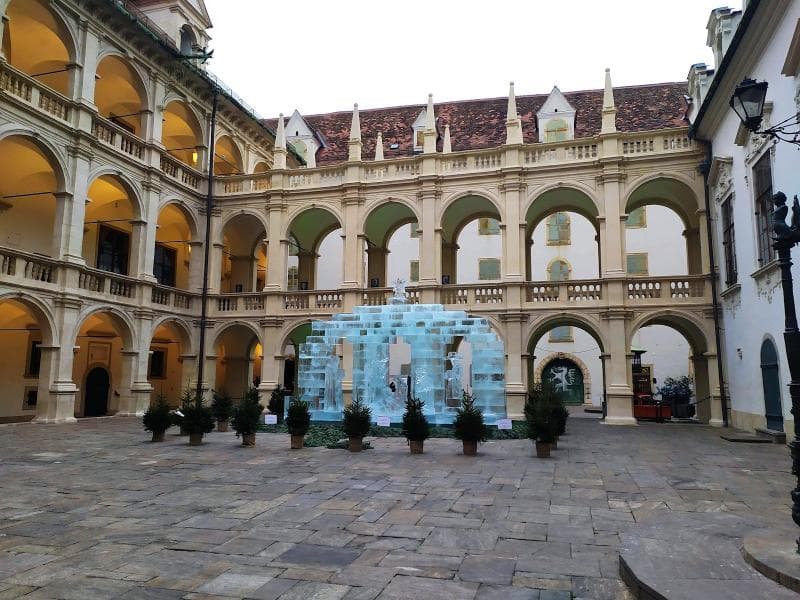
Explore Landhaus Park (Landhaushof) in Graz, Austria, a stunning Italian Renaissance arcaded courtyard and historical seat of Styrian parliament. Discover its history, unique architecture, and cultural events.
Overview
Nestled within the historic heart of Graz, Austria, lies the magnificent Landhaus, home to the captivating Landhaus Park, more accurately known as the Landhaushof or the arcaded courtyard. This architectural marvel, a jewel of the Italian Renaissance, serves as a vibrant public space and the seat of the Styrian provincial parliament. Visitors stepping into its embrace are immediately transported to a bygone era, surrounded by elegant arcades, intricate stonework, and a serene ambiance. It's not just a courtyard; it's a living testament to centuries of history, culture, and artistic expression, offering a unique blend of civic importance and public accessibility in the UNESCO World Heritage city center of Graz.
The Landhaushof is celebrated as one of Graz's top attractions, inviting curious travelers to admire its beauty and soak in its atmosphere. Free and open to the public, it provides an unparalleled opportunity to experience a significant piece of Central European Renaissance architecture up close. Whether you're seeking a moment of quiet reflection, a picturesque backdrop for photographs, or simply a deeper understanding of Graz's rich heritage, the Landhaushof stands as an unmissable destination.
History & Cultural Background
The story of the Landhaus Graz and its spectacular courtyard begins in the 16th century. While an earlier 'office' existed, the transformation into the grand structure we see today commenced in 1557 under the masterful hand of Italian architect Domenico dell'Allio. He was tasked with creating a prestigious building for the Styrian estates, bringing with him the innovative trends of the Northern Italian Renaissance. This endeavor marked the Landhaus as the first Renaissance building in Graz, a pioneering architectural achievement that consciously echoed the grandeur of Venetian palazzos.
Originally, the Styrian estates had convened in various castles and monasteries, but by the late 15th century, a centralized 'Landhaus' in the capital, Graz, became necessary. Dell'Allio, a fortress architect also involved in the Schlossberg reconstruction, ingeniously expanded the complex, creating the main wing on Herrengasse and the iconic three-story arcaded courtyard. This building was not merely an administrative hub; it was a symbol of the estates' power and, for a time, a significant Protestant holding in a largely Catholic region, reflecting the religious and political tensions of the era. The Landhaus, therefore, represents a fascinating intersection of governance, artistry, and societal change within Styria.
What Makes It Special
The Landhaushof's distinctive charm lies in its harmonious blend of architectural brilliance and cultural significance. Its most striking features are the three-story arcades, adorned with elegant arched windows and Tuscan columns, which create a captivating play of light and shadow. The courtyard is further embellished with intricate details, including copper gargoyles dating back to the 16th century and a magnificent bronze fountain, a true masterpiece of Mannerist art. These elements collectively evoke the feeling of a Northern Italian palazzo, creating a unique visual spectacle in the heart of Austria.
Beyond its aesthetic appeal, the Landhaushof is special because it is a vibrant center for public life and cultural events. Throughout the year, its splendid atmosphere provides a dramatic setting for concerts, theatrical performances, and various celebrations. Notably, during the Advent season, the courtyard transforms into a magical wonderland, hosting the famous ice nativity scene ('Eiskrippe'), a beloved local tradition that draws countless visitors. This continuous use as a venue for art and community gatherings ensures that the Landhaushof remains a dynamic and cherished space, constantly weaving new stories into its historical fabric.
Stories, Fun Facts & Local Details
One of the most intriguing historical quirks of the Landhaus is the presence of the 'Rumortafeln', or 'rumbling panels', dating back to 1588. These fascinating plaques, fixed near the Landhaus gateways, serve as a stern reminder of historical decorum. They explicitly prohibit quarreling, shouting, drawing swords or knives, scuffling, and fighting within the premises, urging visitors to behave humbly in words and deeds, lest they face severe punishment. These rules, still visible today, offer a delightful glimpse into the past and the strict societal norms of the time.
Another endearing local detail is the annual ice nativity scene. Each Advent, skilled artisans carve a detailed Christmas nativity from solid blocks of ice, transforming the Landhaushof into a shimmering, ethereal display. This unique tradition captures the festive spirit of Graz and highlights the courtyard's versatility as a cultural venue. Furthermore, the Landhaus was built during a period of religious tension, acting as a Protestant counterpoint to Catholic power structures in Graz. This historical context adds another layer of intrigue to its story, showcasing its role beyond mere administration.
Visitor Perspective
For the curious traveler, a visit to the Landhaushof is an easily accessible and deeply rewarding experience. Located conveniently in Graz's pedestrian zone, it's an ideal starting point for exploring the city's old town, a UNESCO World Heritage site. Access to the courtyard is free and generally open 24/7, allowing for flexible visits at any time of day, whether you wish to admire the architectural lighting in the evening or enjoy the tranquil morning ambiance.
A leisurely stroll through the three-story arcades reveals countless photographic opportunities, from the intricate copper gargoyles to the Mannerist bronze fountain. While the interior administrative rooms are typically restricted, the courtyard itself offers more than enough to captivate for 30-60 minutes, with longer stays encouraged if you wish to attend an event or simply savor the atmosphere. Its central location also makes it easy to combine with other nearby attractions, such as the Styrian Armoury, which is right next door. The Landhaushof truly offers a rich, immersive encounter with Graz's historical and architectural grandeur without requiring extensive planning or entry fees.
Coordinates: 15.4395822, 47.0701418
View on Google Maps💬 How Travelers Describe This Place
Based on community votes
Must See
1.0kPhotogenic
804Interesting
563Beautiful
100Unique
63
Traveler Stories
Discover memorable experiences shared by travelers who have visited this place.
No traveler stories yet.
Be the first traveler to share what made this place memorable.

Tour
By
Spot
Discover amazing places around the world. Your journey starts here.
Explore
© 2026 TourBySpot. All rights reserved.