Kunming Lake
Beijing, China
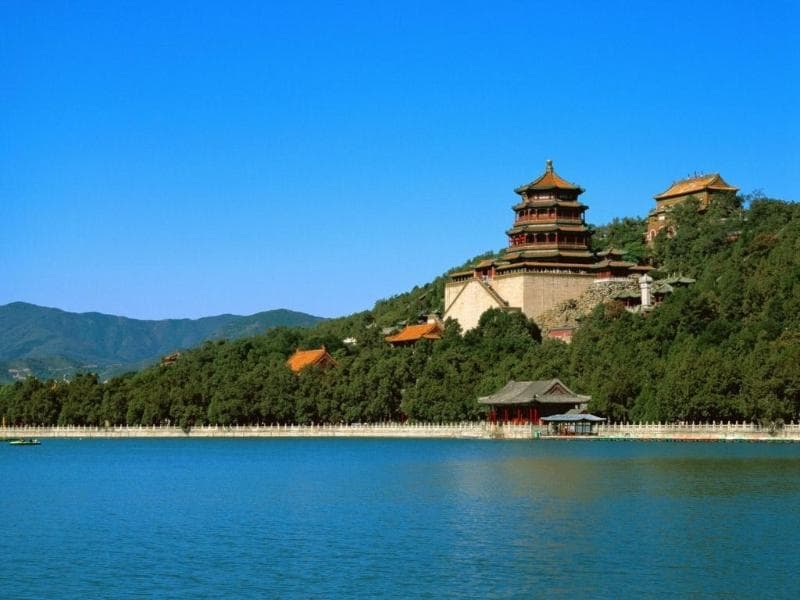
Discover Kunming Lake, the serene heart of the Summer Palace in Beijing, China. Explore its imperial history, stunning design, and unique cultural stories.
Overview
Kunming Lake, nestled within the magnificent Summer Palace in Beijing, China, is far more than just a body of water; it is the breathtaking heart of a UNESCO World Heritage site and a masterpiece of Chinese landscape garden design. Covering approximately three-quarters of the Summer Palace's vast 2.9 square kilometer expanse, this serene artificial lake plays a crucial role in the imperial garden's visual and ecological harmony. With an average depth of about 1.5 meters, its tranquil surface beautifully reflects the surrounding temples, pavilions, and the prominent Longevity Hill, creating a picturesque panorama that has captivated visitors for centuries.
History & Cultural Background
The origins of Kunming Lake trace back over 3,500 years, with its predecessors, Wengshan Pond and Xihu Lake, serving as vital reservoirs for both the city and irrigation. During the Yuan Dynasty, in 1291, the renowned astronomer and engineer Guo Shoujing further developed this area into a significant reservoir for the capital. The transformation into an imperial garden truly began during the Ming Dynasty, when extensive lotus flowers were planted, and the area's scenery, reminiscent of southern China, earned it the informal name 'West Lake,' echoing the famous lake in Hangzhou.
The lake's current grandeur is largely attributed to the Qianlong Emperor of the Qing Dynasty, who commissioned its expansion into an imperial garden between 1750 and 1764. This monumental undertaking involved a workforce of nearly 10,000 laborers to extend the lake's area. Emperor Qianlong named it 'Kunming,' inspired by the Han Dynasty's Emperor Liuche, who created a 'Kunming Pool' for naval battle training. Originally part of a complex known as Qingyi Yuan, or the Garden of Clear Ripples, the Summer Palace and its lake suffered severe damage when Anglo-French allied forces razed it in 1860. It was famously rebuilt from 1886 onwards, largely funded by Empress Dowager Cixi, who reputedly misappropriated funds intended for the Imperial Navy. Though ravaged again in 1900, the palace, renamed Yihe Yuan (Garden of Health and Harmony), was repaired and served as Empress Dowager Cixi's summer retreat and a crucial political and diplomatic venue outside the Forbidden City. Today, it stands as a testament to classical Chinese garden design, having been inscribed as a UNESCO World Heritage Site in 1998.
What Makes It Special
Kunming Lake's special allure lies in its masterful blend of natural landscapes with meticulously crafted artificial features. Its design draws inspiration from the classical gardens of southern China, particularly Hangzhou's West Lake, and incorporates the traditional 'three islands in one pool' principle. These islands, including Nanhu Island, Zhijing Pavilion Island, and Zaojian Hall Island, are strategically placed to enhance the scenic beauty. The lake is dotted with iconic structures like the elegant Seventeen-Arch Bridge, which is the longest bridge in China's imperial gardens, spanning over 150 meters. A truly magical sight occurs around the winter solstice each year when the setting sun aligns to cast a 'golden red light' through its seventeen arches.
The West Causeway, deliberately fashioned to imitate the Su Causeway of West Lake, further enhances the lake's charm, inviting visitors to stroll and admire the intricate reflections of Longevity Hill's temples and pagodas on the shimmering water. The vibrant lotus flowers that bloom across the lake in summer add splashes of color and fragrance, contributing to the harmonious ensemble of outstanding aesthetic value.
Stories, Fun Facts & Local Details
One of the most famous anecdotes associated with Kunming Lake involves Empress Dowager Cixi and the Marble Boat. Legend has it that the funds intended for modernizing the Imperial Navy were diverted by Cixi to rebuild and enhance the Summer Palace, including the creation of this elaborately carved stone boat permanently moored at the lake's edge. This act became a symbol of her extravagance and the political climate of the late Qing Dynasty.
Beyond its grand history, the lake offers numerous delightful details. The surrounding Long Corridor, stretching along the northern shore, features thousands of paintings depicting scenes from Chinese mythology, folktales, and classical novels, providing a vibrant backdrop to the tranquil waters. Visitors often seek out the best viewpoints for photographs, especially during sunset, when the eastern side of Kunming Lake offers spectacular vistas of the Seventeen-Arch Bridge bathed in golden light.
Visitor Perspective
For the curious traveler, Kunming Lake offers an immersive experience into imperial China's leisure and artistic sensibilities. Strolling along its expansive shores provides a tranquil escape, with gentle breezes and picturesque views around every bend. Many choose to enhance their visit by taking to the water; electric and paddle boats are readily available for hire, allowing for a unique perspective of the surrounding architecture and landscapes. The serene atmosphere, combined with the blend of natural beauty and imperial structures, makes it an ideal spot for contemplation and photography. While the Summer Palace can be bustling, particularly on weekends, the sheer size of Kunming Lake often allows for peaceful exploration. The warmer months are particularly appealing, when the lotus flowers are in full bloom and boating is a popular activity, making it a perfect destination for those researching Beijing's historical and cultural gems.
Coordinates: 116.27222, 39.99167
View on Google Maps💬 How Travelers Describe This Place
Based on community votes
Unique
953Must See
695Interesting
658Photogenic
69Beautiful
22
Traveler Stories
Discover memorable experiences shared by travelers who have visited this place.
No traveler stories yet.
Be the first traveler to share what made this place memorable.

Tour
By
Spot
Discover amazing places around the world. Your journey starts here.
Explore
© 2026 TourBySpot. All rights reserved.