Kleinhesseloher See
Munich, Germany
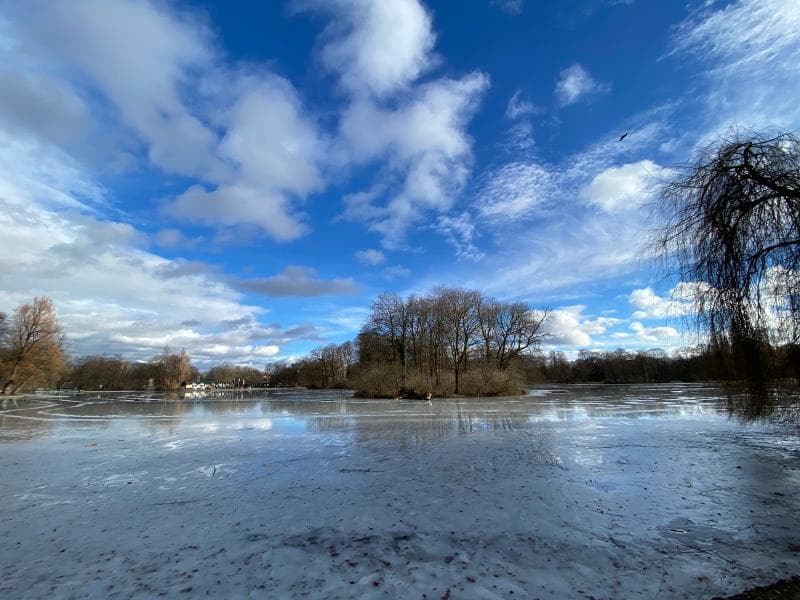
Discover Kleinhesseloher See, a beautiful artificial lake in Munich's English Garden. Enjoy boating, the Seehaus beer garden, and tranquil walks.
Overview
Nestled within the sprawling expanse of Munich's iconic English Garden, the Kleinhesseloher See (Kleinhesseloher Lake) offers a tranquil oasis in the heart of the bustling Bavarian capital. This artificial lake, covering approximately eight hectares, serves as a central feature of the park's southern section, drawing both locals and international visitors seeking relaxation and recreation. Its picturesque setting, surrounded by lush greenery, walking paths, and the charming Seehaus restaurant with its popular beer garden, makes it a quintessential Munich experience.
The Kleinhesseloher See is a hub of activity throughout the year. During warmer months, it's famous for its boat rentals, where visitors can paddle or row across its calm waters, navigating around its three small islands. When winter arrives and temperatures drop sufficiently, the lake transforms into a natural ice rink, inviting skaters and ice hockey players to enjoy its frozen surface. Its role as a recreational focal point underscores the English Garden's overall purpose: to provide a vibrant, accessible green space for public enjoyment.
History & Cultural Background
The creation of Kleinhesseloher See dates back to the early 19th century, specifically starting in 1804, as part of the ongoing development of the English Garden. The larger English Garden itself was commissioned in 1789 by Elector Karl Theodor, aiming to provide a public park for the people of Munich. Unlike the formal baroque gardens of the time, the English Garden was designed in the natural style of an English landscape park, a concept popular in England from the mid-18th century.
The lake's initial design and subsequent expansion were overseen by key figures in the park's landscaping. Reinhard Freiherr von Werneck initiated its creation around 1803, with Friedrich Ludwig von Sckell, the acclaimed garden artist, significantly enlarging it between 1807 and 1812 to its current size. This deliberate design integrated the lake into the park's naturalistic aesthetic, making it appear as if it had 'simply grown on its own' rather than being an artificial construct. Its strategic placement near Kleinhesselohe, an area that housed a nascent beer shop for park workers, foreshadowed the development of the popular Seehaus beer garden we know today.
What Makes It Special
What truly distinguishes Kleinhesseloher See is its blend of cultivated nature and vibrant social life. As an artificial lake, it's a testament to the ambitious landscape architecture of its era, featuring three small islands—Königsinsel, Kurfürsteninsel, and Regenteninsel—that are primarily inhabited by ducks and geese, adding to its idyllic charm. The Seehaus, a renowned restaurant and beer garden directly on its shores, offers a slightly more upscale atmosphere than other park establishments, providing stunning views across the water and a perfect spot for sunset viewing.
Beyond its scenic beauty, the lake is a dynamic space for various activities. The ability to rent paddle and rowing boats allows for a unique perspective of the English Garden from the water. In winter, the transformation into an ice-skating haven is a rare urban delight. The path circling the lake is a popular route for leisurely strolls, offering continuous scenic vistas and benches for quiet contemplation. It embodies Munich's appreciation for accessible green spaces, providing a natural escape without leaving the city.
Stories, Fun Facts & Local Details
The Kleinhesseloher See is not just a body of water; it's interwoven with local narratives and traditions. One charming detail is the presence of numerous waterbirds, especially in spring when ducklings and cygnets can be spotted along its quieter shores. Locals often come to feed the ducks and geese, a simple pleasure that connects generations. Although swimming is not permitted, boating remains a beloved classic activity.
Near the lake, visitors can find the Sckell Monument, a quiet place of remembrance dedicated to Friedrich Ludwig von Sckell, the visionary landscape artist who played a crucial role in shaping the English Garden into one of Europe's most beautiful landscape parks. This monument serves as a subtle reminder of the thoughtful design behind the park's seemingly natural beauty. The lake's proximity to the Seehaus beer garden also highlights a significant aspect of Munich's culture: the enjoyment of Bavarian beer garden traditions in a natural setting.
Visitor Perspective
For visitors, Kleinhesseloher See represents an essential stop within the English Garden, offering a multitude of experiences. Whether one seeks a romantic boat ride with a loved one, a family outing with children delighting in the waterbirds, or a peaceful moment of reflection by the water's edge, the lake caters to diverse interests. The inviting Seehaus beer garden provides a perfect opportunity to savor Bavarian cuisine and a refreshing beer while enjoying panoramic lake views. The path around the lake is stroller-friendly, making it accessible for families.
Its easy accessibility, either by a short walk from subway stations like Münchner Freiheit or by bus, adds to its appeal. It's a place where the urban environment gracefully gives way to serene natural beauty, allowing visitors to disconnect from city life and immerse themselves in a picturesque landscape. The opportunity to witness the seasonal transformation, from summer boating to winter ice skating, ensures that Kleinhesseloher See remains a captivating destination year-round, embodying the spirit of outdoor recreation in Munich.
Coordinates: 11.575278, 48.119722
View on Google Maps💬 How Travelers Describe This Place
Based on community votes
Photogenic
836Must See
287Interesting
255Beautiful
231Unique
86
Traveler Stories
Discover memorable experiences shared by travelers who have visited this place.
No traveler stories yet.
Be the first traveler to share what made this place memorable.

Tour
By
Spot
Discover amazing places around the world. Your journey starts here.
Explore
© 2026 TourBySpot. All rights reserved.