Kiswah
Mecca, Saudi Arabia
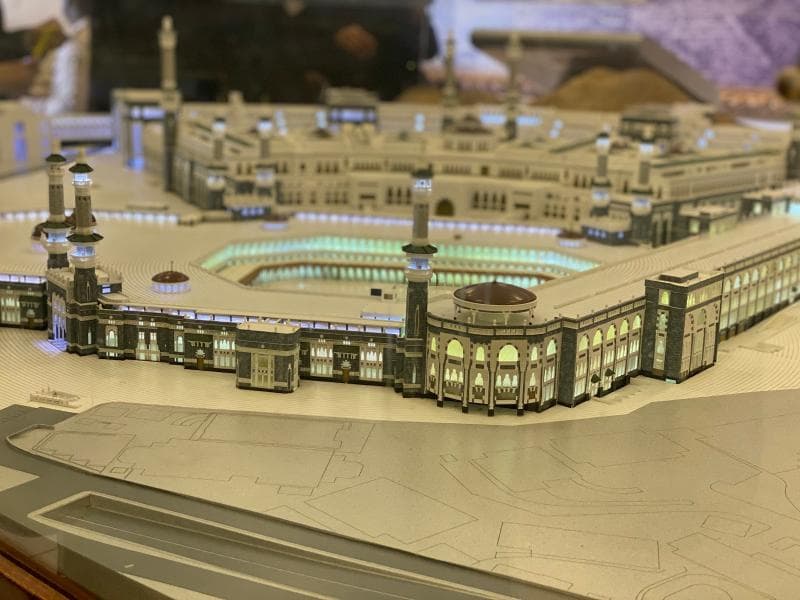
Discover the Kiswah, the revered black silk covering of the Holy Kaaba in Masjid al-Haram, Mecca, Saudi Arabia. Learn its rich history and intricate craftsmanship.
Overview
Within the majestic confines of Masjid al-Haram in Mecca, Saudi Arabia, lies a profound symbol of Islamic faith and artistry: the Kiswah. The Kiswah is the intricately crafted cloth that drapes the Holy Kaaba, the cuboid structure at the center of the Grand Mosque. This sacred covering is a visual representation of reverence and is renewed annually, marking a significant event in the Islamic calendar.
Far more than just a decorative textile, the Kiswah embodies centuries of tradition, devotion, and masterful craftsmanship. It is the most sacred object in Islamic art, ritual, and worship, serving as a unifying visual for Muslims worldwide who turn towards the Kaaba during their daily prayers.
History & Cultural Background
The tradition of covering the Kaaba predates Islam, with some scholars suggesting that Prophet Ismail may have created the first partial covering. However, many sources credit Tubba Abu Karab As'ad, a Himyarite king from Yemen, as the first to fully drape the Kaaba. In the pre-Islamic era, covering the Kaaba was seen as a religious duty, and various individuals contributed fabrics of different types.
With the advent of Islam, the Prophet Muhammad (peace be upon him) continued this esteemed practice after the conquest of Mecca in 630 CE. Early Islamic leaders, including the Caliphs Abu Bakr, Umar, and Uthman, also upheld the tradition, using cloths like white linen from Egypt. Historically, the color of the Kiswah evolved; it was once draped in red and white stripes, yellow, and even green. However, since 1224 CE, the Kiswah has predominantly been black, a color chosen by the Abbasid Caliph Al-Nasir, and has remained so to this day.
For centuries, the manufacturing of the Kiswah was often undertaken in Egypt. A ceremonial procession known as the 'Mahmal' would transport the Kiswah from Cairo to Mecca annually, a tradition dating back to the 12th century. However, in 1927, King Abdulaziz Al-Saud ordered the establishment of a dedicated factory in Mecca, ensuring that the sacred covering would be produced within Saudi Arabia itself.
What Makes It Special
The Kiswah is a masterpiece of textile art, crafted from pure, high-quality black silk. Each year's covering requires a substantial amount of silk, weighing approximately 670 kilograms. What truly distinguishes the Kiswah are its elaborate embroideries, which feature verses from the Quran and Islamic ornamental patterns. These inscriptions are meticulously stitched using gold and silver threads, adding significant weight to the fabric—around 120 kilograms of 24-carat gold thread and 100-120 kilograms of silver thread are used.
The Kiswah is not a single piece of cloth but comprises 54 separate pieces sewn together to fit the Kaaba, measuring about 14 meters high. Two-thirds of the way up, an embroidered band called the 'Hizam' wraps around the Kaaba, measuring 47 meters in length and 95 centimeters in width, also adorned with Quranic verses. The production takes place at the King Abdulaziz Complex for the Holy Kaaba Kiswa in Mecca, where more than 200 skilled artisans and technicians meticulously work across various departments, including dyeing, weaving, and embroidery, blending tradition with modern technology.
Stories, Fun Facts & Local Details
The annual changing of the Kiswah is a deeply symbolic and highly anticipated event, typically occurring on the 9th day of Dhul Hijjah, when Hajj pilgrims depart for the plains of Arafat. This tradition symbolizes renewal and cleansing, aligning with the ideals of unity and repentance central to Hajj.
Once removed, the old Kiswah is not discarded. Instead, it is cut into smaller pieces and often gifted to dignitaries, museums, and organizations worldwide. These fragments are cherished as sacred relics, allowing a broader appreciation for this unique artistry and its spiritual significance. Parts of the Kiswah can be found in museum collections globally, including an impressive curtain that covered the Kaaba's door, gifted to the United Nations.
The black color of the Kiswah is not just for aesthetic appeal; it also symbolizes humility and purity. The detailed Thuluth calligraphy on the Kiswah is considered among the highest forms of Islamic art, showcasing the dedication and skill involved in its creation.
Visitor Perspective
While the Kiswah itself is observed as part of the Kaaba within Masjid al-Haram, visitors to Mecca have a unique opportunity to witness the meticulous process behind its creation. The King Abdulaziz Complex for the Holy Kaaba Kiswa, located in the Umm Al-Joud district of Mecca, welcomes visitors. At this state-of-the-art facility, guests can observe skilled artisans engaged in the various stages of weaving, dyeing, and embroidering the sacred cloth. This immersive experience offers profound insight into the heritage, artistry, and spiritual devotion invested in the Kiswah, enriching any pilgrimage or visit to the Holy City.
Coordinates: 39.8262, 21.4225
View on Google Maps💬 How Travelers Describe This Place
Based on community votes
Interesting
443Must See
414Unique
310Beautiful
277Photogenic
233
Traveler Stories
Discover memorable experiences shared by travelers who have visited this place.
No traveler stories yet.
Be the first traveler to share what made this place memorable.

Tour
By
Spot
Discover amazing places around the world. Your journey starts here.
Explore
© 2026 TourBySpot. All rights reserved.