Kiseleff Boulevard Views
Bucharest, Romania
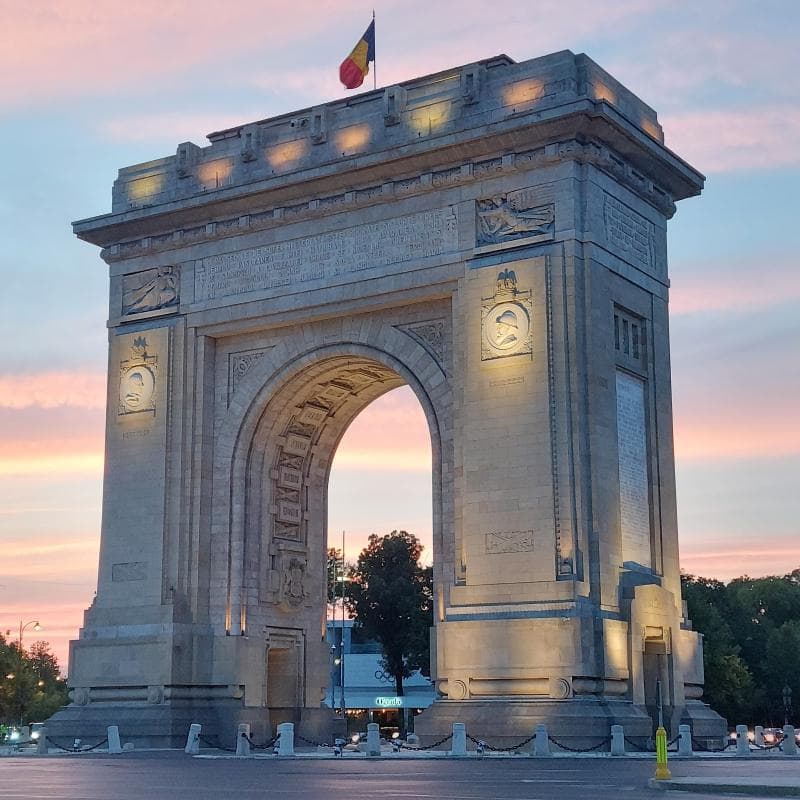
Explore Kiseleff Boulevard Views in Bucharest, Romania, featuring the historic Arcul de Triumf, elegant architecture, and tranquil Kiseleff Park.
Overview
Stepping onto Kiseleff Boulevard, especially in the vicinity of the majestic Arcul de Triumf, offers a captivating journey through Bucharest's past and present. This iconic thoroughfare, a verdant artery in the heart of Romania's capital, provides what are truly the 'Kiseleff Boulevard Views' – a harmonious blend of historical grandeur, architectural splendor, and tranquil green spaces. It is a place where every glance reveals a layer of history, from solemn monuments commemorating national triumphs to elegant villas whispering tales of bygone eras.
As a key northern axis, Kiseleff Boulevard stretches gracefully, inviting curious travelers to wander and absorb its unique atmosphere. Its broad, tree-lined expanses lead directly to the monumental Arcul de Triumf, which stands as a powerful symbol of Romanian resilience and national unity. Here, the views encompass not only the impressive arch itself but also the surrounding Kiseleff Park and the diverse architectural tapestry that defines this elegant district.
History & Cultural Background
The story of Kiseleff Boulevard begins in the mid-19th century, specifically around 1832, when it was developed under the direction of Russian Field Marshal Ivan Kiseleff, after whom it is named. He played a significant role in the administrative reorganization and urban development of the Romanian Principalities, and this grand road was a testament to his vision. Originally carved out of a sprawling forest, the boulevard quickly transformed into an elegant promenade adorned with gardens of great beauty.
Central to these views is the Arcul de Triumf, a monument with a fascinating evolutionary history. The first triumphal arch on this site was a temporary wooden structure, hastily erected in 1878 to celebrate Romania's newly gained independence. Another provisional arch, also wooden, followed in 1922, commemorating the Great Union of 1918 and Romania's victory in World War I. The permanent, stately stone arch we see today was designed by architect Petre Antonescu and inaugurated on December 1, 1936. Its creation was a profound statement, solidifying Romania's national identity and honoring the sacrifices of its soldiers.
Remarkably, unlike many areas of Bucharest that underwent extensive demolitions during the communist era, Kiseleff Boulevard largely retained its pre-World War II charm and residences, preserving its historical integrity and the distinct architectural styles that line its path.
What Makes It Special
What sets Kiseleff Boulevard Views apart is its unique convergence of monumental history, refined architecture, and expansive green spaces. The Arcul de Triumf, standing proudly at 27 meters tall, is not merely a structure but a narrative in stone, adorned with intricate bas-reliefs by prominent Romanian sculptors like Ion Jalea and Dimitrie Paciurea, depicting pivotal moments in Romanian history and portraits of King Ferdinand and Queen Marie. Its Deva granite lends it a distinctive warm, slightly pinkish hue, differing from its Parisian counterpart.
Complementing the arch is Kiseleff Park, a historic urban oasis established in 1832. This tranquil space features winding paths, lush greenery, and various monuments, offering a peaceful retreat from the city's hustle. The boulevard itself is a continuous display of architectural splendor, boasting well-preserved historic villas and mansions that showcase a rich tapestry of styles including French Beaux-Arts, Neo-Romanian, and Art Nouveau. These elegant buildings, with their intricate facades and ornate details, stand as silent witnesses to Bucharest's aristocratic past.
Stories, Fun Facts & Local Details
- It's often said that Bucharest earned the moniker 'Little Paris,' and the Arcul de Triumf, inspired by the iconic French monument, certainly contributes to this romantic image.
- The recurring theme of rebuilding the arch speaks to Romania's persistent spirit and its desire to create a lasting tribute to its national heroes.
- Along the boulevard and within Kiseleff Park, you'll encounter a fascinating collection of statues, including busts of Romanian cultural figures and, interestingly, a statue of the Persian poet and astronomer Omar Khayyam, reflecting unexpected cultural dialogues.
- The Casa Doina Restaurant, housed in a historic building designed by the renowned Romanian architect Ion Mincu, offers a glimpse into traditional Romanian architecture with Moorish influences, paired with authentic local cuisine.
- Each year, on December 1st, Romania's National Day, the area around the Arcul de Triumf comes alive with vibrant military parades, making it a focal point for national celebrations and a truly spectacular sight.
- During warmer months, Kiseleff Park provides opportunities for free bicycle rentals, allowing visitors to explore its shaded alleys and open lawns at a leisurely pace.
Visitor Perspective
Experiencing Kiseleff Boulevard Views is like stepping into a living postcard. For the curious traveler, a leisurely stroll or a cycle ride along the boulevard offers a profound sense of connection to Bucharest's soul. The wide, pedestrian-friendly pathways invite exploration, leading you past architectural masterpieces, tranquil park settings, and cultural institutions.
Standing beneath the massive Arcul de Triumf, one can feel the weight of history and the pride of a nation. While the arch is always impressive from the outside, on select national holidays and during special open-house events, visitors might have the rare opportunity to climb its internal staircase. From the top platform, the panoramic views across northern Bucharest are simply breathtaking, offering a unique perspective of the city's green spaces and urban sprawl.
Whether you're admiring the seasonal transformations of the tree-lined avenues, enjoying a quiet moment in Kiseleff Park, or marveling at the grandeur of the Arch, the Kiseleff Boulevard Views offer an enriching and memorable encounter with Bucharest's elegant past and vibrant present. It's a place where every corner turned, and every vista absorbed, deepens your appreciation for this remarkable European capital.
Coordinates: 26.0780722, 44.4672194
View on Google Maps💬 How Travelers Describe This Place
Based on community votes
Photogenic
995Beautiful
989Must See
613Interesting
603Unique
581
Traveler Stories
Discover memorable experiences shared by travelers who have visited this place.
No traveler stories yet.
Be the first traveler to share what made this place memorable.

Tour
By
Spot
Discover amazing places around the world. Your journey starts here.
Explore
© 2026 TourBySpot. All rights reserved.