Kinh Thien Palace Ruins
Hanoi, Vietnam
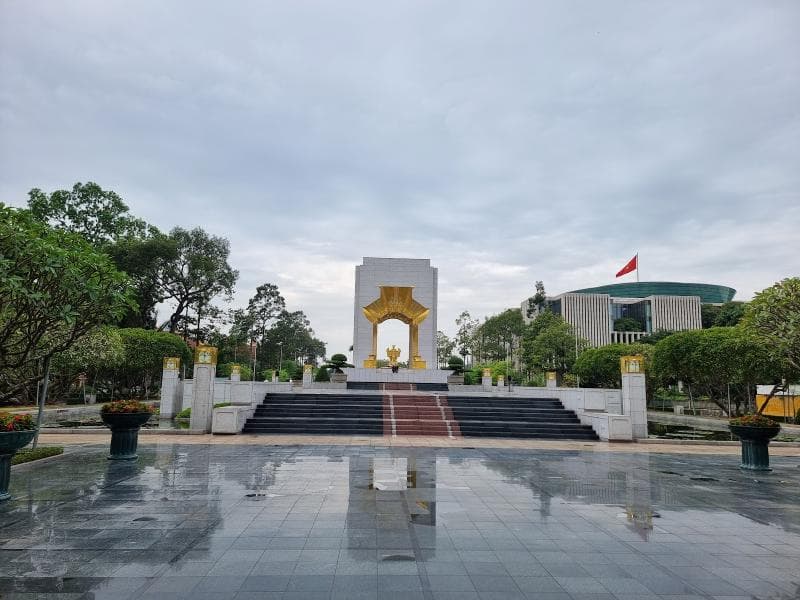
Explore the ancient Kinh Thien Palace Ruins in Hanoi, Vietnam, a historic heart of the Thang Long Imperial Citadel. Discover imperial history and magnificent dragon steps.
Overview
Deep within the heart of Hanoi, Vietnam, nestled within the expansive Thang Long Imperial Citadel, lie the evocative Kinh Thien Palace Ruins. This site, though largely reduced to its foundations and a magnificent stone staircase, stands as a profound testament to Vietnam's imperial past and its enduring cultural heritage. As the historical and spiritual core of the Citadel, Kinh Thien Palace once served as the central point from which Vietnamese emperors governed their realm for centuries. Today, it invites curious travelers to step back in time and imagine the grandeur that once filled these grounds, offering a unique window into the country's rich dynastic history.
The Thang Long Imperial Citadel, a UNESCO World Heritage Site, encompasses a wealth of archaeological finds and standing monuments, with Kinh Thien Palace holding a central and geomantically significant position. While the original wooden structure of the palace itself no longer stands, the surviving stone elements, particularly the intricately carved dragon steps, speak volumes of the architectural and artistic sophistication of past Vietnamese dynasties.
History & Cultural Background
The story of Kinh Thien Palace is inextricably linked to the Thang Long Imperial Citadel, a site with a continuous history as a seat of power dating back to the 7th century. The Citadel itself was established in 1010 by Emperor Ly Thai To, who, inspired by a vision of a rising dragon, moved the capital to this strategically and geomantically important location. Over succeeding centuries, various dynasties, including the Ly, Tran, and Le, expanded and fortified the imperial complex, continuously building upon earlier structures.
Kinh Thien Palace, specifically, was constructed in 1428 during the reign of King Le Thai To and was brought to completion under King Le Thanh Tong. It was erected on the foundations of earlier palaces from the Ly and Tran dynasties, such as the Can Nguyen and Thien An Palaces, underscoring the site's long-standing imperial significance. This grand edifice served as the paramount venue for the most solemn royal rituals, where emperors received foreign dignitaries, held court, and made crucial decisions concerning state affairs.
Tragically, the original palace structure met its demise in 1886, largely destroyed by French colonial authorities to make way for an artillery headquarters. Despite this destruction, archaeological excavations have unearthed multiple cultural layers beneath the site, revealing a continuous historical development from the Ly and Tran periods to the later Le dynasties, and even earlier layers from the Dai La period (7th to 9th centuries).
What Makes It Special
What truly sets the Kinh Thien Palace Ruins apart is not the full reconstruction of a bygone era, but rather the powerful remnants that allow visitors to connect directly with a rich imperial past. The most striking and well-preserved features are the stone foundations and, most notably, the majestic staircase adorned with intricate dragon carvings.
These four stone dragons, carved in 1467 during the Le Dynasty, are considered masterpieces of Vietnamese sculptural art. Each dragon, approximately 5.3 meters long, contributes to dividing the staircase into three distinct paths: a central, wider path reserved exclusively for the emperor, flanked by two narrower paths for his courtiers. This architectural detail vividly illustrates the rigid social hierarchy and imperial etiquette of the time. The details on the handrails, featuring lotus flowers, waves, swords, fire, and clouds, further highlight the artistic sophistication of the Le Dynasty.
The site's special significance also stems from its role as the geomantic heart of the Forbidden City, believed to be the most important location within the imperial complex. Today, Kinh Thien Palace is considered a 'double relic,' representing not only its ancient imperial past but also its more recent history as the headquarters of the General Commander of the Vietnam People's Army after 1954.
Stories, Fun Facts & Local Details
The very name 'Thang Long,' meaning 'Rising Dragon,' originated from a legend involving King Ly Thai To seeing a golden dragon ascend into the sky, a symbolic moment that marked the founding of the city. This connection to dragons, powerful symbols of imperial authority and prosperity, is beautifully echoed in the stone carvings of Kinh Thien Palace.
Imagine the spectacle of court life centuries ago: emperors ascending the central path of the dragon staircase, surrounded by officials, to conduct grand ceremonies or receive emissaries from distant lands. The site is deeply sacred, with historians believing it once housed the imperial throne, the very seat of power for the nation.
For a truly immersive experience, the Imperial Citadel now offers 'Decoding Thang Long' night tours. These tours bring history to life with mesmerizing lights, cultural performances, and reenactments of imperial court ceremonies. Visitors can even rent traditional Vietnamese attire, such as 'ao dai' or 'Viet phuc,' to capture memorable photos against the historic backdrop, adding a personal touch to their historical journey.
Visitor Perspective
Visiting the Kinh Thien Palace Ruins offers a contemplative and educational experience. While the grand palace structure is no longer standing, the surviving elements powerfully evoke a sense of its former majesty. Walking along the ancient foundations and ascending the magnificent dragon steps, one can easily envision the emperors and their entourages, feeling the weight of history underfoot.
The site forms an integral part of the larger Thang Long Imperial Citadel complex, allowing for a comprehensive exploration of Vietnam's dynastic layers. It is a place for reflection, for appreciating the resilience of Vietnamese culture, and for understanding the profound historical shifts that have shaped the nation. The ongoing archaeological work also highlights the continuous effort to uncover and preserve these precious insights into the past. It's a journey into the architectural and cultural heart of ancient Vietnam, set against the vibrant backdrop of modern Hanoi. Visitors should expect to purchase an entry ticket to the Thang Long Imperial Citadel to access the Kinh Thien Palace Ruins.
Coordinates: 105.8411111111111, 21.037777777777777
View on Google Maps💬 How Travelers Describe This Place
Based on community votes
Beautiful
981Unique
617Interesting
357Photogenic
147Must See
28
Traveler Stories
Discover memorable experiences shared by travelers who have visited this place.
No traveler stories yet.
Be the first traveler to share what made this place memorable.

Tour
By
Spot
Discover amazing places around the world. Your journey starts here.
Explore
© 2026 TourBySpot. All rights reserved.