Khreshchatyk
Kiev, Ukraine
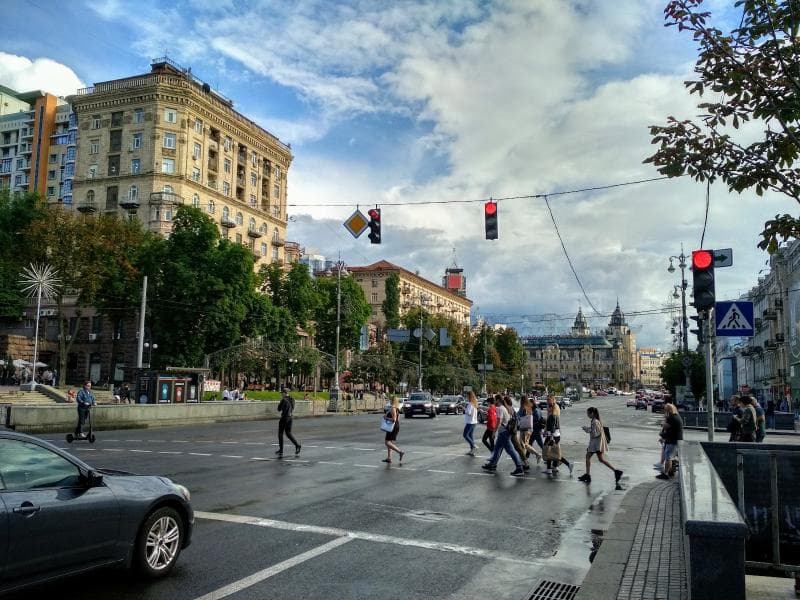
Explore Khreshchatyk, Kyiv, Ukraine's iconic main street. Discover its rich history, unique Stalinist architecture, and vibrant weekend pedestrian life.
Overview
Khreshchatyk is not merely a street; it is the vibrant main artery of Kyiv, Ukraine, pulsating with the city's rich history, cultural life, and administrative significance. Stretching approximately 1.2 to 1.5 kilometers, this iconic boulevard elegantly connects European Square in the northeast, traverses the monumental Maidan Nezalezhnosti (Independence Square), and culminates at Bessarabska Square, home to the bustling Besarabsky Market. Beyond its practical role as a thoroughfare, Khreshchatyk serves as Kyiv's commercial, cultural, and administrative heart, hosting numerous government offices, major department stores, and cultural institutions. On weekends and public holidays, the street transforms into a lively pedestrian zone, buzzing with street performers, artists, and families, offering a unique opportunity to experience the city's dynamic spirit up close.
History & Cultural Background
The story of Khreshchatyk begins not as a grand avenue, but as a forested valley carved by a small stream, known historically as Khreshchaty Yar. This area was once a hunting ground for Kyivan Rus' princes, where nets were hung to catch wild animals. The name 'Khreshchatyk' is believed to derive from the Slavic word 'krest' or 'khrest', meaning 'cross', possibly referring to the ravines that crisscrossed the valley.
Development of the street began in the 1830s and 1840s, evolving from early wooden structures into a planned principal street for Kyiv. By the late 19th century, Khreshchatyk was adorned with multi-story stone buildings housing banks, shops, hotels, and theaters. It was home to Kyiv's first theater, built in 1806, and later, the city's first skyscraper, the Ginsburg House, erected in 1912. The street also saw the installation of the second electric tram in Europe (and the first in the Russian Empire) in 1892, connecting it to the Podil district.
A pivotal, yet tragic, chapter in Khreshchatyk's history unfolded during World War II. In 1941, as the Soviet army retreated from Kyiv, they deliberately mined and destroyed nearly every building on the street using radio-controlled explosives, an unprecedented tactic at the time. This act left the city center in ruins, an act of 'scorched earth' policy. Following the war, a monumental rebuilding effort took place from the late 1940s to the 1960s. The street was widened considerably, reaching 75 to 100 meters, and reconstructed in the imposing Stalinist Neoclassical style, often referred to as 'Stalin's Empire'. This reconstruction gave Khreshchatyk its distinctive, grand architectural ensemble and saw the planting of its famous chestnut trees.
In post-independence Ukraine, Khreshchatyk continued its role as a focal point for national identity. The first ceremonial raising of the Ukrainian national flag took place here at the Kyiv City Council building in 1990. It has also been the center of significant public movements, including the Orange Revolution in 2004 and the Euromaidan protests in 2013-2014, solidifying its place as a symbol of Ukrainian freedom and unity.
What Makes It Special
What truly sets Khreshchatyk apart is its unique architectural character and its multifaceted role in the life of Kyiv. Unlike much of the 'totalitarian architecture' seen elsewhere, Khreshchatyk's post-war Stalinist Neoclassical buildings uniquely integrate elements of Ukrainian folk architecture and Ukrainian Baroque. This blend is evident in decorative motifs and facades, creating an aesthetic that is both grand and distinctly national.
Beyond its visual appeal, Khreshchatyk is the undisputed hub of the city. It houses crucial administrative buildings like the Kyiv City Council and the Central Post Office, as well as significant cultural and commercial centers. These include the 'Ukrainian House,' a large international exhibition and convention center, and the TsUM department store, alongside numerous shops and cafes. The street's most cherished feature for many locals and visitors is its weekend transformation. When traffic is diverted, Khreshchatyk becomes a vibrant pedestrian zone, bustling with street musicians, artists, and open-air markets, fostering a festive and communal atmosphere. This tradition underscores its role as a living public space, constantly evolving yet deeply rooted in the city's pulse.
Stories, Fun Facts & Local Details
- Europe's Unique Main Street: Khreshchatyk holds the distinction of being one of Europe's shortest capital city main streets, measuring only about 1.2 to 1.3 kilometers. Yet, it is also notably wide, ranging from 75 to 100 meters, a result of its expansive post-war reconstruction.
- Floods and Progress: In its early days, before proper infrastructure, the valley through which Khreshchatyk runs was prone to severe flooding from its natural stream. Residents reportedly kept small wooden bridges on wheels to cross the street during these times. This problem was eventually solved with the installation of underground drains and street paving.
- A Commercial Landmark: At one point, Khreshchatyk was recognized as one of Europe's most expensive streets for renting commercial space, highlighting its importance as a premier shopping destination.
- The City's 'Public Room': Khreshchatyk has long served as a vital 'public room' for Kyivans, a place where celebrations, parades, and significant public gatherings and protests converge. This role reflects its central place in the city's collective consciousness.
- Symbolic Chestnut Trees: The street is famously lined with beautiful chestnut trees, which have become an unofficial symbol of Kyiv itself, especially vibrant when in bloom during spring.
Visitor Perspective
For any traveler to Kyiv, a visit to Khreshchatyk is an essential experience, offering a direct encounter with the city's spirit. Starting your exploration from European Square, you can stroll towards Bessarabska Square, absorbing the grand scale of the post-war architecture. Make sure to linger at Maidan Nezalezhnosti, a square steeped in modern Ukrainian history and a hub of activity. If your visit aligns with a weekend, you'll be treated to the street's vibrant pedestrian atmosphere, filled with street performers, impromptu concerts, and various stalls. It's the perfect time to observe local life, enjoy a coffee at one of the many cafes, or simply people-watch. Don't miss the chance to explore the historic Besarabsky Market at the southwestern end, a covered market offering a fascinating glimpse into local produce and life. Khreshchatyk's central location also makes it an ideal starting point for exploring other Kyiv attractions, easily accessible by foot or metro from its various stations. It's a place where every step tells a story, blending historical grandeur with contemporary energy.
Coordinates: 30.52194, 50.44722
View on Google Maps💬 How Travelers Describe This Place
Based on community votes
Beautiful
961Photogenic
897Unique
695Interesting
605Must See
336
Traveler Stories
Discover memorable experiences shared by travelers who have visited this place.
No traveler stories yet.
Be the first traveler to share what made this place memorable.
Things to see at Khreshchatyk



Tour
By
Spot
Discover amazing places around the world. Your journey starts here.
Explore
© 2026 TourBySpot. All rights reserved.