Khlong Saen Saep Viewpoint
Bangkok, Thailand
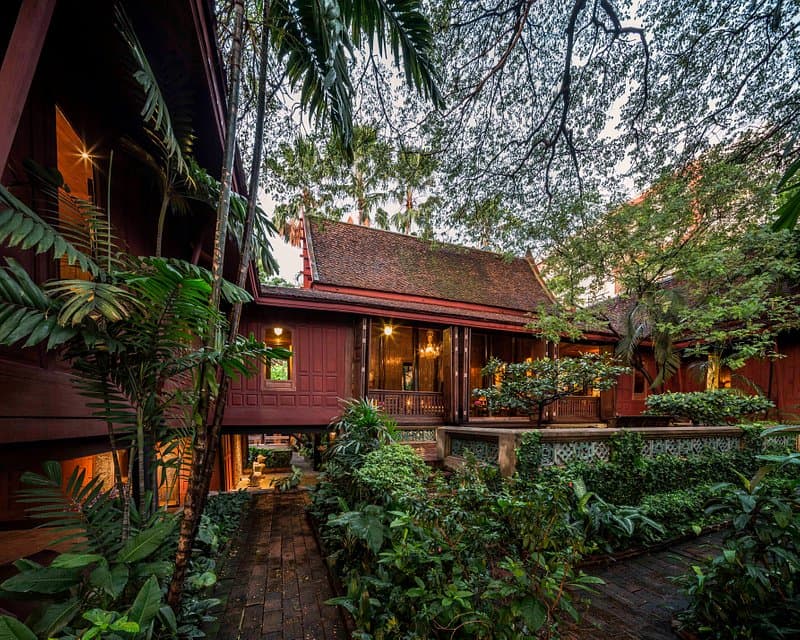
Explore the Jim Thompson House in Bangkok, Thailand, and its serene Khlong Saen Saep Viewpoint, offering unique insights into Thai culture and history.
Overview
Tucked away in the vibrant heart of Bangkok, the Jim Thompson House stands as a remarkable testament to traditional Thai architecture and the legacy of its enigmatic American founder. More than just a museum, it is a serene oasis, beautifully preserved and situated directly alongside the historic Khlong Saen Saep canal. This waterway provides a unique backdrop to the sprawling compound, which comprises six traditional Thai teakwood houses meticulously reassembled by Jim Thompson himself. Visitors don't merely observe artifacts; they step into a living space that once buzzed with activity, surrounded by lush tropical gardens and the gentle ebb and flow of the canal life.
The view from the Jim Thompson House, extending over the Khlong Saen Saep, is an integral part of its charm. It offers a glimpse into a Bangkok that existed before the city's modern skyscrapers, where canals served as vital arteries for transport and commerce. This particular vantage point allows for a contemplative experience, contrasting the tranquil beauty of the traditional Thai home and its garden with the bustling energy that still animates the canal today. It's a place where history, art, and nature converge, inviting reflection on Jim Thompson's vision and his profound connection to Thailand.
History & Cultural Background
James H.W. Thompson, an American architect and former OSS officer, first arrived in Thailand during World War II. Enchanted by the country, he chose to make Bangkok his home and played a pivotal role in revitalizing the Thai silk industry, transforming it into a global phenomenon in the mid-20th century.
In 1959, Thompson embarked on his architectural masterpiece: constructing his residence by combining six traditional Thai houses, some dating back to the 19th century, which he acquired from various parts of Thailand, including Ayutthaya and the Ban Krua community.
His chosen location, overlooking Khlong Saen Saep, was no accident. Crucially, directly across the canal lay the Ban Krua village, home to the Cham Muslim silk weavers who were instrumental in Thompson's success. This proximity fostered a deep connection between Thompson's home and the source of his business, making the canal not just a scenic element but a historical and cultural bridge.
The Khlong Saen Saep itself boasts a rich history. Constructed in the early 19th century, it was designed to serve as a strategic waterway and a means of transportation, connecting different parts of Bangkok and beyond. Even today, the canal is alive with long-tail boats ferrying commuters, offering a direct link to the city's past and present.
What Makes It Special
The Jim Thompson House is exceptional in its seamless integration of traditional Thai architecture with its natural surroundings, particularly its position along Khlong Saen Saep. Unlike many urban residences, Thompson's home was designed to embrace the waterway. The living room, notably, features an open-sided wall that directly overlooks the canal, blurring the lines between indoor comfort and outdoor life.
The houses are raised on stilts, a classic Thai architectural feature, which historically protected against floods and provided ventilation, but here also elevates the perspective over the canal and the lush gardens.
This thoughtful design allows the sounds and sights of the Khlong to become part of the experience, offering a tranquil contrast to the city's bustle just a short distance away. The garden, often described as a 'jungle' by Thompson, further enhances this feeling of a secluded sanctuary.
Stories, Fun Facts & Local Details
One of the most captivating aspects of the Jim Thompson House, beyond its architectural beauty and art collection, is the enduring mystery surrounding Jim Thompson's disappearance. In March 1967, while vacationing in Malaysia's Cameron Highlands, he vanished without a trace, a puzzle that remains unsolved to this day. This adds an almost mythical aura to the house and its story, making a visit even more intriguing.
The Khlong Saen Saep canal itself provides a fascinating 'fun fact' for visitors. It's not just a scenic backdrop but a functioning public transportation route. Visitors can arrive at the Jim Thompson House by taking the Khlong Saen Saep Express Boat, disembarking at the Hua Chang pier. This offers an authentic and often exhilarating local experience, providing a unique perspective on Bangkok's waterways.
Thompson's deep admiration for Thai craftsmanship extended beyond silk. He collected a vast array of Southeast Asian art, including Buddhist statuary, Burmese carvings, and Chinese porcelain, all displayed within his home as if still lived in, offering a personal touch to the museum experience.
Visitor Perspective
For the curious traveler, visiting the Jim Thompson House offers a truly immersive cultural experience. As you wander through the elevated teakwood structures and their connecting walkways, a sense of stepping back in time prevails. The proximity to Khlong Saen Saep means that throughout your tour, you might catch glimpses of life on the canal – the rhythmic chug of a long-tail boat, the calls of vendors, or the reflections of the sky on the water.
This connection to the waterway provides a profound understanding of how integral canals, or 'khlongs', were to Bangkok's traditional way of life. It’s an authentic sensory journey where the gentle breeze from the canal mingles with the scent of tropical flora, and the quiet atmosphere within the compound creates a perfect escape from the urban energy just outside its walls. Observing the Khlong Saen Saep from this historic vantage point allows visitors to appreciate not only the architectural ingenuity of the house but also the enduring charm of Bangkok's watery past.
Coordinates: 100.5282095, 13.7493205
View on Google Maps💬 How Travelers Describe This Place
Based on community votes
Must See
852Photogenic
665Interesting
645Unique
244Beautiful
80
Traveler Stories
Discover memorable experiences shared by travelers who have visited this place.
No traveler stories yet.
Be the first traveler to share what made this place memorable.

Tour
By
Spot
Discover amazing places around the world. Your journey starts here.
Explore
© 2026 TourBySpot. All rights reserved.