Kesik Minare
Antalya, Turkey
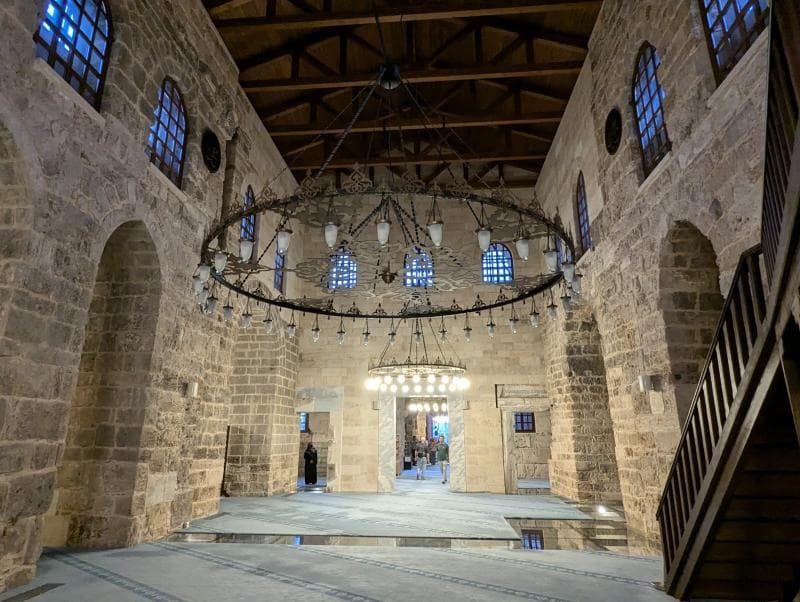

Explore Kesik Minare, the 'Broken Minaret' in Antalya's historic Kaleiçi. Discover its layered history as a Roman temple, Byzantine church, and mosque, reflecting centuries of transformation in Turkey.
Overview
Nestled within the enchanting cobbled streets of Kaleiçi, Antalya's historic Old Town, stands the Kesik Minare, famously known as the 'Broken Minaret'. This distinctive landmark is far more than just a historical ruin; it is a profound architectural narrative, a living chronicle of Antalya's rich and often turbulent past. Its unique silhouette, a testament to centuries of transformation, beckons curious travelers to delve into the city's layered history. Once a Roman temple, then a Byzantine church, and later a mosque, the Kesik Minare has recently undergone significant restoration, allowing its full splendor to emerge once again within the vibrant heart of modern Antalya.
History & Cultural Background
The story of Kesik Minare begins in the 2nd century AD, when its foundations were laid as a grand Roman temple, possibly dedicated to the god Serapis, or perhaps serving as a bustling agora, a central gathering place. [2, 4, 10, 18] For centuries, it stood as a monument to Roman imperial power and polytheistic worship in ancient Attalia, the precursor to modern Antalya. [2]
As the tides of history turned, so did the purpose of this venerable structure. In the 7th century AD, the Roman edifice was transformed into a Byzantine church, consecrated in honor of the Virgin Mary, known as the Panagia Church. [2, 4, 6, 7, 8, 10] It endured significant damage during the Arab invasions of the same century but was diligently repaired and expanded in the 9th century, continuing its role as a beacon of Christian faith. [4, 6, 7, 8]
The early 13th century marked another pivotal moment. Following the Seljuk Turks' conquest of Antalya from the Byzantines, the church was converted into a mosque, initially known as Cami-i Cedid, or the 'New Mosque'. [2, 4, 6, 7, 8, 10] A minaret, symbolizing the new Islamic presence, was added during this period. [2, 4, 7, 8] However, its religious identity was not yet settled; in 1361, when Peter I, the Crusader King of Cyprus, briefly captured Antalya, the structure once again became a church. [4, 6, 7, 8, 10]
It was during the Ottoman era, under the patronage of Şehzade Korkut, son of Sultan Bayezid II, that it firmly re-established itself as a mosque, hence its other names, Korkut Cami or Cumanın Cami. [2, 4, 7, 8, 24] The most dramatic chapter in its history unfolded in 1896 when a devastating fire consumed the main building and the wooden upper sections of the minaret, leaving only its truncated stone base. [2, 8] This event gave it the evocative name 'Kesik Minare', meaning 'Broken Minaret' or 'Cut Minaret'. [2, 5, 6, 16]
For over a century, the Kesik Minare stood as a picturesque ruin, a poignant reminder of time's passage. However, in 2018, extensive restoration work commenced, aiming to preserve its historical integrity. [7, 8] By 2019, the top cone and roof of the minaret were restored, and on March 5, 2021, the structure was officially reopened as a mosque, welcoming worshippers for the first time in nearly 125 years, coinciding with the anniversary of Antalya's conquest by the Seljuk Empire. [7, 8]
What Makes It Special
The true allure of the Kesik Minare lies in its unparalleled ability to tell a layered story through its very fabric. It is a 'palimpsest' of Anatolian history, where each era has left its indelible mark, physically etched into the stone. [2, 5] Visitors can observe the distinct architectural styles and materials from Roman, Byzantine, Seljuk, and Ottoman periods coexisting within a single structure.
Its 'broken' state, for which it was named, became a powerful symbol. It wasn't just a ruin; it represented Antalya's enduring spirit and its capacity for transformation through countless historical shifts. [5] The recent restoration, while altering its long-familiar 'broken' appearance, highlights its ongoing relevance and the commitment to preserving such a significant cultural asset. The reuse of ancient Roman spolia, such as column drums and capitals, integrated into the Seljuk minaret base, further underscores this continuous thread of history, demonstrating how new cultures built upon—literally—the foundations of those that came before. [2]
Furthermore, its location within Kaleiçi, a beautifully preserved district of narrow streets and historic houses, enhances its special appeal. It's not an isolated monument but an integral part of an atmospheric urban landscape that transports visitors back in time. [5, 11]
Stories, Fun Facts & Local Details
- The name 'Kesik Minare' directly translates from Turkish as 'Broken Minaret' or 'Cut Minaret', a descriptor born from the fire of 1896 that destroyed its upper sections. [2, 5, 6, 16]
- Beyond its common name, the mosque is also historically known as Korkut Cami or Cumanın Cami, named in honor of Şehzade Korkut, who was instrumental in its re-establishment as a mosque during the Ottoman period. [2, 4, 7, 8, 24]
- Archaeological findings reveal that the robust lower shaft of the minaret actually incorporates architectural elements, known as spolia, salvaged from the original 2nd-century Roman temple foundations, creating a fascinating blend of historical epochs in a single structure. [2]
- The reopening of the Kesik Minare as a functioning mosque on March 5, 2021, was a momentous occasion, marking its return to religious service after nearly 125 years and symbolically aligning with the historic date of Antalya's conquest by the Seljuks. [7, 8]
- Its story serves as a vivid illustration of Antalya's dynamic past, where the site witnessed shifts in dominant cultures and religions, from paganism to Christianity and then to Islam, making it a unique focal point for understanding the region's complex heritage. [2]
Visitor Perspective
Visiting the Kesik Minare offers a profound journey through time in the heart of Kaleiçi. Easily accessible on foot, it is often a highlight for those exploring the charming alleys of Antalya's Old Town, particularly as it's located not far from the iconic Hadrian's Gate. [4, 5, 11] As you approach, its distinctive silhouette rises above the red-tiled roofs, inviting contemplation.
Travelers can wander around the perimeter of the structure, examining the ancient stonework and the architectural layers that reveal its Roman, Byzantine, and Seljuk origins. [5] Informational plaques on-site provide valuable context, deepening your understanding of each historical phase. [5] The blend of ruined sections with the recently restored minaret offers a compelling visual narrative, allowing for dramatic photographs that capture both its enduring legacy and its renewed purpose. [5]
For a truly immersive experience, consider visiting in the early morning or late afternoon when the light is soft, and the crowds are fewer, allowing for a quieter moment of reflection amidst centuries of history. [5] While the restoration has brought new life to the Kesik Minare, some visitors have noted that it has transformed its appearance from a romantic ruin to a more complete, yet still historically rich, landmark. Regardless, its story remains as compelling as ever, making it an essential stop on any historical walking tour of Antalya. [16]
Coordinates: 30.70606, 36.88257
View on Google Maps💬 How Travelers Describe This Place
Based on community votes
Unique
934Beautiful
449Interesting
279Photogenic
276Must See
256
Traveler Stories
Discover memorable experiences shared by travelers who have visited this place.
No traveler stories yet.
Be the first traveler to share what made this place memorable.

Tour
By
Spot
Discover amazing places around the world. Your journey starts here.
Explore
© 2026 TourBySpot. All rights reserved.