Karlsturm Tower
Zurich, Switzerland
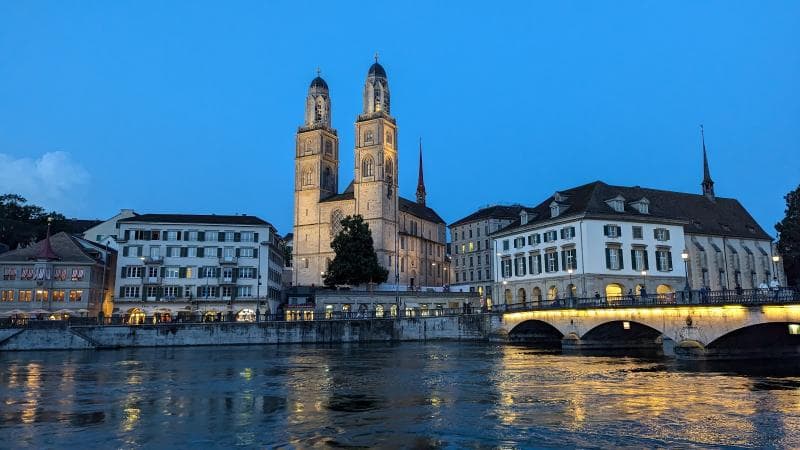
Climb Karlsturm Tower in Grossmünster, Zurich, Switzerland, for breathtaking panoramic views of the city, lake, and Alps. Discover its rich history and connection to Charlemagne and the Reformation.
Overview
Perched majestically above the Limmat River in Zurich, Switzerland, the Karlsturm Tower stands as an iconic symbol of the city's rich history and enduring spirit. As the south tower of the renowned Grossmünster Church, it forms one half of the distinctive twin spires that define Zurich's skyline. While the Grossmünster itself is a significant landmark, the Karlsturm offers a unique experience, inviting curious travelers to ascend its historic steps. This architectural marvel not only provides a tangible link to centuries past but also rewards those who undertake the climb with breathtaking panoramic views. From its elevated vantage point, visitors can survey the charming Old Town, the winding Limmat River, the serene expanse of Lake Zurich, and, on exceptionally clear days, the distant, majestic peaks of the Alps. The journey up the Karlsturm involves navigating approximately 187 to 189 steps, culminating in an unforgettable vista that captures the essence of Zurich's beauty.
History & Cultural Background
The story of the Karlsturm Tower is deeply intertwined with the Grossmünster Church, a site steeped in legend and historical significance. According to medieval tradition, the Grossmünster was founded by Emperor Charlemagne himself, whose horse is said to have knelt at the burial site of Zurich's patron saints, Felix, Regula, and Exuperantius. This legendary connection to Charlemagne is directly reflected in the tower's name, Karlsturm, or 'Charles' Tower'. The core Romanesque structure of the Grossmünster was constructed between 1090 and 1230 CE, built upon a Carolingian church and a Roman burial ground. The twin towers, including the Karlsturm, were first erected between 1487 and 1492. Originally, the towers featured tall wooden steeples, but these were tragically destroyed by a fire in 1763. They were subsequently replaced with the distinct neo-Gothic domed helmets that we see today. The Grossmünster played a pivotal role in the Protestant Reformation, becoming the starting point for Huldrych Zwingli's movement in the German-speaking part of Switzerland beginning in 1519. This period of religious reform profoundly influenced the church's interior, leading to its characteristic austere simplicity, which emphasizes the spoken word over elaborate ornamentation.
What Makes It Special
The Karlsturm Tower is not just an architectural component; it's a living piece of Zurich's identity. Its twin silhouette, often affectionately referred to as the 'salt and pepper shakers' by locals, is perhaps the most recognized feature of the city's skyline. A unique aspect is the statue of Charlemagne that adorns the south tower. While the one currently outside is a replica, the original 15th-century statue, once prominently displayed, has been carefully preserved within the church's crypt. This artistic detail directly ties into the foundational legend of the Grossmünster. Furthermore, the tower provides access to the viewing platform, offering unmatched panoramic views that encompass the historical urban tapestry of Zurich, the shimmering Limmat, and the vast Lake Zurich. Within the broader Grossmünster complex, visitors can also admire other significant artistic contributions, such as the colorful stained glass windows by renowned artists Augusto Giacometti and Sigmar Polke, and the bronze doors crafted by Otto Münch. The church also houses the largest Romanesque crypt in Switzerland, providing an atmospheric glimpse into its earliest foundations.
Stories, Fun Facts & Local Details
Many captivating stories and intriguing facts surround the Karlsturm and the Grossmünster. The legend of Charlemagne's horse kneeling at the graves of Felix and Regula is particularly charming, illustrating a mythical origin that has been central to Zurich's civic identity for centuries. Equally compelling is the tale of the patron saints themselves, Felix and Regula, who, according to lore, carried their own decapitated heads up the hill to their chosen burial site after their martyrdom. The name 'Karlsturm' itself is a direct nod to Charlemagne, signifying 'Charles' Tower' and reinforcing the imperial connection to the church's founding. Historically, the two towers of Grossmünster were not always of equal height; the northern tower was once taller until the southern tower (the Karlsturm) was heightened to match it in the late 15th century. The decision to move the original Charlemagne statue from its lofty perch on the tower to the crypt in the 1930s speaks to an ongoing effort to preserve these valuable artifacts, allowing a closer appreciation of the craftsmanship that was originally intended to be viewed from afar. The ancient crypt, an 11th-century marvel, remains the oldest accessible part of the cathedral, a cool, quiet space that whispers tales of a millennium.
Visitor Perspective
A visit to the Karlsturm Tower offers a deeply rewarding experience for any traveler exploring Zurich. While the entry to the main church is free, a modest fee is typically required to climb the tower, though this is often waived for Zürich Card holders. The ascent comprises 187 to 189 steps, and the staircase can be narrow, so visitors prone to claustrophobia should be aware. However, the physical effort is amply repaid by the stunning 360-degree views from the viewing platform, which features six large panoramic windows. These windows offer unparalleled photographic opportunities and a chance to orient oneself within the city's historic layout. It's important to note that the outdoor terraces on the tower may be closed for safety reasons. The best time for the climb is on a clear day, maximizing the chance to see the distant Alps. The Grossmünster remains an active Protestant church, hosting regular services and events, so visitors are encouraged to be mindful and respectful of ongoing worship. The entire Grossmünster complex, including the Karlsturm, invites visitors to step back in time, connect with profound history, and appreciate Zurich from a unique, elevated perspective.
Coordinates: 8.54397, 47.3701
View on Google Maps💬 How Travelers Describe This Place
Based on community votes
Must See
934Beautiful
276Photogenic
152Unique
30Interesting
16
Traveler Stories
Discover memorable experiences shared by travelers who have visited this place.
No traveler stories yet.
Be the first traveler to share what made this place memorable.

Tour
By
Spot
Discover amazing places around the world. Your journey starts here.
Explore
© 2026 TourBySpot. All rights reserved.