Kale Walls
Skopje, North Macedonia
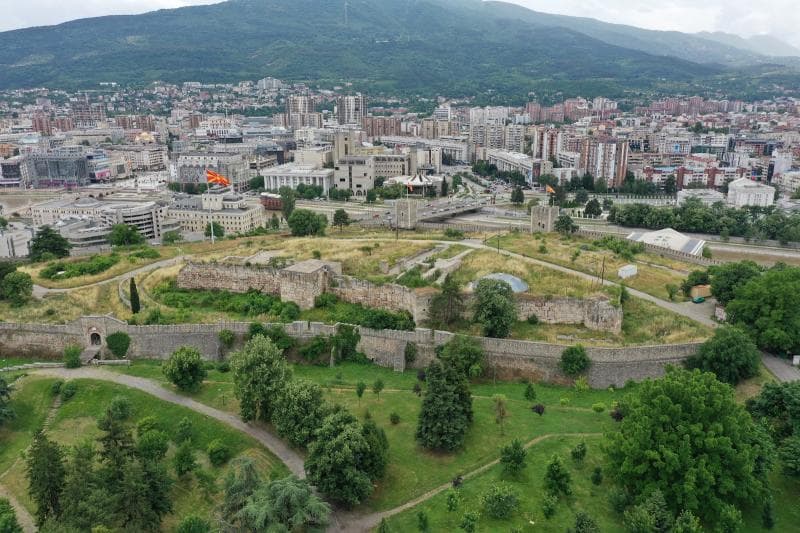
Explore the historic Kale Walls of Skopje Fortress in Skopje, North Macedonia, offering ancient history, panoramic city views, and rich cultural insights.
Overview
Perched majestically atop the highest point in Skopje, North Macedonia, the Kale Walls, part of the larger Skopje Fortress, stand as a silent guardian overlooking the vibrant city and the meandering Vardar River below. The name 'Kale' itself is derived from the Turkish word for 'fortress,' a testament to centuries of diverse cultural influences. This ancient site offers visitors not only a profound journey through history but also unparalleled panoramic views that stretch across the terracotta rooftops of the Old Bazaar to the distant mountains. Its imposing stone structure, a patchwork of various construction eras, invites curious travelers to explore its enduring legacy.
The Kale Walls are a landmark that symbolizes Skopje's strategic importance throughout history, featuring prominently on the city's coat of arms and flag. Today, the fortress is an open-air archaeological treasure, inviting exploration without an admission fee, providing a unique blend of history, nature, and urban vistas.
History & Cultural Background
The story of the Kale Walls begins much earlier than their visible stone structures suggest. Archaeological evidence indicates that the hill has been continuously inhabited since the Neolithic and Bronze Ages, roughly 4000 BC onwards. The first significant fortification, however, is believed to have been constructed in the 6th century AD during the reign of Byzantine Emperor Justinian I. Remarkably, much of the material for this initial build, including yellow limestone and travertine, was sourced from the ancient Roman city of Skupi, which was devastated by an earthquake in 518 AD.
Throughout the centuries, the fortress underwent numerous reconstructions and modifications by succeeding civilizations, each leaving its indelible mark. Further construction occurred during the 10th and 11th centuries over the Byzantine remains. It served as a critical defensive stronghold, playing a pivotal role under various empires, including the Byzantine, Bulgarian, and Serbian. Notably, in 1346, Stefan Dušan was crowned Emperor of the Serbs and Greeks within these very walls, making Skopje the capital of the Serbian Empire. The most extensive transformation is often attributed to the Ottoman period, particularly under Sultan Suleiman the Magnificent in the 16th century, who oversaw a major reconstruction using stone, contributing significantly to the imposing structure seen today. The fortress suffered substantial damage during the catastrophic Skopje earthquake in 1963, which crumbled many of its defensive towers and buildings, leading to various restoration efforts, including the southwestern wall in 2010.
What Makes It Special
The Kale Walls are special for their profound layers of history, presenting a tangible link to millennia of human civilization. Walking along the ramparts, visitors can observe the distinct architectural methods and materials used across different periods, a silent testament to the ingenuity of bygone eras. The solid stone construction, high ramparts, and sturdy towers reflect the strategic military architecture that once protected the city.
Beyond its architectural marvels, the fortress is a significant archaeological site. Ongoing excavations have unearthed a wealth of artifacts from various epochs, including the foundations of a 13th-century church, offering continuous insights into the region's diverse cultural influences. Perhaps one of its most celebrated features is the breathtaking panoramic views it offers. From its elevated position, visitors can gaze over the Vardar River, the sprawling cityscape, and the distinct landmarks of Skopje, creating exceptional photo opportunities, especially during sunset.
Stories, Fun Facts & Local Details
The Kale Walls are steeped in captivating narratives and local charm. An intriguing account comes from Evliya Çelebi, an Ottoman chronicler who, in 1660, described the fortress as having 'double walls' built from 'chipped stone that shines as if it were polished,' noting its exceptional refinement. This speaks to the meticulous craftsmanship and aesthetic value placed on the fortress even centuries ago.
A point of local pride is the fortress's depiction on Skopje's coat of arms and flag, highlighting its enduring significance to the city's identity. While 'Kale' already means 'fortress,' its full name, Skopje Fortress or Kale Fortress, is a common and accepted pleonasm, emphasizing its role. Admission to the outer walls is free, making it a beloved spot for locals who often visit for peaceful strolls or even picnics, especially on weekdays. The site also occasionally hosts cultural events, including summer festivals and medieval reenactments, bringing its rich history to life.
Visitor Perspective
For the curious traveler, visiting the Kale Walls is an experience that blends historical immersion with stunning natural beauty. The fortress is easily accessible, typically a short uphill walk from Skopje's Old Bazaar, making it a perfect extension to exploring the historic market. While there's no admission fee for the outer walls, visitors are advised to wear comfortable, grippy shoes as the paths can be cobbled and uneven.
The best time to visit is often cited as late afternoon or sunset when the changing light bathes the city in a golden glow, creating spectacular views. Spring and autumn also offer comfortable weather for exploration. Allow approximately 45 to 90 minutes to fully appreciate the site, from walking the eastern ramparts for classic Old Bazaar views to spotting the Stone Bridge and Millennium Cross in the distance. Combine your visit with nearby attractions such as the Mustafa Pasha Mosque and the various museums for a comprehensive cultural day out.
Coordinates: 21.434444, 42
View on Google Maps💬 How Travelers Describe This Place
Based on community votes
Beautiful
623Interesting
545Unique
343Must See
302Photogenic
20
Traveler Stories
Discover memorable experiences shared by travelers who have visited this place.
No traveler stories yet.
Be the first traveler to share what made this place memorable.

Tour
By
Spot
Discover amazing places around the world. Your journey starts here.
Explore
© 2026 TourBySpot. All rights reserved.