Kaaba
Mecca, Saudi Arabia
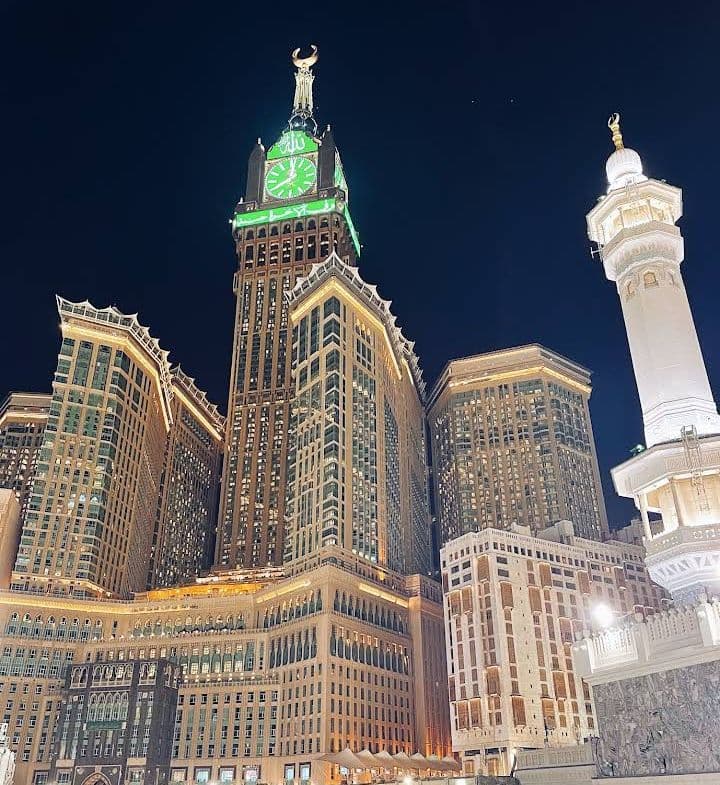

Discover the Kaaba in Mecca, Saudi Arabia – the holiest site in Islam. Explore its rich history, cultural significance, and visitor experience.
Overview
The Kaaba, an ancient and profoundly sacred structure, stands at the heart of Masjid al-Haram, the Grand Mosque, in the holy city of Mecca, Saudi Arabia. It is not merely a building but the holiest shrine in Islam, serving as the 'Qibla' – the precise direction that Muslims across the globe face during their five daily prayers. This cuboid edifice, draped in an exquisite black cloth known as the Kiswa, is a focal point of worship and pilgrimage, symbolizing unity and devotion for over 1.8 billion Muslims worldwide.
History & Cultural Background
The history of the Kaaba stretches back through time, predating the advent of Islam. In pre-Islamic times, it served as a sanctuary and housed idols representing various deities for the polytheistic tribes of the Arabian Peninsula.
However, Islamic tradition attributes its initial construction to Prophet Adam. Subsequently, it is believed to have been rebuilt by Prophet Ibrahim (Abraham) and his son, Ismail, as the first house dedicated solely to the worship of Allah.
The Kaaba has undergone numerous reconstructions throughout history due to natural disasters and conflicts. Around 608 CE, the Quraysh tribe, custodians of Mecca, rebuilt the structure, incorporating alternating masonry and wood. The Prophet Muhammad himself participated in one of these reconstructions, helping to place the revered Black Stone.
After the Prophet Muhammad's migration to Medina, a divine revelation instructed Muslims to turn towards the Kaaba for prayer, establishing it as the permanent Qibla and unifying believers in their devotion. Significant renovations occurred under various caliphates, notably after fire damage in 683 CE and floods in 1630 CE, ensuring its preservation as the central site of Islamic worship.
What Makes It Special
The Kaaba's distinct cubical form sets it apart from almost any other religious edifice. Measuring approximately 15 meters in height and about 10.5 meters on each side, its corners are roughly aligned with the cardinal directions.
A striking feature is the Kiswa, a magnificent black silk and cotton cloth embroidered with gold inscriptions of Quranic verses, which elegantly drapes the entire structure and is replaced annually.
Integral to the Kaaba are several significant elements: the Hajar al-Aswad (Black Stone), believed to have been given to Prophet Ibrahim by the Angel Jibreel and set in the eastern corner; the golden Bab al-Kaaba (Door of the Kaaba), elevated above ground; the Rukn al-Yamani (Yemeni Corner); and the semi-circular wall known as Hijr Ismail or Hateem, which marks the original footprint of the Kaaba built by Prophet Ibrahim.
More than its physical attributes, the Kaaba embodies profound spiritual meaning. It symbolizes the unity of the Muslim 'ummah' (community), humility before God, and the surrender of the self, acting as a constant reminder that faith transcends all borders and cultures.
Stories, Fun Facts & Local Details
Throughout its long history, the Kaaba has seen numerous rebuilds, with some scholars estimating between five and twelve major reconstructions.
The current structure is primarily built from local Makkah granite. Inside, the Kaaba features three tall wooden pillars made from ancient teak wood supporting the roof, with walls lined with polished marble panels and the upper interior adorned with hanging green silk curtains inscribed with Quranic verses. Historical bronze and silver lamps also hang between the central support pillars.
The Kaaba is also known by other names, including 'Bait ul Ateeq', which can mean 'the earliest and ancient' or 'independent and liberating', highlighting its profound significance and timeless nature.
While millions perform Tawaf around it, entry into the Kaaba's interior is a rare privilege, typically reserved for dignitaries and maintenance teams during special cleaning ceremonies, preserving its sanctity.
Visitor Perspective
For pilgrims arriving for Hajj or Umrah, the first glimpse of the Kaaba is often described as an overwhelming and deeply emotional experience. Many visitors report feelings of profound awe, gratitude, and humility, often moved to tears, as they connect with a sacred history and the collective devotion of millions.
The central ritual performed around the Kaaba is the 'Tawaf', where pilgrims circumambulate the structure seven times in a counter-clockwise direction, commencing and concluding each circuit at the Black Stone. This act is not merely physical but a spiritual journey, a shared moment of unity with the global Muslim community.
The atmosphere within Masjid al-Haram, especially around the Kaaba, is one of intense spiritual focus and communal worship. Pilgrims find solace in prayer, recitation of the Quran, and supplication, often seeking quiet moments for reflection amidst the bustling crowds. The experience is transformative, a powerful internal reset that leaves a lasting impact on one's faith and perspective.
Coordinates: 39.8262, 21.4225
View on Google Maps💬 How Travelers Describe This Place
Based on community votes
Interesting
931Beautiful
692Unique
491Photogenic
266Must See
261
Traveler Stories
Discover memorable experiences shared by travelers who have visited this place.
No traveler stories yet.
Be the first traveler to share what made this place memorable.

Tour
By
Spot
Discover amazing places around the world. Your journey starts here.
Explore
© 2026 TourBySpot. All rights reserved.