Jewelry Section
Phnom Penh, Cambodia
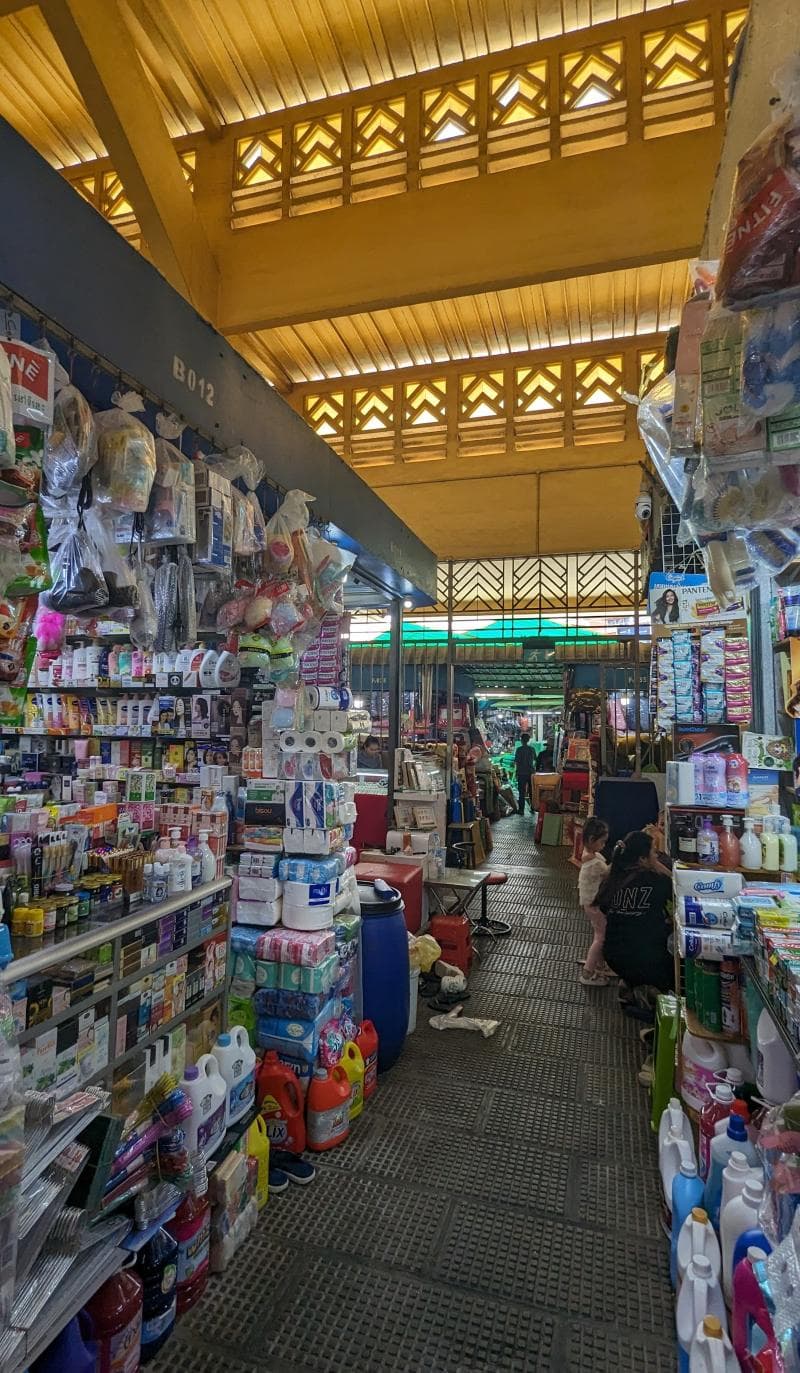
Discover the glittering Jewelry Section in Phnom Penh's Central Market, Phsar Thmei. Explore Khmer gold and silver designs amidst Art Deco architecture.
Overview
Stepping into the Central Market, known locally as Phsar Thmei, in Phnom Penh, Cambodia, visitors are immediately drawn to its remarkable architectural centerpiece: a grand, yellow-domed structure. Underneath this iconic dome lies the vibrant Jewelry Section, a dazzling heart within the bustling marketplace. Here, a concentrated array of stalls showcases exquisite gold and silver jewelry, many adorned with traditional Khmer patterns, reflecting centuries of Cambodian artistry. This particular section serves not just as a commercial hub but also as a cultural window, inviting curious travelers to explore the rich heritage embedded in Cambodian adornment. The Central Market itself, a prominent Art Deco landmark built in 1937, stands as a testament to Phnom Penh's colonial past and its enduring market traditions, making its Jewelry Section a must-visit for anyone seeking both beauty and a glimpse into local life.
History & Cultural Background
The Central Market's origins trace back to the French colonial era, with its construction taking place between 1935 and 1937. Officially inaugurated in September 1937, it was designed by French architect Jean Desbois and overseen by Louis Chauchon. Interestingly, the market was built on what was once a swamp or lake, a site that had to be drained before construction could begin. Upon its completion, Phsar Thmei was celebrated as one of the largest markets in Asia, an architectural marvel of its time. Its distinctive Art Deco style, characterized by a massive central dome rising 26 meters high and stretching 45 meters in diameter, with four branching wings, is said to symbolize lotus petals. Over its history, the market faced adversity, including bombing during the Franco-Thai War (1940-1941) which necessitated rebuilding, and later, significant renovations between 2009 and 2011, funded in part by the French government, to restore its original grandeur. Culturally, gold and silver jewelry hold deep significance in Cambodia, often playing a central role in traditional ceremonies and weddings.
What Makes It Special
The Jewelry Section at Central Market is distinguished by its unique setting directly beneath the market's soaring central dome. This prime location creates an almost cathedral-like atmosphere, where the natural light filtering through the dome illuminates the glittering displays. Here, visitors encounter a vast selection of gold and silver pieces, frequently featuring traditional Khmer designs, which are a hallmark of Cambodian craftsmanship. Unlike mass-produced items, many pieces reflect genuine Cambodian artistry, particularly in the intricate silverwork. The architectural splendor of the market itself—its grand Art Deco design—provides a majestic backdrop to the precious wares, enhancing the shopping experience beyond mere transaction. Shoppers often note the high-quality design of Cambodian jewelry, often available at relatively competitive prices. A key aspect of shopping here is the ingrained practice of bargaining; vendors expect negotiation, making the process an engaging and interactive part of the cultural exchange.
Stories, Fun Facts & Local Details
Amidst the vibrant energy of the Central Market, the Jewelry Section under the central dome offers a relatively spacious and airy environment, a stark contrast to the sometimes more densely packed corridors of other market wings. This openness allows for a more relaxed browsing experience, where vendors often greet visitors with friendly calls, inviting them to admire their collections. A fun detail for groups is the large clock located in this central area, serving as an easily identifiable meeting point should anyone wander off to explore other sections. Visiting the market provides a genuine insight into local Cambodian life, offering opportunities to observe daily interactions and the rhythm of commerce. When purchasing jewelry, it's wise to be prepared with cash, as while some larger stalls might accept cards, most prefer Cambodian Riel or US Dollars. For significant gold purchases, it's a common local practice to request a purity test and a receipt, which some reputable shops even honor for 90-95% refunds if returned, a testament to the local gold trading culture. However, a practical tip from locals is to avoid buying jewelry from street vendors to minimize the risk of acquiring counterfeit items. It's also a fascinating historical note that the market's initial years were challenged by recurrent flooding during the rainy season, a vestige of its origins as a drained swamp.
Visitor Perspective
For a truly immersive experience of the Jewelry Section and the wider Central Market, timing your visit strategically can greatly enhance your enjoyment. Many suggest arriving early, between 8:00 AM and 10:00 AM, to witness the market at its most lively while enjoying cooler temperatures. Alternatively, weekdays generally offer a less crowded atmosphere, allowing for a more leisurely exploration of the Art Deco architecture and deeper interactions with vendors. Navigating the sprawling layout of the market can initially feel overwhelming, but a helpful strategy is to start your exploration at the central dome, where the jewelry is located, and then gradually venture outwards into the four wings. Remember that bargaining is not just accepted but expected, so be ready to engage in friendly negotiation to secure the best prices. Bringing small denominations of both US Dollars and Cambodian Riel will prove most convenient for purchases. Ultimately, a visit to the Central Market's Jewelry Section is more than just a shopping trip; it is a rich cultural, historical, and commercial journey that offers a vibrant slice of Phnom Penh life, often described by travelers as entering a 'living museum' or a 'treasure trove'.
Coordinates: 104.9193, 11.5683
View on Google Maps💬 How Travelers Describe This Place
Based on community votes
Interesting
965Must See
862Photogenic
629Beautiful
443Unique
184
Traveler Stories
Discover memorable experiences shared by travelers who have visited this place.
No traveler stories yet.
Be the first traveler to share what made this place memorable.

Tour
By
Spot
Discover amazing places around the world. Your journey starts here.
Explore
© 2026 TourBySpot. All rights reserved.