Central Market
Phnom Penh, Cambodia
Explore Phnom Penh's Central Market (Phsar Thmei), an iconic Art Deco landmark in Cambodia. Discover its history, unique architecture, and diverse goods.
Overview
Stepping into Phnom Penh's Central Market, known locally as Phsar Thmei, is like entering a vibrant, living museum in the heart of Cambodia's capital. This iconic Art Deco landmark, with its striking bright yellow facade and colossal central dome, stands as a testament to the city's rich history and enduring spirit. Opened in 1937, it is far more than just a place to shop; it is a bustling hub where daily life unfolds amidst a kaleidoscope of sights, sounds, and scents. Its distinctive architecture, featuring a grand dome from which four arch-roofed arms radiate, houses countless stalls brimming with an incredible array of goods, from dazzling jewelry to fresh produce.
The market's unique design ensures natural ventilation and light, making it a surprisingly comfortable space to explore despite the tropical heat. Visitors are drawn here not only for the diverse shopping opportunities but also to immerse themselves in the authentic Cambodian market experience and witness the city's unique charm.
History & Cultural Background
The genesis of Central Market dates back to the French colonial administration in the 1930s, a period of significant urban expansion for Phnom Penh. Responding to the city's growing population, plans were laid to construct a grand market on what was then a vast marshland, known as Beng Decho lake. After the land was drained, construction commenced in August 1935. The market was designed by city architect Jean Desbois, with supervision from French architect Louis Chauchon and engineer Wladimir Kandaouroff.
Inaugurated by King Sisowath Monivong in September 1937, Phsar Thmei quickly earned a reputation as the biggest market in Asia and the largest covered market in Southeast Asia at the time. However, its history has not been without challenges. It suffered damage from bombing during the Franco-Thai War in the early 1940s and was temporarily closed. During the tumultuous Khmer Rouge period from 1975 to 1979, the market was shuttered and used for storage, representing a traumatic interruption of normal life. After enduring these trials, the market underwent a significant US$4.2 million renovation between 2009 and 2011, restoring its grandeur and functionality.
What Makes It Special
Central Market is celebrated for its truly unique Art Deco architecture. Its pale ochre-yellow structure, dominated by a 26-meter-high central dome, radiates four expansive wings, creating a cruciform layout often likened to a giant lotus flower or even a futuristic 'flying saucer' gracefully landed in the city. This ingenious design provides exceptional natural light and air circulation, a crucial feature in Cambodia's warm climate. Beyond its architectural prowess, the market stands as one of Asia's finest surviving examples of colonial Art Deco civic buildings.
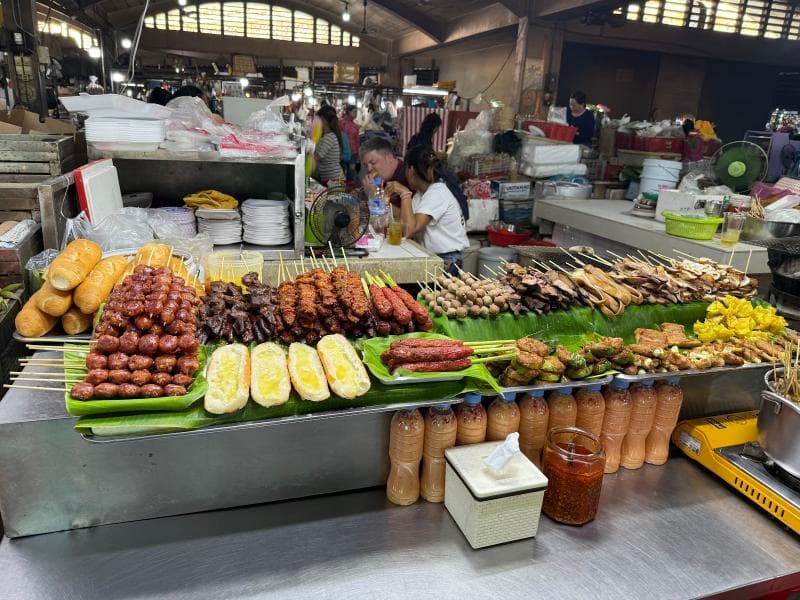
Inside, the market is a treasure trove of goods. The central dome area glitters with stalls dedicated to gold and silver jewelry, often showcasing intricate Khmer designs. The four wings and surrounding areas offer everything from Cambodian silk textiles, local handicrafts, and souvenirs like T-shirts and kramas, to electronics, stationery, second-hand clothing, and fresh flowers. Outside, a bustling food section tempts visitors with fresh produce, vibrant fruits, and an array of authentic Cambodian street food and desserts.
Stories, Fun Facts & Local Details
The Khmer name, Phsar Thmei (ផ្សារធំថ្មី), literally translates to 'New Grand Market', reflecting its origins as a modern addition to Phnom Penh's urban fabric. A fascinating detail is its construction on reclaimed marshland, a history that occasionally resurfaces as wet season flooding remains a recurring challenge around the market. The impressive central dome, once considered the second highest in the world, is capped by a four-faced clock tower. This clock is a subtle nod to Phnom Penh's poetic nickname, 'The City of Four Faces', referencing the convergence of the Mekong, Bassac, and Tonle Sap rivers near the capital.
A visit here is a sensory adventure. Locals engage in spirited bargaining, a cultural practice that visitors are encouraged to partake in respectfully. Vendors might playfully call out 'hello, pretty girl!' to draw attention to their stalls, adding to the market's lively atmosphere. Beyond shopping, you can savor local delicacies such as Lort Cha (stir-fried pin noodles), Bai Sach Chrouk (grilled pork with rice), and various refreshing Cambodian sweets. For a truly immersive experience, some travelers even opt for a $5 local haircut inside the market, blending commerce with community.
Visitor Perspective
Central Market welcomes visitors daily, typically operating from early morning around 7:00 AM until late afternoon, usually 6:00 PM. To experience the market at its most authentic and avoid the thickest crowds and heat, an early morning visit or a weekday exploration is often recommended. There is no admission fee, allowing for casual browsing and soaking in the atmosphere. Most visitors find that one to two hours is sufficient to explore its offerings.
Navigating the sprawling layout can initially feel daunting, but starting from the central dome and exploring the radiating arms methodically can help ensure you don't miss any hidden gems. Both Cambodian Riel and US Dollars are widely accepted for transactions. T-shirts, scarves, and local handicrafts are popular souvenirs, and engaging in polite bargaining is a common and often enjoyable part of the shopping experience. The market's food court is a fantastic spot to sample local flavors, offering a genuine taste of Cambodian cuisine. Its central location makes it easily accessible by tuk-tuk or ride-hailing services from anywhere in the city.
Coordinates: 104.92111, 11.56944
View on Google Maps💬 How Travelers Describe This Place
Based on community votes
Interesting
896Must See
102Beautiful
102Unique
95Photogenic
28
Traveler Stories
Discover memorable experiences shared by travelers who have visited this place.
No traveler stories yet.
Be the first traveler to share what made this place memorable.
Things to see at Central Market



Tour
By
Spot
Discover amazing places around the world. Your journey starts here.
Explore
© 2026 TourBySpot. All rights reserved.