Ivy-covered Walls
Zagreb, Croatia
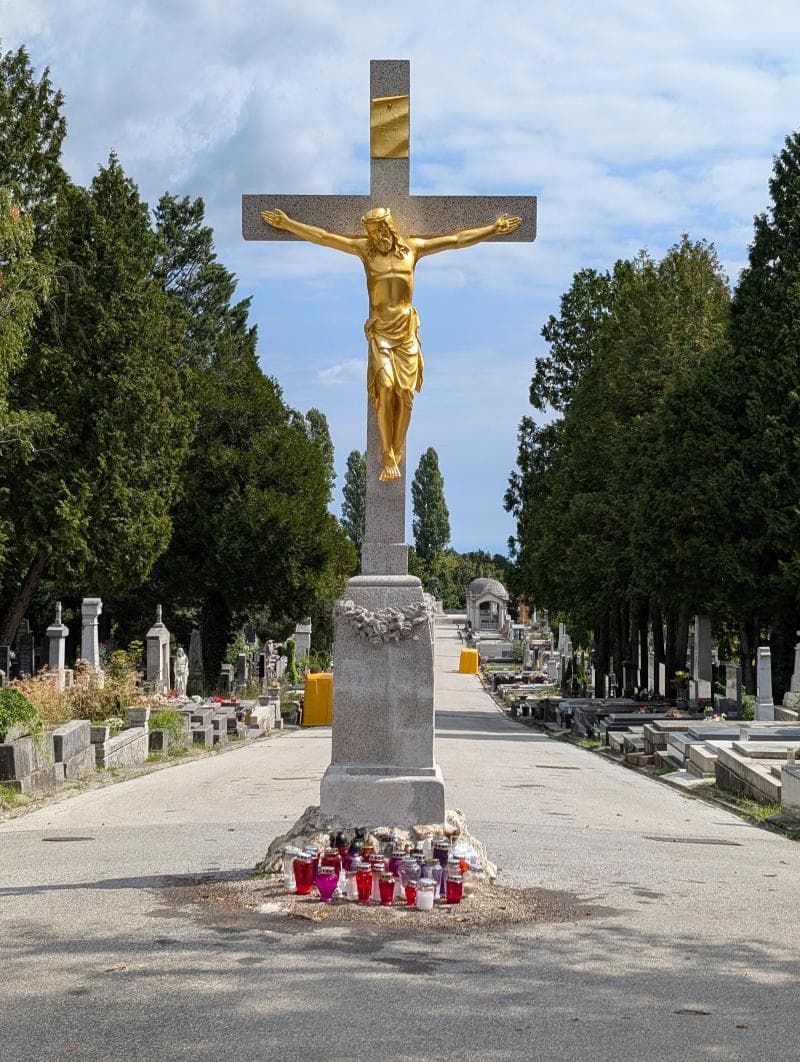
Explore the serene Mirogoj Cemetery in Zagreb, Croatia, a stunning architectural marvel. Discover its iconic ivy-covered walls, rich history, and famous interments.
Overview
Nestled on the verdant slopes at the foot of Mount Medvednica, Mirogoj Cemetery in Zagreb, Croatia, transcends the traditional concept of a burial ground, emerging as a breathtaking urban park and an open-air art gallery. Often hailed as one of Europe's most magnificent cemeteries, it is renowned for its stunning Neo-Renaissance architecture, particularly its grand arcades and their iconic ivy-covered walls [11, 12, 17]. Far from being a somber place, Mirogoj invites contemplation and admiration, offering visitors a unique blend of natural beauty, artistic masterpieces, and profound historical significance. It stands as a testament to Zagreb's rich past and its commitment to honoring its citizens, regardless of their religious beliefs. [13, 23]
History & Cultural Background
The story of Mirogoj Cemetery began in 1876, when it was officially inaugurated on land once owned by the prominent Croatian linguist Ljudevit Gaj [5, 21]. Prior to Mirogoj, Zagreb relied on numerous smaller, parish-owned cemeteries [4]. The decision to establish a single, central, municipal cemetery was a significant step, embracing a progressive vision for the city. The design of this monumental necropolis was entrusted to Herman Bollé, a renowned German architect who left an indelible mark on Zagreb's architectural landscape, including his work on the city's cathedral [3, 7, 21].
Bollé’s ambitious plans for Mirogoj commenced in 1879 with the construction of the magnificent arcades, cupolas, and a central church [5, 22]. These architectural elements, built in a distinctive Neo-Renaissance style, were envisioned to provide a grand and unified aesthetic [7]. However, due to funding constraints and the sheer scale of the project, construction spanned several decades, finally reaching completion in 1929, three years after Bollé’s own interment within the cemetery [5, 21]. One of Mirogoj's most pioneering aspects was its multiconfessional nature from its inception. Unlike earlier church-owned burial grounds, Mirogoj was designed to accommodate all religious groups – Catholic, Orthodox, Jewish, Muslim, Protestant, and others – fostering a spirit of inclusivity that was remarkable for its time [5, 9, 11]. This democratic approach to remembrance cemented its status as a true Croatian pantheon. [10]
What Makes It Special
The true magic of Mirogoj lies in its harmonious blend of architecture and nature, creating an atmosphere of serene beauty that is both monumental and inviting. The most striking feature, and indeed the sub-spot of 'ivy-covered walls,' refers primarily to the cemetery's magnificent arcades. These long, elegant brick structures, crowned with green, onion-shaped domes, stretch majestically, forming a picturesque backdrop to the tranquil grounds [14].
These outer walls, particularly during the autumn months, become a vibrant spectacle as the ivy that clings to them transforms into a 'firework of colors' [4]. This living tapestry softens the grandeur of the Neo-Renaissance architecture, lending an organic, timeless beauty to the stone [16]. Walking beneath these arcades, with their tiled ceilings and the rustling leaves of the surrounding trees, feels less like a visit to a cemetery and more like an immersive experience in an art gallery or a classical palace garden [11, 12, 17]. The interplay of light and shadow, filtered through the foliage and the architectural arches, creates a meditative space, inviting quiet reflection and appreciation for the intricate details of sepulchral art that adorn the countless tombs. [16]
Stories, Fun Facts & Local Details
Mirogoj is not merely a place of rest but a repository of Croatian history and culture, echoing with the stories of the nation’s most prominent figures. Within its walls lie statesmen like Franjo Tuđman, Croatia's first president, whose impressive black-marble monument is a notable sight [3, 6, 14]. Sports enthusiasts often seek out the grave of legendary basketball player Dražen Petrović [3, 14]. Many literary giants, artists, scientists, and other influential Croatians, including the architect Herman Bollé himself, also find their eternal repose here, making it a national pantheon [5, 10, 25].
A particularly poignant local detail is the tradition of All Saints' Day (November 1st). On this day, Mirogoj truly comes alive as countless Croatian families visit to pay their respects, illuminating the cemetery with thousands of flickering candles. This moving spectacle transforms the grounds into a sea of light, symbolizing enduring memory and love [11, 14]. Historically, the cemetery even had a rule of only one burial per day a century ago, emphasizing the solemnity and reverence attributed to each interment [4]. Visitors might also notice the diversity of grave markers, reflecting Mirogoj's unique multiconfessional heritage, where Christian crosses, Jewish stars, and Muslim headstones coexist harmoniously. [3, 7, 15]
Visitor Perspective
For the curious traveler, Mirogoj Cemetery offers a peaceful and deeply rewarding experience, often described as a must-see in Zagreb [8, 12]. It is easily accessible from the city center; local bus line 106 departs regularly from Kaptol, near Zagreb Cathedral, taking visitors directly to the cemetery's main entrance [3, 7, 19]. Once there, you are free to wander through the expansive grounds, which combine formal arcades with park-like sections featuring trees, flowers, and meticulously maintained pathways. [4, 23]
Mirogoj operates with extended hours from April to September (6 AM to 8 PM) and slightly shorter hours from October to March (7:30 AM to 6 PM), ensuring ample time for exploration [3, 7, 26]. Admission is free, allowing everyone to partake in its beauty and history [7]. When visiting, remember that Mirogoj remains an active cemetery. It is customary to observe respectful etiquette, maintaining a quiet demeanor, and allowing mourners their privacy [26]. The 'ivy-covered walls' and grand architecture are best appreciated with a leisurely stroll, absorbing the tranquility and the artistic details that make this unique place a poignant and beautiful landmark. [16]
Coordinates: 15.986111, 45.835
View on Google Maps💬 How Travelers Describe This Place
Based on community votes
Must See
836Beautiful
797Photogenic
695Interesting
396Unique
286
Traveler Stories
Discover memorable experiences shared by travelers who have visited this place.
No traveler stories yet.
Be the first traveler to share what made this place memorable.

Tour
By
Spot
Discover amazing places around the world. Your journey starts here.
Explore
© 2026 TourBySpot. All rights reserved.