Ivan Meštrović Fountain
Zagreb, Croatia
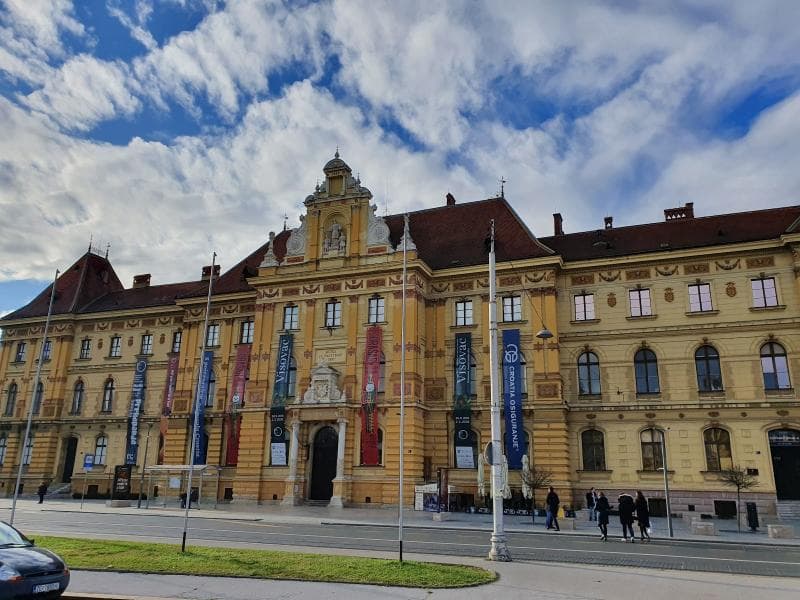
Discover the Ivan Meštrović Fountain, 'The Well of Life,' a symbolic bronze sculpture representing the cycle of life in Zagreb, Croatia.
Overview
Nestled discreetly before the grand facade of the Croatian National Theatre in Zagreb, the Ivan Meštrović Fountain, also known as 'The Well of Life' (Zdenac života), offers a profound artistic experience. This bronze sculpture, a pivotal early work by the renowned Croatian artist Ivan Meštrović, masterfully encapsulates the universal cycle of human existence. Unveiled to the public in 1912, it has since become a cherished cultural landmark in Croatia's capital. While the imposing Neo-Baroque architecture of the theatre commands immediate attention, the fountain invites a closer, more contemplative gaze, revealing its intricate details and powerful symbolism to those who pause to discover it. It is often described as being at ground level, surrounded by a low wall, which means a curious visitor might initially overlook its subtle beauty.
History & Cultural Background
Ivan Meštrović, born in 1883, emerged as Croatia's most prominent sculptor of the 20th century, a multi-talented artist who also excelled as a painter, architect, and writer. His artistic journey began with an early aptitude for carving in wood and stone, leading him to formal studies at the Vienna Academy of Art. 'The Well of Life' was created in 1905, during a period when Meštrović was heavily influenced by Auguste Rodin's Impressionism and the burgeoning Vienna Secession (Art Nouveau) movement. The sculpture first garnered significant attention when it was exhibited in the main hall of the Vienna Secession's spring exhibition in 1906, marking it as a masterpiece from his youthful, playful, yet deeply philosophical phase. Originally displayed in Meštrović's gallery in 1909, the sculpture was purchased in 1912 by Izidor Kršnjavi and installed at its present location on Republic of Croatia Square.
Its placement was quite intentional, situated in a cavity surrounded by walls, reportedly to mitigate 'astonishment and critical comments' from the conservative Zagreb populace regarding the nudity of its figures. This historical context highlights the avant-garde nature of Meštrović's work for its time and the societal norms it challenged. The Croatian National Theatre itself, a magnificent Neo-Baroque edifice designed by Viennese architects Fellner & Helmer, opened in 1895. The fountain, therefore, stands as a striking counterpoint to the theatre's ceremonial grandeur, offering an intimate human narrative against a backdrop of institutional culture.
What Makes It Special
What sets 'The Well of Life' apart is its profound symbolic depth and artistic execution. The circular bronze sculpture features ten life-sized nude figures, encompassing individuals from childhood to old age. These figures are depicted in various states of being—crouching, twisting, and reaching around a central well filled with water. Each figure contributes to a powerful visual narrative representing the continuous cycle of life, from birth to death, and the universal human quest for vitality and beauty.
Meštrović's genius lies in his ability to convey a spectrum of human emotions and experiences through the figures' expressions and body language. From the tender embrace of a loving couple to the thoughtful gaze of an elder contemplating his reflection, the sculpture speaks to fundamental aspects of the human condition. The sculpture's dark bronze contrasts subtly with the stone on which it rests, and its soft transitions between light and shadow enhance its emotional resonance. Art historians have noted Rodin's influence, observing Meštrović's 'impressionism' within the context of Vienna Secession art, making it a unique blend of styles.
Stories, Fun Facts & Local Details
One of the intriguing aspects of 'The Well of Life' is its subtle presence. Despite being a major work by Croatia's most famous sculptor and positioned in front of a prominent national institution, it can be easily overlooked. Its placement at ground level, slightly recessed, means many visitors walk past without noticing its intricate details. This characteristic often leads to a delightful discovery for those who are specifically seeking it out or are guided to its location. Locals and informed travelers appreciate this nuanced positioning, which transforms a casual glance into an act of intentional engagement.
The sculpture beautifully illustrates the human need for water, shaping the figures around the simple action of reaching for it. This focus on basic human needs and interdependence is a powerful element of its charm. The oldest figure, for instance, gazes thoughtfully at his reflection in the water, appearing troubled, adding a layer of introspection to the theme of life's journey. While Meštrović himself had expressed a desire for the fountain to be placed in Split, it found its permanent home in Zagreb, becoming an inseparable part of the city's cultural tapestry.
Visitor Perspective
For a curious traveler, encountering 'The Well of Life' is an intimate experience that complements the grandeur of the Croatian National Theatre. Standing at the base of the theatre's steps, one needs to look down into the circular bronze basin to appreciate the figures clinging to the water's edge. The fountain invites a moment of quiet contemplation, prompting visitors to reflect on the various stages of life it depicts and the deeper meanings it holds. Reviewers often highlight its abstract and profound symbolism, describing it as a beautiful place to relax and ponder.
To truly appreciate this masterpiece, one might walk around it multiple times, allowing the narrative of the ten intertwined figures—from children to the elderly—to unfold. It's a reminder that art can be both public and deeply personal, and that some of the most moving works require a conscious effort to discover. The fountain's contrast with the majestic theatre building, representing the official and ceremonial, while the fountain portrays the raw and intimate, makes it a compelling stop on any cultural tour of Zagreb.
Coordinates: 15.97004, 45.80942
View on Google Maps💬 How Travelers Describe This Place
Based on community votes
Beautiful
826Must See
387Unique
242Photogenic
125Interesting
82
Traveler Stories
Discover memorable experiences shared by travelers who have visited this place.
No traveler stories yet.
Be the first traveler to share what made this place memorable.

Tour
By
Spot
Discover amazing places around the world. Your journey starts here.
Explore
© 2026 TourBySpot. All rights reserved.