Island Temple
Lyon, France
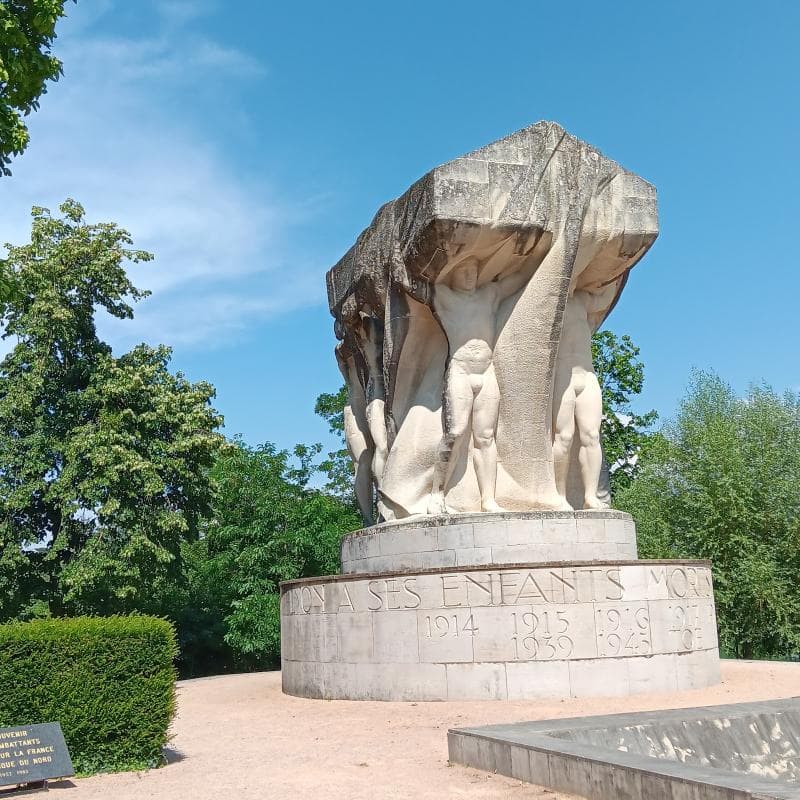
Discover the Île du Souvenir, also known as the 'Island Temple', a poignant war memorial in Parc de la Tête d'Or, Lyon, France.
Overview
Nestled within the sprawling beauty of Parc de la Tête d'Or in Lyon, France, lies a tranquil and poignant sub-spot often referred to as the 'Island Temple': the Île du Souvenir, or 'Island of Remembrance'. This unique island, situated on the park's expansive lake, serves as a solemn war memorial, offering a space for quiet contemplation amidst the park's vibrant life. It is distinctively accessible via an underwater tunnel, adding to its mystique and sense of secluded purpose.
The Île du Souvenir stands as a testament to the city's history and a dedication to fallen soldiers, providing visitors with a moment to reflect on sacrifice and peace. Its modest yet profound presence contrasts beautifully with the surrounding recreational areas, making it a powerful landmark within one of France's largest urban parks.
History & Cultural Background
The Parc de la Tête d'Or itself was conceived in the mid-19th century, with construction beginning in 1856 and the park opening in 1857. It was designed by landscape architects Denis and Eugène Bühler, inspired by English gardens, and features a significant 16 to 17-hectare lake at its heart.
The Île du Souvenir, originally known as the 'Île aux Cygnes' or 'Isle of Swans', underwent a significant transformation. Between 1914 and 1930, a war memorial, the 'monument aux morts', was erected on the island. This memorial was designed by the renowned Lyonnais architect Tony Garnier, solidifying the island's role as a permanent tribute. The transition from the 'Isle of Swans' to the 'Island of Remembrance' marks a shift from a natural feature to a site of profound cultural and historical significance, honoring those who gave their lives.
What Makes It Special
What truly sets the Île du Souvenir apart is its unique combination of natural serenity and historical gravity. Its location on an island, surrounded by the calm waters of the lake, already lends it an air of exclusivity. However, the method of access—an underwater tunnel—elevates the experience beyond the ordinary. This subterranean passage creates a symbolic journey, preparing visitors for the contemplative atmosphere of the memorial above.
The memorial itself, described as quadrilateral in shape, offers a dignified and understated architectural presence. It serves as a quiet counterpoint to the bustling activities elsewhere in the park, providing a designated space for reflection. The blend of carefully curated natural landscapes and the solemnity of the memorial creates a profoundly moving experience, making the Île du Souvenir a unique cultural gem within Lyon.
Stories, Fun Facts & Local Details
The very name of the larger park, 'Tête d'Or' (Golden Head), comes from a local legend suggesting a treasure, specifically a golden head of Christ, was buried somewhere within its grounds. While no such treasure has ever been found, the park is rich with other stories, including that of the Île du Souvenir.
Locals and recurring visitors appreciate the peaceful escape the island offers. It's often seen as a place of quiet contemplation, a moment to pause and remember. The design of the memorial by Tony Garnier, a prominent figure in urban planning and architecture, further imbues the island with significance, connecting it to Lyon's artistic and civic heritage. Though once an 'Isle of Swans', the presence of the memorial has redefined its identity, creating a lasting legacy of remembrance for the community.
Visitor Perspective
A visit to the Île du Souvenir begins with the intriguing journey through the underwater tunnel. Emerging onto the island, one is immediately struck by the peaceful ambiance. The sounds of the park seem to recede, replaced by the gentle rustling of leaves and the distant calls of birds. The memorial, with its unadorned yet powerful form, invites visitors to slow down and reflect.
Many visitors choose to sit for a while, taking in the views across the lake to the vibrant park, a stark yet harmonious contrast to the island's quiet solemnity. It’s a space that encourages a personal connection to history and a moment of gratitude. Whether seeking a moment of peace, paying respects, or simply exploring a unique architectural feature, the Île du Souvenir offers a meaningful and memorable experience within the Parc de la Tête d'Or.
Coordinates: 4.84496, 45.777121
View on Google Maps💬 How Travelers Describe This Place
Based on community votes
Interesting
869Must See
445Beautiful
416Photogenic
309Unique
33
Traveler Stories
Discover memorable experiences shared by travelers who have visited this place.
No traveler stories yet.
Be the first traveler to share what made this place memorable.

Tour
By
Spot
Discover amazing places around the world. Your journey starts here.
Explore
© 2026 TourBySpot. All rights reserved.