Irrigation Canals
Bali, Indonesia
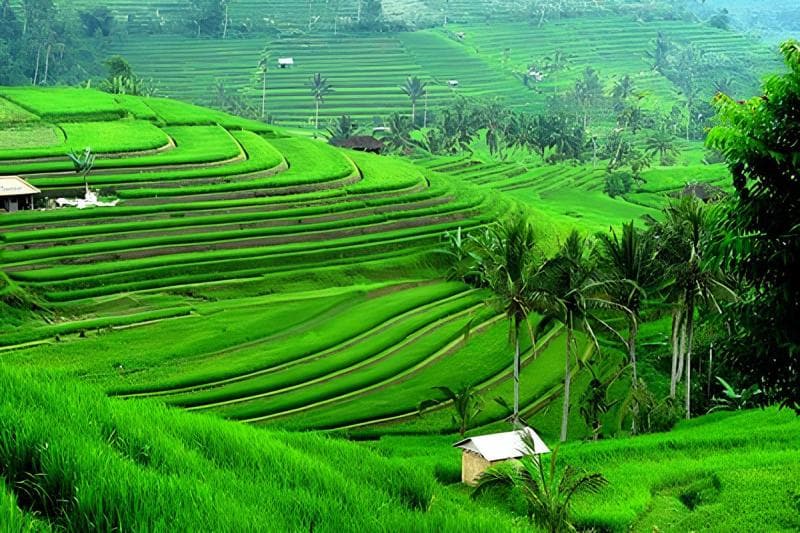
Explore the ancient irrigation canals of the Jatiluwih Rice Terraces in Bali, Indonesia. Discover the UNESCO-recognized Subak system and its cultural significance.
Overview
As you wander through the breathtaking expanse of the Jatiluwih Rice Terraces in Bali, Indonesia, your eye is naturally drawn to the vibrant green tapestry of paddies, cascading down the volcanic slopes. Integral to this stunning landscape are the irrigation canals, the very lifelines of this agrarian masterpiece. These canals are not mere ditches; they are the visible manifestation of the ancient and ingenious Subak system, an irrigation network that has sustained rice cultivation and a profound cultural heritage for over a thousand years. Without this intricate web of waterways, the terraces would not exist in their current form, making the canals a central feature of Jatiluwih's natural and cultural beauty. They are a constant, gentle reminder of the harmonious relationship between humanity and nature that defines Balinese life.
History & Cultural Background
The Subak system, which includes these vital irrigation canals, originated in the 9th century, making it a testament to centuries of Balinese ingenuity and cooperative spirit. It's more than just a method of distributing water; it's a traditional, ecologically sustainable system that binds Balinese agrarian society together. This complex system, spanning across terraced rice fields and water temples, was officially recognized as a UNESCO World Heritage Site in 2012, under the name 'Cultural Landscape of Bali Province: the Subak System as a Manifestation of the Tri Hita Karana Philosophy'. This philosophy, Tri Hita Karana, emphasizes achieving harmony between three essential elements: people, nature, and the spiritual realm. The Subak system embodies this principle, linking environmental management with the cultural and spiritual life of Bali.
What Makes It Special
The irrigation canals within the Jatiluwih Rice Terraces are special because they are part of a unique, democratic, and egalitarian water management system. This system relies on a carefully planned network of canals, tunnels, and weirs that channel water from mountain streams and volcanic lakes, like Lake Batur, across the rice terraces. Unlike modern irrigation, water in Bali is not simply for plant roots; it's used to construct a complex, pulsed artificial ecosystem that is both autonomous and interdependent. Farmers, organized into Subak associations, collectively manage water distribution, coordinate planting cycles, and maintain the infrastructure, ensuring fair access for everyone. This collaborative structure fosters fairness and sustainability, allowing the agricultural landscape to function as a shared ecosystem. The terraced fields themselves, sculpted over generations, are an ecological engineering marvel, preventing erosion and maximizing water retention, all demonstrating a deep respect for the natural environment.
Stories, Fun Facts & Local Details
For the Balinese, water is considered sacred, particularly when it originates from mountain springs and volcanic lakes. This spiritual connection is deeply woven into the Subak system. At the heart of each Subak is a water temple, which serves as both a spiritual center and an administrative office. Farmers gather at these temples to conduct rituals and make offerings to Dewi Sri, the Hindu goddess of rice and fertility, or Dewi Danu, the goddess of water, to ensure a bountiful harvest and maintain spiritual balance. Decisions regarding irrigation schedules and planting are often guided by religious calendars and determined by water temple priests. It's believed that the water delivered by the Subak system is a gift from the goddess. This communal approach extends beyond water management, with farmers often collaborating on other farming activities like pest control and harvesting, strengthening community bonds. The synchronization of crops across different fields, orchestrated by the Subak, also plays a crucial role in natural pest control.
Visitor Perspective
Walking through the Jatiluwih Rice Terraces provides a deeply immersive experience, allowing you to witness the Subak system in action. As you follow the winding paths, you'll see the canals, sluices, and bamboo gates that meticulously divert water from one terrace to the next. The sheer scale and meticulous engineering of these waterways, harmoniously integrated with the natural contours of the land, are truly awe-inspiring. Unlike some busier rice terraces, Jatiluwih offers a more peaceful and authentic atmosphere, allowing for quiet reflection on the profound connection between the Balinese people, their environment, and their spiritual beliefs. Observing farmers tending their fields and the water flowing through the ancient canals, you gain a powerful appreciation for this living cultural landscape, a testament to sustainable living that has nourished both the land and the soul of Bali for centuries.
Coordinates: 115.1081, -8.356218
View on Google Maps💬 How Travelers Describe This Place
Based on community votes
Photogenic
951Unique
748Beautiful
499Interesting
427Must See
94
Traveler Stories
Discover memorable experiences shared by travelers who have visited this place.
No traveler stories yet.
Be the first traveler to share what made this place memorable.

Tour
By
Spot
Discover amazing places around the world. Your journey starts here.
Explore
© 2026 TourBySpot. All rights reserved.