Interrogation Rooms
Phnom Penh, Cambodia
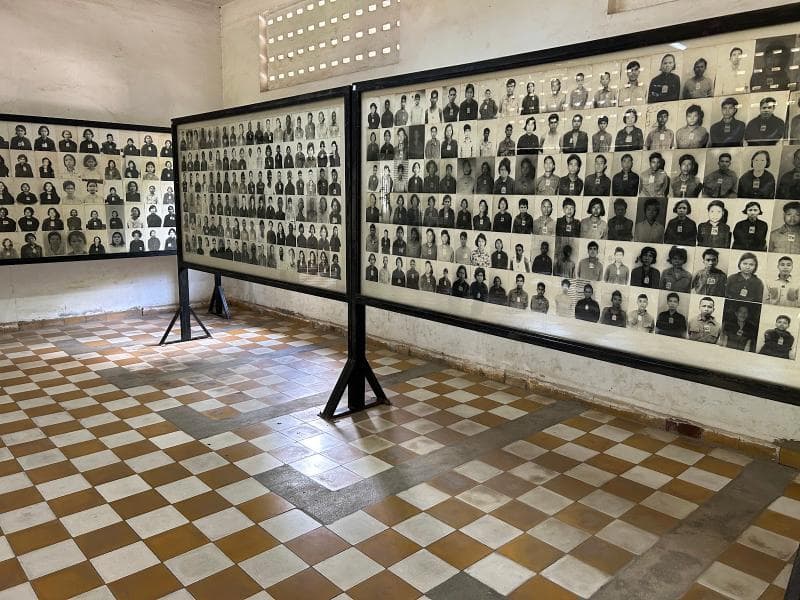
Explore the Interrogation Rooms at Tuol Sleng Genocide Museum, Phnom Penh, Cambodia, a chilling testament to the Khmer Rouge regime's atrocities.
Overview
The 'Interrogation Rooms' are a profoundly significant sub-spot within the Tuol Sleng Genocide Museum, located in Phnom Penh, Cambodia. This site, once a bustling high school known as Tuol Svay Prey, was transformed by the Khmer Rouge regime into Security Prison 21 (S-21) between 1975 and 1979. Today, it stands as a stark and sobering testament to the atrocities committed during that dark period of Cambodian history.
Visiting these rooms offers a harrowing, yet crucial, glimpse into the mechanisms of terror employed by the regime. It is a place where historical facts converge with an palpable sense of past suffering, compelling visitors to confront the grim realities faced by thousands of Cambodians.
History & Cultural Background
In March or April of 1976, the former Tuol Svay Prey High School was converted into S-21, a secretive prison and interrogation center, becoming the largest facility of its kind in the country. The Khmer Rouge, under Pol Pot, systematically imprisoned, interrogated, and tortured an estimated 14,000 to 20,000 people here. Their goal was to extract 'confessions' for alleged crimes against the state, often fabricated accusations such as being a Vietnamese spy or a CIA agent. The regime's chilling philosophy was encapsulated in the belief that 'It is better to kill ten innocent people than to let one guilty person go free.'
A deeply disturbing aspect of S-21's history is that many of its victims were not external enemies, but rather former Khmer Rouge cadres themselves, purged for suspected disloyalty or treason as the regime became increasingly paranoid. Of the thousands who entered S-21, only a handful—between seven and twelve individuals—are known to have survived.
What Makes It Special
The interrogation rooms at Tuol Sleng are not merely exhibits; they are preserved as they were found by Vietnamese forces in 1979, offering a visceral and authentic connection to the past. Many rooms contain only a rusty iron bed frame, a single chair, and shackles, reflecting the brutal simplicity of the prison's operations. The raw brickwork and sparse furnishings evoke an immediate sense of confinement and dread.
The walls of these former classrooms are often lined with thousands of black and white mug shots of the prisoners, taken meticulously by the Khmer Rouge upon arrival. These haunting portraits, often taken both before and after torture, capture expressions of shock, resignation, and fear. Additionally, powerful paintings by Vann Nath, one of the few survivors, graphically depict the various torture methods employed, serving as a chilling visual record of the unimaginable suffering that transpired within these walls. Visitors can also see some of the actual instruments of torture used, and the barbed wire that was installed on windows and around the compound to prevent escape or suicide, further reinforcing the prison's grim purpose.
Stories, Fun Facts & Local Details
The methods used in the interrogation rooms were systematically brutal, designed solely to break the human spirit and force confessions. Prisoners endured severe beatings, electric shocks, waterboarding, hanging, suffocation with plastic bags, and even having saltwater poured on their open wounds. The Khmer Rouge kept meticulous records, not only photographing each prisoner but also transcribing their forced 'confessions' in detail.
These confessions often implicated other individuals, leading to a relentless cycle of arrests. Prisoners were forced to adhere to a strict set of 'Rules,' one infamous example being, 'While getting lashes or electrification you must not cry at all.' Many of the guards and interrogators were remarkably young, some between 17 and 21 years old. Following their forced confessions, the vast majority of S-21 prisoners were transported to the nearby Killing Fields of Choeung Ek for execution.
For Cambodians, the Tuol Sleng Genocide Museum is more than a historical site; it is a sacred memorial where they can pay respects to the victims and reflect on their nation's tragic past. Entry to the museum is free for Cambodian citizens, highlighting its profound cultural importance as a place of pilgrimage and remembrance.
Visitor Perspective
A visit to the Interrogation Rooms is an undeniably intense and emotionally challenging experience. The atmosphere is often described as haunting and spine-chilling, leaving visitors with a deep sense of the grim reality of the Cambodian genocide. It serves as a poignant testament to human suffering and resilience, offering invaluable lessons on the dangers of extremism and the importance of peace.
Travelers often find that the museum prompts deep reflection and provides a vital educational insight into Cambodia's recent history, making it a critical, albeit difficult, part of understanding the country. Audio guides are highly recommended for international visitors, as they provide detailed narratives and contextual information, allowing for a more profound and personal engagement with the site's history. Visitors are encouraged to dress respectfully and maintain solemnity, fitting for a site of such historical gravity.
Coordinates: 104.9178, 11.5494
View on Google Maps💬 How Travelers Describe This Place
Based on community votes
Unique
748Photogenic
304Must See
85Beautiful
73Interesting
35
Traveler Stories
Discover memorable experiences shared by travelers who have visited this place.
No traveler stories yet.
Be the first traveler to share what made this place memorable.

Tour
By
Spot
Discover amazing places around the world. Your journey starts here.
Explore
© 2026 TourBySpot. All rights reserved.