Interrogation Exhibits
Tirana, Albania
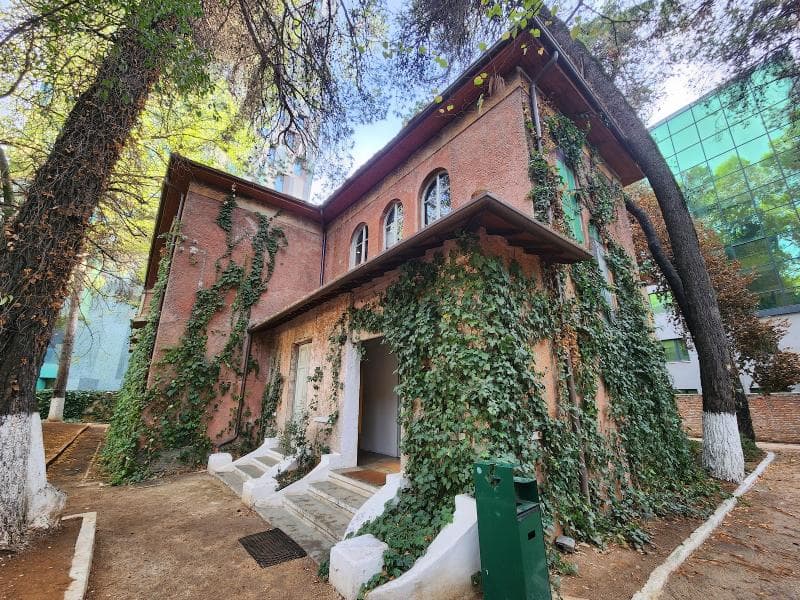
Explore the chilling Interrogation Exhibits at the House of Leaves in Tirana, Albania, the former HQ of the communist secret police. Discover Albania's past.
Overview
Nestled in the heart of Tirana, Albania, the House of Leaves, officially known as the Museum of Secret Surveillance, stands as a stark and powerful testament to a dark chapter in the nation's history. This unique museum occupies a building whose unassuming facade, often cloaked in climbing greenery, belies its chilling past. Known colloquially as the 'House of Leaves' – a name that evokes both the literal foliage covering its exterior and the countless 'leaves' of files containing citizens' secrets – it served as the headquarters for the notorious Sigurimi, Albania's secret police, during the communist regime. Today, it invites visitors to explore the intricate and often brutal mechanisms of a surveillance state, offering a profound journey into the lives of those who endured its oppressive control.
History & Cultural Background
The building itself holds a multifaceted history, predating its infamous role under communism. Constructed in 1931, it initially functioned as Albania's first private obstetrics clinic, a place dedicated to new life. Its purpose dramatically shifted with the tides of war and political upheaval. During the German occupation of World War II, the Gestapo, Germany's secret state police, commandeered the villa for their operations. Following the war, with the establishment of Enver Hoxha's communist regime, the building was transformed into the central hub for the Sigurimi, operating as their interception and surveillance headquarters until the collapse of communism in 1991. For decades, it was a place of dread and secrecy, where every phone call, letter, and conversation was potentially monitored. In a significant move towards confronting its past, the House of Leaves reopened its doors as a museum on May 23, 2017, dedicated to the innocent victims of state surveillance. Its importance was globally recognized when it received the European Museum of the Year Award 2020 by the Council of Europe.
What Makes It Special
What sets the House of Leaves apart is its unwavering commitment to authenticity and its direct confrontation with the methods of state repression. The museum is not merely a collection of artifacts; it is the original site where these chilling events unfolded. Visitors can explore the very rooms where interrogations occurred, walk through reconstructed monitoring stations, and even see what were once solitary confinement cells. The exhibits showcase an array of sophisticated (for their time) surveillance equipment, including wiretapping devices, hidden microphones, cameras, and banks of East German Uher recording machines used to monitor phone lines. Beyond the technology, the museum features original internal documents, archives, and records that meticulously detail the Sigurimi's organizational structure and its extensive methods of espionage against its own citizens. The preservation of the building's architectural integrity and original fixtures allows the space itself to tell a powerful and often unsettling story of control and fear.
Stories, Fun Facts & Local Details
The name 'House of Leaves' carries a double meaning, reflecting both the ivy that famously covers its facade and the thousands of 'leaves' or files containing intimate details about citizens' lives, collected through relentless surveillance. During the communist era, the mere mention of the building could instill widespread fear and dread among Albanians. The museum highlights the chilling reality that thousands were spied on, arrested, prosecuted, and executed under the regime, with exhibits even showing visual aids depicting methods used to 'persuade' prisoners to confess. This deep dive into a totalitarian past often draws comparisons to the Stasi headquarters in East Germany, illustrating a shared narrative of state control. The museum also features a darkroom for developing surveillance film and a laboratory for processing chemicals and fingerprints, providing insight into the comprehensive nature of the Sigurimi's operations. Personal testimonies, including recorded interviews and written accounts from survivors and victims, are integrated throughout, giving voice to those whose lives were profoundly impacted by the regime's security apparatus.
Visitor Perspective
Visiting the House of Leaves is an immersive and deeply thought-provoking experience, often described as unsettling but profoundly educational. As you navigate the 31 rooms, each telling a piece of the story, you gain a tangible sense of the psychological violence and pervasive control that characterized daily life under the communist dictatorship. The atmosphere within the building is heavy, prompting visitors to reflect on the fragility of freedom, privacy, and human rights. The chronological path through the museum, from the history of the house to the detailed exposition of surveillance techniques, ensures a comprehensive understanding. While the museum is highly informative, visitors often note the ironic ban on photography inside, a stark reminder of the very surveillance it chronicles. This unique institution serves as a crucial educational tool, aiming to preserve memory, commemorate victims, and teach new generations about the critical importance of democratic values and human rights that should never be taken for granted.
Coordinates: 19.81647, 41.32667
View on Google Maps💬 How Travelers Describe This Place
Based on community votes
Must See
799Photogenic
539Unique
424Interesting
234Beautiful
30
Traveler Stories
Discover memorable experiences shared by travelers who have visited this place.
No traveler stories yet.
Be the first traveler to share what made this place memorable.

Tour
By
Spot
Discover amazing places around the world. Your journey starts here.
Explore
© 2026 TourBySpot. All rights reserved.