Interior Galleries
Belgrade, Serbia
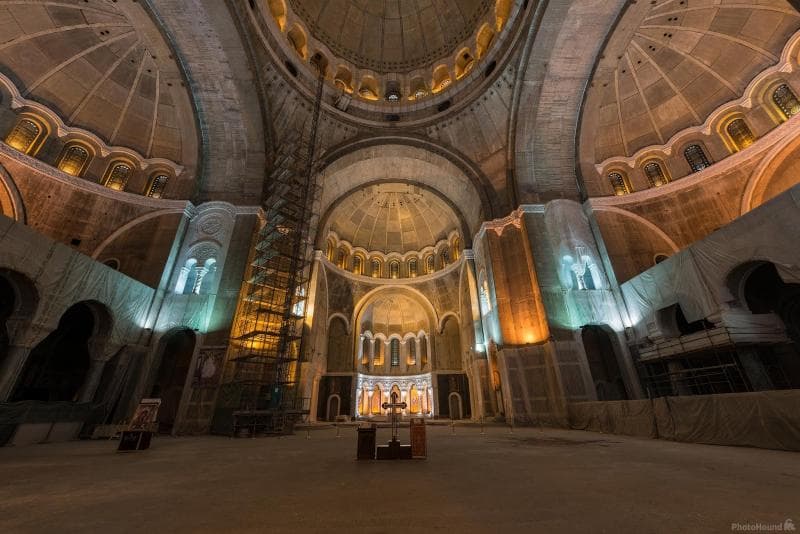
Explore the majestic Interior Galleries, including the stunning Crypt, of the Church of Saint Sava in Belgrade, Serbia, adorned with breathtaking mosaics and rich history.
Overview
Within the majestic embrace of the Church of Saint Sava in Belgrade, Serbia, lie the captivating interior galleries. These aren't just elevated viewing platforms; they are integral parts of the temple's spiritual and architectural narrative, offering distinct perspectives on its grandeur. While the main nave enthralls with its immense scale and shimmering mosaics, the 'Interior Galleries' encompass the upper viewing levels as well as the profoundly significant Crypt beneath the main church, each revealing layers of Serbian Orthodox heritage. They invite visitors to explore not only the artistic achievements but also the historical and cultural heart of this monumental structure.
The main church itself features three galleries, including a choir gallery designed to accommodate a large number of singers, demonstrating the church's function as a vibrant spiritual center. However, when people speak of the 'Interior Galleries' with a sense of wonder, they often refer to the spectacular Crypt. Located seven meters beneath the main floor, the Crypt is a lavishly decorated, independent underground area that houses a burial church, a treasury of the Serbian Orthodox Church, and an exhibition space.
History & Cultural Background
The entire Church of Saint Sava stands on Vračar Hill, a site imbued with deep historical and spiritual significance. It is believed to be the spot where the relics of Saint Sava, the founder of the Serbian Orthodox Church, were burned by Ottoman forces in 1594 in an attempt to suppress Serbian identity. The construction of the church, which began in earnest in 1935 and saw its interior largely completed by 2020, was a monumental undertaking, interrupted by wars and political turmoil.
The interior decoration, particularly the extensive mosaic program that adorns both the main church and the Crypt, reflects centuries of Byzantine artistic tradition fused with Serbian cultural identity. The decision to adorn the interior with mosaics, a process involving Serbian and Russian masters, was a deliberate choice to create a lasting spiritual impression. The Crypt's Church of Saint Lazar the Hieromartyr, consecrated in 2013, draws its inspiration from the rich iconography of traditional Orthodox art, connecting visitors to the ancient roots of Serbian Christianity.
What Makes It Special
The Interior Galleries of the Church of Saint Sava are truly special due to their immersive artistic expression and profound spiritual ambiance. The main church's galleries provide elevated vantage points for appreciating the sheer scale of the central dome's Christ Pantocrator mosaic, which alone contains 40 tons of glass and gold and is part of a 15,000 square meter mosaic surface across the entire interior, making it one of the largest mosaic programs in Christendom.
The Crypt, however, offers an entirely different, yet equally breathtaking, experience. It's often described as an 'otherworldly atmosphere' with intricate gold paintings and vibrant murals, a subterranean masterpiece that many visitors find even more spectacular than the main temple. The Serbian-Byzantine paintings within the Crypt, created by top icon painters between 2012 and 2016, detail religious scenes and figures, enveloping visitors in a golden glow. It is not merely a decorative space but a functional one, serving as a place of worship for the afterlife and intended as a burial place for Serbian patriarchs.
Stories, Fun Facts & Local Details
The creation of the mosaics throughout the church, including those visible from the galleries and within the Crypt, involved thousands of square meters of tiny tesserae, meticulously placed by hundreds of artists. The sheer dedication required for such a monumental task underscores the deep reverence and national pride invested in the Church of Saint Sava. The golden motifs and shimmering surfaces are designed to evoke a sense of the divine, transforming light into a spiritual presence. The Crypt, in particular, resonates with the symbolism of eternal rest and remembrance, serving as a tangible link to the patriarchs of the Serbian Orthodox Church. Its decoration with relief art further adds to its unique character.
Visitor Perspective
Exploring the Interior Galleries provides a multi-faceted experience for any visitor. From the upper galleries, one gains an unparalleled panoramic view of the vast main sanctuary, allowing for a comprehensive appreciation of its architectural scale and the overwhelming beauty of its mosaics. Down in the Crypt, the atmosphere shifts to one of solemn tranquility and profound beauty. Visitors often describe feeling enchanted by the detailed religious scenes and the monumental, yet peaceful, ambiance.
While the main church inspires awe with its immense open space, the Crypt offers an intimate encounter with sacred art and history. It is a space where the rich tapestry of Serbian spirituality feels incredibly close, often leaving a lasting impression of admiration and spiritual peace. Dress modestly when visiting, as is customary for an active place of worship. Whether viewing from above or delving below, the interior spaces of the Church of Saint Sava offer a truly unforgettable journey into the heart of Serbian culture and faith.
Coordinates: 20.4685389, 44.79806
View on Google Maps💬 How Travelers Describe This Place
Based on community votes
Beautiful
915Interesting
873Photogenic
422Must See
123Unique
53
Traveler Stories
Discover memorable experiences shared by travelers who have visited this place.
No traveler stories yet.
Be the first traveler to share what made this place memorable.

Tour
By
Spot
Discover amazing places around the world. Your journey starts here.
Explore
© 2026 TourBySpot. All rights reserved.