Interior Foyers
Frankfurt, Germany
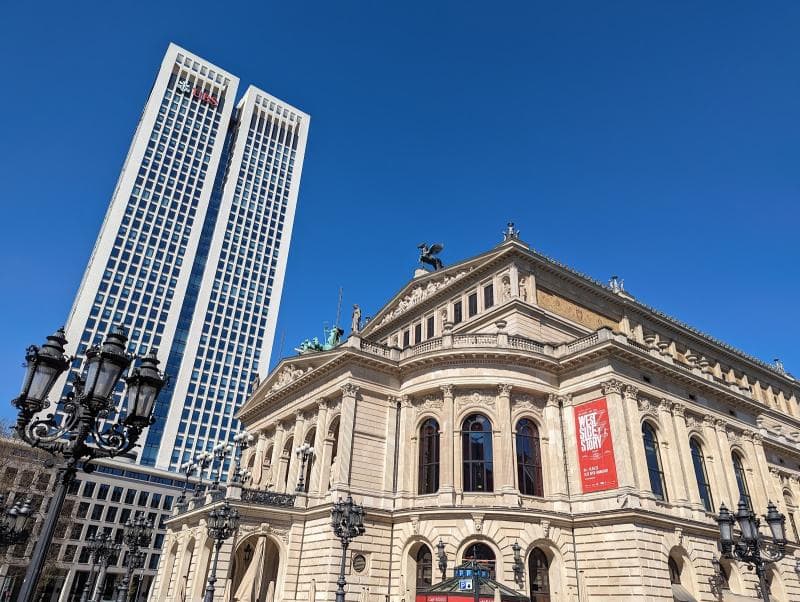
Explore the historic and culturally rich Interior Foyers of Alte Oper Frankfurt, Germany. Discover its Neo-Renaissance architecture and storied past.
Overview
Nestled in the heart of Frankfurt, Germany, the Alte Oper stands as a magnificent testament to resilience and cultural grandeur. While its striking Neo-Renaissance facade immediately captures attention, it's within its elegant 'Interior Foyers' that the building's soul truly unfolds, offering visitors a unique blend of history and contemporary function. These spaces, more than mere passageways, serve as vibrant gathering points, exhibition areas, and social hubs, playing an integral role in the Alte Oper's current incarnation as a world-class concert and congress center.
Designed to both honor its past and embrace its future, the foyers reflect the building's remarkable journey from a celebrated opera house to a revered concert venue. Today, they welcome hundreds of thousands of guests annually, providing an atmospheric prelude and postlude to performances, conferences, and diverse cultural events.
History & Cultural Background
The story of the Alte Oper, and by extension its interior spaces, is one of dramatic rises and falls. Originally inaugurated on October 20, 1880, as Frankfurt's opera house, it was an architectural marvel designed by Berlin architect Richard Lucae in the Italian Renaissance style. Its construction was largely financed by the citizens of Frankfurt, a testament to the city's deep-seated cultural appreciation. For over six decades, it stood as a pinnacle of German theater, hosting significant premieres, including Carl Orff's 'Carmina Burana' in 1937.
Tragically, the building suffered extensive damage during an air raid in March 1944, leaving behind what was famously dubbed 'Germany's most beautiful ruin.' For years, its fate hung in the balance, with proposals ranging from demolition to reconstruction. However, a determined citizens' initiative championed its rebirth, culminating in its painstaking reconstruction and reopening on August 28, 1981. While the exterior and main entrance areas were meticulously restored to their original splendor, the interior was redesigned to accommodate modern concert and congress requirements, giving rise to its versatile foyers.
What Makes It Special
The Interior Foyers of the Alte Oper are remarkable for their unique blend of historical reverence and modern functionality. Unlike many historical buildings where the interior remains largely untouched, the Alte Oper's foyers represent a thoughtful reimagining of space post-reconstruction. While the grand entrance foyer (Eingangsfoyer) preserves an original historical mosaic, other foyers like the Clara Schumann Foyer, Paul Hindemith Foyer, and Albert Mangelsdorff Foyer were conceived with flexibility in mind. These spaces are not static; they are dynamic environments that can host exhibitions, receptions, artistic discussions, and even smaller, intimate concerts.
The integration of cutting-edge technology within the restored Neo-Renaissance framework is also particularly special. Recent upgrades have included innovative lighting concepts, ensuring that the ambiance can be tailored to various events, from classical recitals to modern art installations, all while respecting the building's historic character.
Stories, Fun Facts & Local Details
The Alte Oper is rich with fascinating anecdotes that underscore its cultural significance. Upon its initial opening in 1880, Kaiser Wilhelm I, deeply impressed by its magnificence, reportedly remarked, 'I couldn't permit myself this sort of thing in Berlin.' This highlights the opera house's original opulence and Frankfurt's civic pride. Later, during the post-war reconstruction debate, the then-mayor of Frankfurt, Rudi Arndt, earned the nickname 'Dynamit-Rudi' for seemingly suggesting the ruins be blown up, a notion met with fierce citizen resistance that ultimately led to the building's revival. This public outcry demonstrates the deep affection Frankfurters held for their 'Old Opera.' The foyers themselves, with names like Clara Schumann and Albert Mangelsdorff, honor significant figures in music and culture, embedding a narrative of artistic legacy into the very fabric of the building.
Visitor Perspective
For the curious traveler, exploring the Interior Foyers offers more than just a glimpse into architectural beauty; it provides an immersive cultural experience. During intervals of performances, these spaces come alive with conversation, offering opportunities to mingle and absorb the vibrant atmosphere. The foyers often house pop-up exhibitions or provide catering services, including cafes like 'Rosso' and restaurants like 'Opéra', adding to the overall visitor experience. Guided tours are available, offering a deeper dive into the building's history, architecture, and the complex operations that bring world-class events to life. These tours often provide access to areas usually hidden from the public, offering unique insights into the transformation of this iconic landmark. Whether attending a concert or simply taking a tour, the Interior Foyers connect visitors directly to the living history and dynamic present of the Alte Oper Frankfurt.
Coordinates: 8.67191599, 50.11619355
View on Google Maps💬 How Travelers Describe This Place
Based on community votes
Beautiful
934Must See
741Unique
276Interesting
30Photogenic
16
Traveler Stories
Discover memorable experiences shared by travelers who have visited this place.
No traveler stories yet.
Be the first traveler to share what made this place memorable.

Tour
By
Spot
Discover amazing places around the world. Your journey starts here.
Explore
© 2026 TourBySpot. All rights reserved.