Injeongjeon Hall
Seoul, South Korea
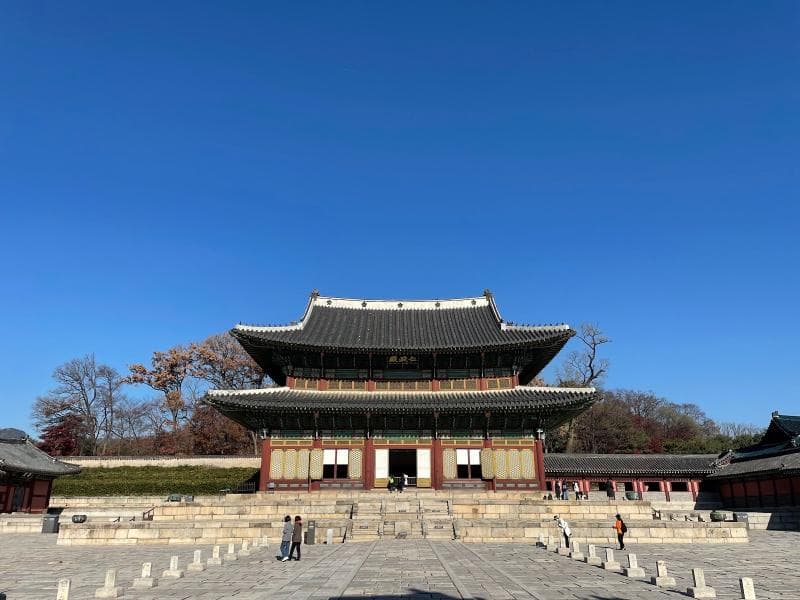
Explore Injeongjeon Hall, the grand main throne hall of Changdeokgung Palace in Seoul, South Korea. Discover its history, architecture, and cultural significance.
Overview
Step into the heart of Joseon Dynasty power by exploring Injeongjeon Hall, the magnificent main throne hall nestled within Changdeokgung Palace in Seoul, South Korea. As a designated National Treasure of South Korea, Injeongjeon Hall, meaning 'Hall of Benevolent Governance,' served as the primary stage for grand royal ceremonies and pivotal state affairs for centuries. From its imposing exterior to its richly symbolic interior, the hall offers a profound glimpse into Korea's regal past, blending traditional architectural grandeur with subtle traces of early modern influence.
History & Cultural Background
The story of Injeongjeon Hall is one of resilience and transformation. It was first constructed around 1405, shortly after Changdeokgung Palace itself was established as a secondary royal villa. However, like many historic structures, it faced repeated destruction due to fires and wars, most notably during the Imjin War (Japanese invasions) of 1592. The current iteration of the hall stands as a testament to diligent reconstruction efforts, rebuilt in 1804 during the reign of King Sunjo. This enduring structure then witnessed a fascinating period of change. In the early 20th century, particularly after Emperor Sunjong moved to Changdeokgung in 1907, Injeongjeon Hall underwent renovations that subtly incorporated modern elements such as electric lighting, glass windows, and curtains. This unique blend allows visitors today to observe both the traditional Joseon palace architecture and the influences of an evolving era.
What Makes It Special
Injeongjeon Hall's architecture is a marvel of design and symbolism. While appearing to be a two-story building from the outside, its interior reveals a single, soaring open space that emphasizes its majesty. At the heart of this grand chamber is the king's ornate throne, positioned against the backdrop of the iconic 'Irworobongdo' screen, a painting depicting the sun, moon, and five peaks. This powerful imagery symbolizes the king's divine rule and his dominion over the entire universe. Overhead, the ceiling features two intricately carved phoenix sculptures, representing royal authority and dignity. The expansive courtyard in front of Injeongjeon Hall, known as the 'hoejo,' is equally significant. Here, stone markers called 'pumgyeseok' indicate where court officials of various ranks would stand during royal ceremonies, creating a powerful visual of the Joseon court's hierarchical structure. The building's traditional '八' shaped roof and the elevated stone platform ('wŏltae') further showcase the distinctive Joseon architectural style.
Stories, Fun Facts & Local Details
Imagine the vibrant tapestry of history that unfolded within and around Injeongjeon Hall. It was the epicenter of major state ceremonies, including the enthronement of new kings, the annual New Year's greetings, and crucial receptions for foreign envoys, each event imbued with formality and diplomatic significance. The hall's very name, 'Hall of Benevolent Governance,' speaks volumes about the ideals of leadership in the Joseon era. A fascinating detail is the juxtaposition of old and new within its walls; the traditional royal throne coexists with the early 20th-century additions, a silent narrative of Korea's transition into modernity. Injeongjeon is recognized as one of the three great throne halls of the Joseon Dynasty, standing alongside Geunjeongjeon in Gyeongbokgung Palace and Myeongjeongjeon in Changgyeonggung Palace, each playing a crucial role in representing the dynasty's rich history. The plum design on its roof, a symbol of the imperial family towards the end of the Joseon Dynasty, adds another layer of historical intrigue.
Visitor Perspective
A visit to Injeongjeon Hall offers a truly immersive historical experience. Standing in the vast courtyard, one can almost hear the echoes of past ceremonies and visualize the lines of officials, arranged by rank, greeting their monarch. Though visitors typically view the interior from outside to preserve its delicate wooden structures, special guided programs sometimes offer a rare opportunity to step inside, providing an even more intimate connection with this historic space. This experience allows one to fully appreciate the intricate details of the Irworobongdo screen and the soaring phoenixes. The dignified atmosphere and the sheer scale of the hall evoke a sense of awe, transporting you back to a time when kings ruled and grand decisions were made within these very walls. It is an essential stop for anyone seeking to understand the cultural and political heart of Joseon Korea, offering a quiet moment of reflection on a significant piece of national heritage.
Coordinates: 126.99111, 37.57889
View on Google Maps💬 How Travelers Describe This Place
Based on community votes
Beautiful
898Unique
667Must See
308Photogenic
190Interesting
32
Traveler Stories
Discover memorable experiences shared by travelers who have visited this place.
No traveler stories yet.
Be the first traveler to share what made this place memorable.

Tour
By
Spot
Discover amazing places around the world. Your journey starts here.
Explore
© 2026 TourBySpot. All rights reserved.