Incense Courtyard
Hanoi, Vietnam
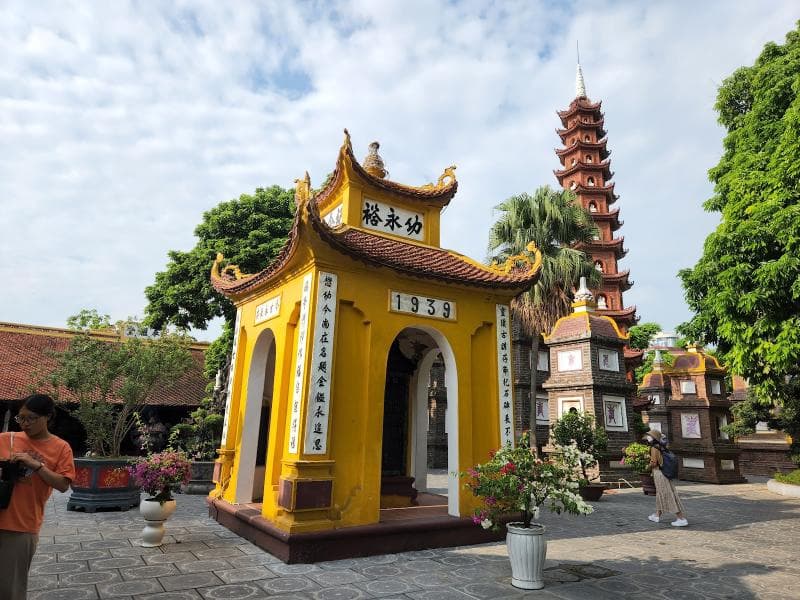
Explore the sacred Incense Courtyard (Nha Thieu Huong) at Tran Quoc Pagoda, Hanoi, Vietnam. Discover its history, cultural significance, and spiritual traditions.
Overview
Nestled within the ancient and revered Tran Quoc Pagoda in Hanoi, Vietnam, lies the deeply significant Incense Courtyard, known locally as Nha Thieu Huong, or the Incense Burning House. This sacred space is not merely a transitional area but a central hub of spiritual devotion, where visitors and devout Buddhists alike participate in the age-old tradition of offering incense. It stands as a testament to Vietnam's rich Buddhist heritage and the enduring practice of connecting with the spiritual realm through fragrant smoke. The courtyard forms a crucial architectural link, typically connecting the pagoda's Front House (Tien Duong) to the Upper House (Thuong Dien), guiding pilgrims deeper into the temple's sacred heart.
History & Cultural Background
Tran Quoc Pagoda itself boasts a venerable history, dating back to the 6th century under the reign of Emperor Ly Nam De, making it the oldest Buddhist temple in Hanoi. Initially named Khai Quoc, meaning 'National Founder,' the pagoda underwent several name changes, eventually settling on Tran Quoc, which translates to 'Protecting the Nation,' reflecting its profound importance to the country's peace and prosperity. The practice of incense burning, central to the Incense Courtyard's function, has been an integral part of Vietnamese culture for centuries. It is deeply intertwined with Buddhism, Taoism, and ancestor worship, serving as a spiritual bridge between the visible human world and the invisible spiritual realm. This ritual is performed not only in grand temples and pagodas but also at humble family altars, particularly during important festivals like Tet (Lunar New Year), full moon days, and death anniversaries.
What Makes It Special
The Incense Courtyard at Tran Quoc Pagoda distinguishes itself through its spiritual essence and architectural elegance. Constructed with traditional Vietnamese wooden architecture and featuring intricate carvings, it creates an atmosphere of solemnity and reverence. As visitors step into this area, they are immediately enveloped by the tranquil ambiance and the distinctive aroma of burning incense. This sensory experience is a fundamental part of the spiritual journey within the pagoda, where the rising smoke is believed to carry prayers and wishes to deities and ancestors. The architectural design ensures a natural flow, preparing devotees for deeper contemplation as they move from the outer areas towards the main altars. The continuous presence of fragrant smoke visually underscores the constant communication between the earthly and spiritual, making the courtyard a vibrant, living space of worship and reflection.
Stories, Fun Facts & Local Details
The act of burning incense in Vietnam is rich with symbolism. The smoke itself is considered a medium that carries human desires and prayers to the divine. Vietnamese people typically choose to offer odd numbers of incense sticks – usually one, three, or five – as these numbers are considered auspicious for prayers and offerings in their tradition. For example, three incense sticks often symbolize the 'Three Treasures' of Buddhism: the Buddha, the Dharma (teachings), and the Sangha (community). The fragrant materials used in incense, such as cinnamon and sandalwood, are carefully chosen to enhance the spiritual experience and purify the space. Interestingly, many of the incense sticks used across Vietnam, including likely those at Tran Quoc Pagoda, are handcrafted in traditional villages around Hanoi, such as Quang Phu Cau, a process often referred to as 'heart work' due to the dedication involved. This tradition emphasizes sincerity and respect, with worshippers holding sticks with both hands and placing them upright, signifying honesty.
Visitor Perspective
Visiting the Incense Courtyard offers a profound cultural immersion. It's a place where you can witness the deep faith and traditions of the Vietnamese people firsthand. Travelers often describe a sense of calm and spiritual energy as they observe locals offering incense, bowing in prayer, and meditating. The gentle wisps of smoke, the subtle fragrances, and the respectful silence create a meditative atmosphere, inviting visitors to pause and reflect. When visiting, it is customary to dress modestly, covering shoulders and knees, and to maintain a respectful demeanor, refraining from loud conversations. While the act of burning incense is primarily for devotion, it also provides a moment for individuals to seek inner peace and purify their souls. Engaging with this tradition, even as an observer, allows for a deeper appreciation of the spiritual practices that have sustained Tran Quoc Pagoda for over a millennium.
Coordinates: 105.83678862448232, 21.047842527417696
View on Google Maps💬 How Travelers Describe This Place
Based on community votes
Must See
847Photogenic
712Beautiful
513Unique
482Interesting
62
Traveler Stories
Discover memorable experiences shared by travelers who have visited this place.
No traveler stories yet.
Be the first traveler to share what made this place memorable.

Tour
By
Spot
Discover amazing places around the world. Your journey starts here.
Explore
© 2026 TourBySpot. All rights reserved.