Imperial Harem
Istanbul, Turkey
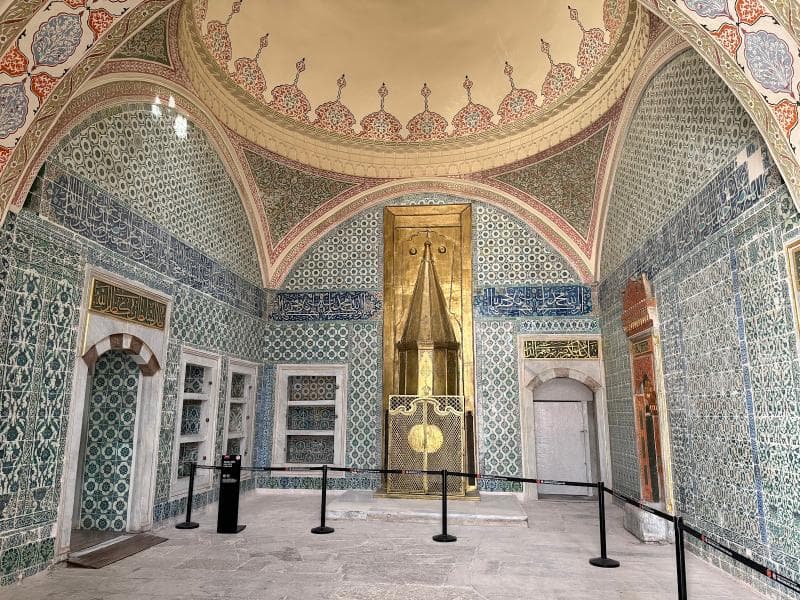

Explore the Imperial Harem of Topkapi Palace in Istanbul, Turkey, a captivating and historically rich private world of Ottoman sultans and their families.
Overview
Stepping into the Imperial Harem within Istanbul's iconic Topkapi Palace is like journeying into a meticulously guarded world, a 'forbidden' realm that was once the private residential quarter of the Ottoman sultans and their families. Far from the simplistic notions often portrayed, the Harem was a self-contained community, a 'city within a city', encompassing the sultan's wives, concubines, children, and a vast retinue of staff and eunuchs. This secluded section, located behind the Gate of Felicity, reveals the intricate daily lives and immense political significance of the women and inhabitants of the Ottoman court for centuries. Its labyrinthine corridors, adorned with exquisite Iznik tiles and opulent chambers, offer a unique glimpse into Ottoman imperial design and the complex social structures that governed this powerful dynasty.
History & Cultural Background
The construction and organization of the Harem in Topkapi Palace began in earnest after Sultan Suleyman the Magnificent, influenced by his wife Hürrem Sultan, decided to move the imperial family from the Old Palace in the mid-16th century. This relocation marked a pivotal shift, transforming the Harem into a well-organized, hierarchical, and institutionalized social and political structure within Topkapi Palace. It functioned not only as a private residence but also as a school, where women received rigorous education in palace training, Turkish language, Islam, music, poetry, and dance. The Harem's inhabitants lived under strict rules and a clear hierarchy, with the Valide Sultan (Queen Mother) at its apex, wielding considerable influence over both the Harem and wider state affairs. This period, particularly from the mid-16th to the late 17th century, is famously known as the 'Sultanate of Women,' when female members of the Harem exerted extraordinary political power.
What Makes It Special
The Imperial Harem's distinctiveness lies in its multi-layered function: it was simultaneously a private household, a center of dynastic education, a political arena, and a testament to architectural artistry. It housed over 300 rooms at its peak, alongside nine baths, two mosques, a hospital, and various service buildings, all connected by courtyards and gardens. The intricate architecture, with its domes, courtyards, and richly tiled interiors, showcases a blend of classical Ottoman forms with Persian, Byzantine, and later European influences. Areas such as the Imperial Hall, the Apartments of the Queen Mother, the Privy Chamber of Murad III, and the Twin Kiosk/Apartments of the Crown Prince reveal breathtaking examples of İznik tiles, gilded ceilings, and stained glass, offering a visual narrative of opulence and power. It's a place where every corner tells a story of the personal lives and political machinations of one of history's most powerful empires.
Stories, Fun Facts & Local Details
Life in the Harem was far from the sensual indulgence often imagined; it was a highly structured society filled with intense competition and strict protocols. The women, mostly non-Muslim slaves acquired through gifts or warfare (as Islam forbade enslaving Muslim women), entered as novices and received extensive training. Their ultimate ambition was often to give birth to a son, thereby elevating their status and potentially becoming the next Valide Sultan. The Harem was guarded by black eunuchs, who, despite being slaves, often gained significant power and influence as intermediaries between the sultan and the women. The phrase 'Golden Cage' aptly describes the Harem; while its inhabitants lived in luxurious surroundings, many were unable to leave, making it a gilded prison. Hürrem Sultan, known in the West as Roxelana, famously broke tradition by officially marrying Sultan Suleyman the Magnificent, forever changing the dynamics of the Harem.
Visitor Perspective
Today, the Imperial Harem offers an unparalleled journey into the heart of Ottoman private life. Visitors can explore a selected route through interconnected halls and courtyards, marveling at the preserved grandeur. Since January 2024, access to the Harem is typically included in the standard Topkapi Palace ticket, eliminating the need for a separate fee. To fully appreciate its intricate details, allocating 45 to 75 minutes for your visit is recommended. Arriving early in the day or later in the afternoon is advisable to avoid peak crowds and experience the serene atmosphere. While some areas may be closed for restoration, the open sections provide a rich and informative experience. The Harem is a must-see for anyone wishing to understand the complex tapestry of Ottoman history and culture beyond the public facade of the palace.
Coordinates: 28.984, 41.013
View on Google Maps💬 How Travelers Describe This Place
Based on community votes
Photogenic
610Unique
589Beautiful
319Interesting
244Must See
52
Traveler Stories
Discover memorable experiences shared by travelers who have visited this place.
No traveler stories yet.
Be the first traveler to share what made this place memorable.

Tour
By
Spot
Discover amazing places around the world. Your journey starts here.
Explore
© 2026 TourBySpot. All rights reserved.