Imperial Hall
Frankfurt, Germany
Explore the Imperial Cathedral (Kaiserdom) in Frankfurt, Germany, the historic site of Holy Roman Emperor elections and coronations.
Overview
Stepping into Frankfurt Cathedral, officially known as Kaiserdom St. Bartholomäus, immediately connects you with centuries of German imperial history. While many travelers associate an 'Imperial Hall' (Kaisersaal) with the grand post-coronation banquets, it is important to clarify that the celebrated Imperial Hall adorned with portraits of Holy Roman Emperors is actually located within the historic Römer, Frankfurt's city hall, a short walk from the Cathedral. However, the Cathedral itself is rightly called the 'Imperial Cathedral' (Kaiserdom) because it was the pivotal site for the election and coronation of German kings and Holy Roman Emperors for centuries. It stands as a profound testament to Frankfurt's political and spiritual importance during the Holy Roman Empire, a Gothic masterpiece that witnessed the making of history.
History & Cultural Background
The history of Frankfurt Cathedral stretches back much further than its Gothic appearance suggests, with archaeological findings indicating a Merovingian chapel from the 7th century on its site. The present Gothic structure began to take shape in the 13th century, dedicated to Saint Bartholomew in 1239. Its profound significance began to cement in 1356, when Emperor Charles IV's Golden Bull designated Frankfurt as the official place for the election of German kings. From 1562 to 1792, ten Holy Roman Emperors were crowned within its sacred walls, earning it the honorific 'Imperial Cathedral.' Despite its common English name, Frankfurt Cathedral has never been the seat of a bishop; it was a collegiate church until 1803, yet its imperial role far transcended a typical cathedral's function.
The Cathedral has endured numerous trials, including a devastating fire in 1867 and severe damage during the Allied bombings of 1944. Each time, it has been painstakingly rebuilt and restored, rising from the ashes to reclaim its place as a symbol of national unity and historical continuity.
What Makes It Special
What truly makes Frankfurt Cathedral special is its tangible connection to the Holy Roman Empire. It isn't just an old church; it's a monumental stage where the fate of a vast empire was decided. The most unique and historically charged area within the Cathedral related to its imperial past is the 'Wahlkapelle' or Election Chapel. This small, vaulted room is where the Prince-Electors gathered to choose the next German King, who would then typically become the Holy Roman Emperor. Imagining the intense deliberations and political maneuvering that unfolded in this very space adds an incredible layer of depth to your visit. The high altar also marks the spot where the coronations took place, a tradition that began in 1562.
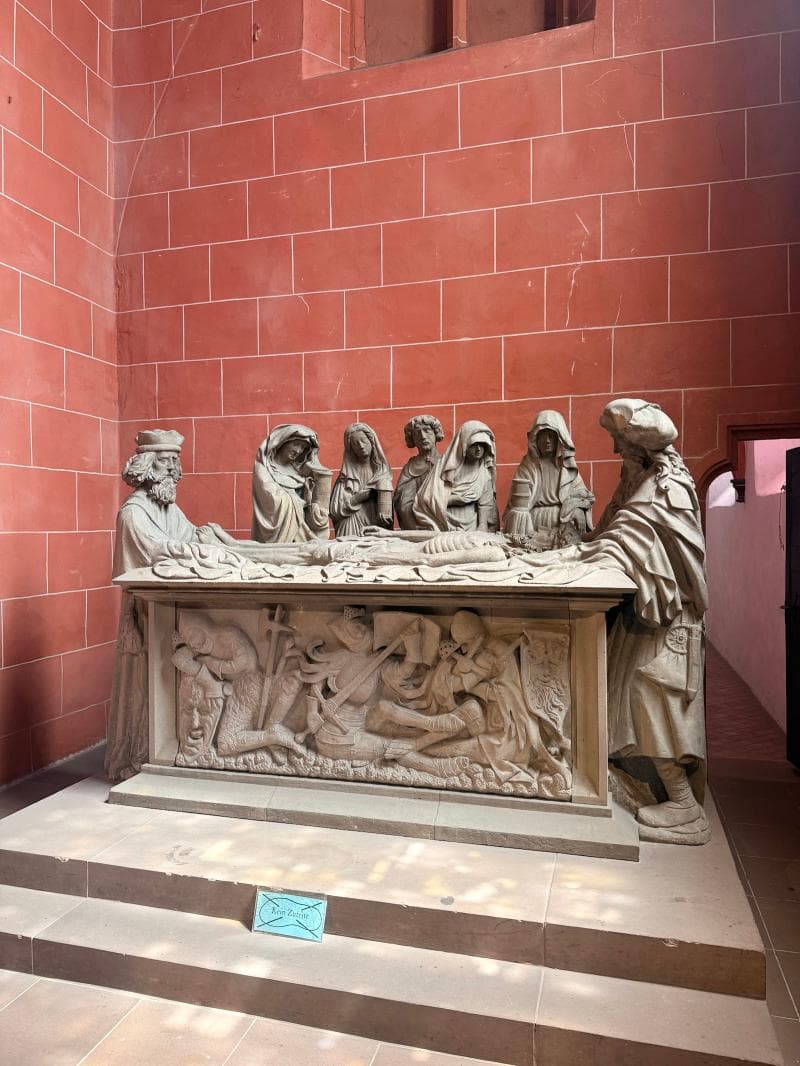
Beyond its imperial role, the Cathedral's striking Gothic architecture, built primarily from deep red Main sandstone, and its impressive 95-meter tower, which once served as Frankfurt's 'first skyscraper,' contribute to its grandeur. The interior boasts high vaulted ceilings, intricate stonework, and significant art pieces, including the Maria Schlaf Altar from 1434 and 14th-century choir stalls.
Stories, Fun Facts & Local Details
One fascinating detail is that after being elected in the Wahlkapelle and crowned at the Cathedral's altar, the newly chosen emperors would process to the Römer's Imperial Hall for their lavish coronation banquets. This tradition created a direct link between the spiritual gravitas of the Cathedral and the secular celebration at the city hall.
Another intriguing fact is the Cathedral's treasured relic: a skullcap believed to belong to Saint Bartholomew, its patron saint, venerated here since the 13th century. This relic underscores the Cathedral's enduring spiritual importance alongside its political weight.
The Cathedral is also known for its magnificent organ, one of the largest in Germany, and its nine-part bell ringing, which participates in the great Frankfurt city ringing before major church festivals, a truly unique auditory experience.
Visitor Perspective
For the curious traveler, visiting Frankfurt Cathedral is an immersive journey into Germany's imperial heart. As you wander through its spacious naves, you're walking in the footsteps of kings and emperors. The atmosphere is one of solemn history, inviting contemplation of the power and traditions that once shaped Europe. Don't miss the opportunity to visit the Election Chapel, where decisions of immense consequence were once made. Climbing the 328 steps to the top of the 95-meter tower is highly recommended for those able, offering a breathtaking panoramic view of Frankfurt's historic Old Town, the Main River, and its modern skyline. This vista provides a unique perspective, bridging the ancient imperial city with its contemporary reality. A visit here is not just about observing architecture; it's about feeling the echoes of a profound past.
Coordinates: 8.6853436, 50.1106664
View on Google Maps💬 How Travelers Describe This Place
Based on community votes
Photogenic
995Beautiful
989Must See
613Interesting
603Unique
581
Traveler Stories
Discover memorable experiences shared by travelers who have visited this place.
No traveler stories yet.
Be the first traveler to share what made this place memorable.

Tour
By
Spot
Discover amazing places around the world. Your journey starts here.
Explore
© 2026 TourBySpot. All rights reserved.