Hungerburg Station
Innsbruck, Austria
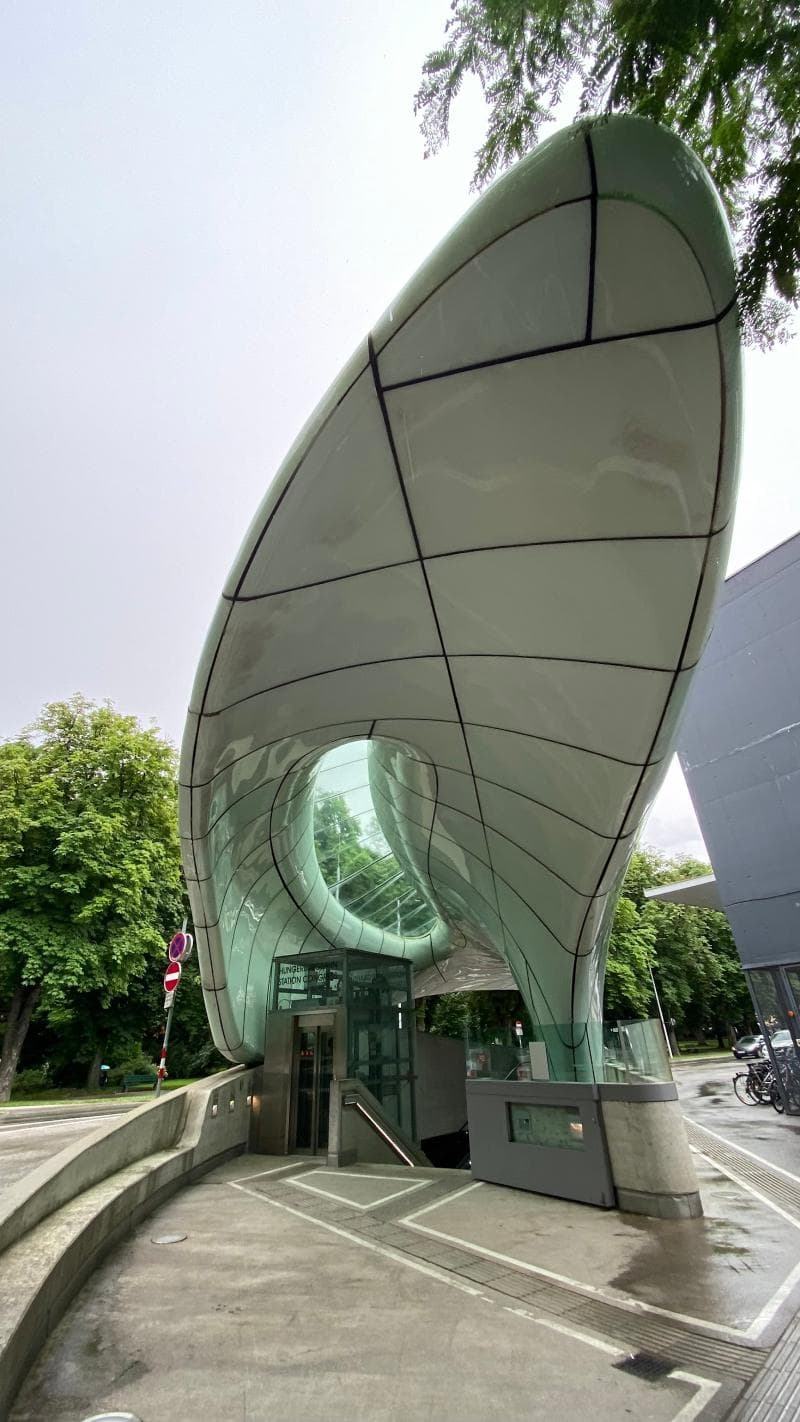
Explore Hungerburg Station in Innsbruck, Austria – a Zaha Hadid-designed architectural marvel and gateway to the breathtaking Nordkette mountains.
Overview
The Hungerburg Station stands as a striking landmark in Innsbruck, Austria, serving as a crucial link in the Nordkette Cable Car system. Positioned in the Hungerburg district, approximately 300 meters above the city, it acts as a gateway from urban life to the high alpine landscape. The station is the uppermost point of the Hungerburgbahn funicular railway, which transports visitors and locals alike from the heart of Innsbruck directly into the mountain environment. It's not merely a transit point but an architectural marvel, offering breathtaking panoramic views of the city below and the majestic surrounding peaks.
As part of the Nordkette Cable Car journey, the Hungerburg Station connects passengers to further ascents up the mountains, leading to areas like Seegrube and Hafelekar. This seamless integration of modern transport infrastructure with natural beauty makes it a popular starting point for various alpine activities, from hiking in summer to skiing in winter.
History & Cultural Background
The history of the Hungerburgbahn, and by extension its station, dates back to 1906, when the original funicular was built to connect Innsbruck's city center with the then-developing Hungerburg area. This early construction was a significant engineering feat, with a bridge spanning the Inn River that was considered a technical masterpiece of its time.
The current Hungerburg Station, along with the other stations of the Hungerburgbahn (Congress, Löwenhaus, and Alpenzoo), was entirely redesigned by the celebrated Iraqi-British architect Zaha Hadid. Her firm, Zaha Hadid Architects, won the competition in 2005, and the new stations officially opened in December 2007. Hadid's vision transformed the functional railway stops into iconic pieces of contemporary architecture.
What Makes It Special
What truly sets Hungerburg Station apart is its extraordinary architecture. Zaha Hadid drew inspiration from the natural ice and snow formations found in the region, creating structures that resemble flowing glaciers or sheets of ice. The stations feature distinct curvilinear geometries, with smooth, shell-like roofs of white glass and concrete that appear to float above their foundations. This design creates a fascinating dynamic between the robust concrete bases and the light, ethereal canopies.
Each station, while sharing Hadid's characteristic design language, is uniquely adapted to its specific terrain, topography, and altitude. The Hungerburg Station, in particular, showcases a dramatic, wing-like canopy that protectively wraps around the upper part of the structure. This innovative approach earned the project international recognition, and the stations are often cited as prime examples of futuristic design integrated seamlessly into a historic and natural landscape.
Stories, Fun Facts & Local Details
The name 'Hungerburg' itself holds a local story, stemming from a former coaching inn in the area. Legend has it that the food served there was so poor that locals mockingly called it 'Hungerburg,' meaning 'Hunger Fortress.' Despite this humorous origin, the area developed into a popular destination.
Zaha Hadid's work on the Hungerburgbahn stations is part of her significant legacy in Innsbruck; she also redesigned the Bergisel Ski Jump, which opened in 2002. The Hungerburgbahn project, completed in 2007, was even shortlisted for the prestigious Stirling Prize in 2008, highlighting its architectural excellence. The four stations are renowned for being among the world's largest structures made of double-curved glass.
Visitor Perspective
For visitors, arriving at Hungerburg Station is an experience in itself. The journey on the Hungerburgbahn offers captivating views as it ascends from the city, passing through the Löwenhaus and Alpenzoo stops. Once at Hungerburg, travelers are immediately greeted by the station's avant-garde design, a striking contrast to the traditional alpine scenery.
The station serves as a vibrant hub, where the architectural grandeur of Hadid's design meets the raw beauty of the Tyrolean Alps. From here, you can step out onto Hermann-Buhl-Platz, named after the famous Austrian alpinist, and take in the expansive vistas before continuing your journey further up the Nordkette. It is a place where modern art, functional transport, and unspoiled nature converge, offering a memorable start to any alpine adventure in Innsbruck.
Coordinates: 11.4001172, 47.2862373
View on Google Maps💬 How Travelers Describe This Place
Based on community votes
Unique
894Interesting
862Photogenic
443Beautiful
304Must See
35
Traveler Stories
Discover memorable experiences shared by travelers who have visited this place.
No traveler stories yet.
Be the first traveler to share what made this place memorable.

Tour
By
Spot
Discover amazing places around the world. Your journey starts here.
Explore
© 2026 TourBySpot. All rights reserved.