Human Rights Hall
Bucharest, Romania
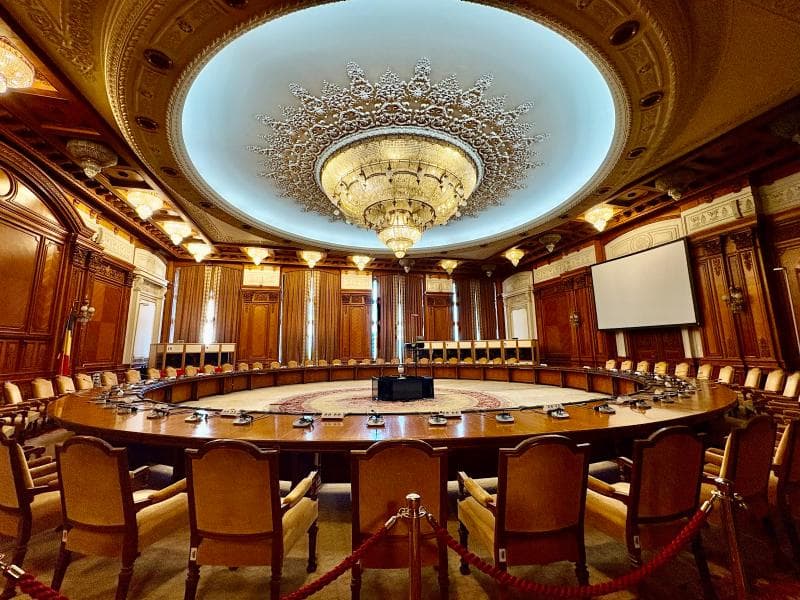
Explore the Human Rights Hall inside Bucharest's colossal Palace of the Parliament. Discover its opulent design, controversial history, and symbolic significance.
Overview
Nestled within the monumental Palace of the Parliament in Bucharest, Romania, the Human Rights Hall stands as a testament to both grandeur and a complex history. This colossal structure, originally known as the People's House, is an architectural marvel that dominates the city's skyline, and the Human Rights Hall is one of its most striking interiors. While the Palace itself is a symbol of controversial ambition from Romania's communist past, this specific hall offers a poignant contrast, having been repurposed and renamed in the wake of the 1989 Revolution. Visitors today can explore this impressive space as part of guided tours, experiencing firsthand the lavish, yet historically charged, atmosphere that permeates its walls. It's a place where history, architecture, and evolving ideals converge, offering a unique glimpse into Romania's journey.
History & Cultural Background
The Palace of the Parliament, housing the Human Rights Hall, has a history steeped in the tumultuous era of Nicolae Ceaușescu's communist regime. Construction began in 1984, an ambitious project driven by Ceaușescu's desire to create a new civic center for Bucharest following the devastating earthquake of 1977. This undertaking involved the demolition of a significant portion of historic Bucharest, displacing tens of thousands of residents and razing churches, synagogues, and homes. The Palace was built entirely with Romanian materials and labor, involving over 100,000 workers and 700 architects under immense pressure, often working around the clock.
The Human Rights Hall itself was originally conceived for a vastly different purpose: to host meetings of the Executive Political Committee of the Communist Party. Its design reflected the regime's quest for overwhelming power and authority. However, following the fall of Ceaușescu, the hall gained its current, ironically evocative name because it hosted the first meeting after the revolution, marking a symbolic shift towards new democratic ideals. This renaming transforms a space of authoritarian control into one associated with fundamental freedoms, embodying the profound changes Romania underwent.
What Makes It Special
The Human Rights Hall is undeniably one of the most visually impressive areas within the Palace of the Parliament. Its imposing scale and opulent decor captivate visitors immediately. The hall features a massive round table, surrounded by 60 identical chairs, designed to accommodate the numerous members of the Executive Political Committee. This arrangement speaks to the era's collective, albeit authoritarian, leadership.
Dominating the room from above is the second-largest chandelier in the entire Palace, a breathtaking display of crystal and craftsmanship. Like all materials used throughout the building, the crystal, marble, and wood in the Human Rights Hall were sourced exclusively from Romania, showcasing the nation's rich resources and the dedication of its artisans. The pastel-colored curtains and stylish interiors contribute to an aesthetic that is both grand and, arguably, refined, making it a truly aesthetic experience for visitors.
Stories, Fun Facts & Local Details
One of the most compelling aspects of the Human Rights Hall is the stark contrast between its original intent and its current designation. Conceived as a hub for communist power, it ironically became known as the 'Human Rights Hall' after hosting the initial post-revolutionary meetings. This twist of fate imbues the room with a profound historical irony, transforming a symbol of oppression into one of newfound liberty.
A fascinating detail related to the hall's original use is the story of Nicolae Ceaușescu's chair. While 60 identical chairs were created for the committee members, the armchair specifically designed for Ceaușescu was never completed, a tangible reminder of the sudden end to his regime. The very construction of the Palace, and by extension this hall, involved immense human and material sacrifice, with stories of thousands of workers toiling under harsh conditions. The sheer volume of materials—millions of cubic meters of marble, tons of crystal, and vast quantities of wood—all locally sourced, highlights the scale of this ambitious project.
Visitor Perspective
Visiting the Human Rights Hall offers a unique perspective on Romania's past and present. As part of a guided tour of the Palace of the Parliament, travelers are led through corridors and halls that evoke both awe and reflection. The experience of standing in a room once meant for communist party elites, now bearing the name 'Human Rights Hall,' is deeply thought-provoking. Guides often share the compelling history, bringing the stark contrasts of the building's legacy to life.
Security procedures are similar to airport checks, requiring a valid ID or passport for entry. Tours are typically available daily, though schedules can vary due to official events within this active government building. While the scale of the Palace can be overwhelming, the Human Rights Hall stands out as a focal point, inviting visitors to ponder the evolution of a nation and the enduring quest for freedom.
Coordinates: 26.0875, 44.4275
View on Google Maps💬 How Travelers Describe This Place
Based on community votes
Must See
886Beautiful
564Unique
201Interesting
121Photogenic
87
Traveler Stories
Discover memorable experiences shared by travelers who have visited this place.
No traveler stories yet.
Be the first traveler to share what made this place memorable.

Tour
By
Spot
Discover amazing places around the world. Your journey starts here.
Explore
© 2026 TourBySpot. All rights reserved.