Holyrood Abbey Ruins
Edinburgh, United Kingdom
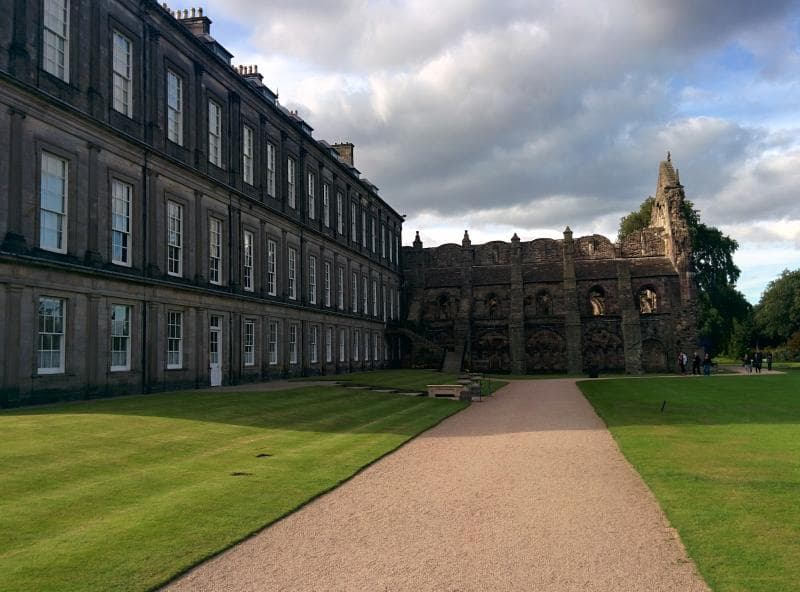
Explore the ancient Holyrood Abbey Ruins, a medieval marvel within the Palace of Holyroodhouse in Edinburgh, United Kingdom. Discover royal history, Gothic architecture, and compelling stories.
Overview
Nestled adjacent to the majestic Palace of Holyroodhouse in Edinburgh, United Kingdom, lie the evocative Holyrood Abbey Ruins. These roofless remnants are what remain of a once grand Augustinian abbey, founded in the 12th century. Today, they stand as a hauntingly beautiful testament to Scotland's rich royal and religious history, offering a unique glimpse into medieval architecture and the lives of kings and queens. The abbey's ancient stones tell tales that resonate through centuries, from its mystical founding to its eventual decay, yet its powerful presence continues to captivate visitors to Scotland's capital.
History & Cultural Background
Holyrood Abbey was founded in 1128 by King David I of Scotland. Its name, 'Holyrood,' translates to 'Holy Cross,' and its establishment is steeped in a legendary tale. King David I, while hunting in the royal forests east of Edinburgh, was said to have been thrown from his horse by a stag. As the stag charged, a miraculous holy cross appeared, startling the animal and saving the king's life. In thanksgiving, David I vowed to build an abbey on that very spot.
The abbey quickly became a central site for Scottish royalty. Over the centuries, its guesthouse evolved into the Palace of Holyroodhouse, the primary royal residence in Scotland. Holyrood Abbey bore witness to numerous significant royal events. It was the site of coronations, including those of James II in 1437, James V's first wife Madeleine of Valois in 1537, Anne of Denmark in 1590, and Charles I in 1633. Several royal weddings were also celebrated here, such as James II and Mary of Guelders in 1449, and James IV and Margaret Tudor in 1503. Furthermore, the abbey served as a royal mausoleum, becoming the final resting place for many Scottish monarchs, including King David II, James II, James V, and Henry Stuart, Lord Darnley (Mary, Queen of Scots' second husband).
During the Scottish Reformation in the 16th century, the abbey's fortunes began to wane. While its nave initially survived as a parish church for the Canongate area, the choir and transepts were destroyed in 1570. The abbey continued to suffer, and a major roof collapse in 1768 sealed its fate as a picturesque ruin, marking the end of its ecclesiastical life.
What Makes It Special
The Holyrood Abbey Ruins are distinguished by their remarkably preserved Gothic architecture, particularly the impressive West Front, considered one of Scotland's finest. Even in its roofless state, the towering arches and intricate stonework convey a sense of its former grandeur. Visitors can still discern the nave's design, which has been compared to that of Lincoln Cathedral. A notable survival is the East Processional Doorway, the only remaining part of David I's original 12th-century monastery, showcasing Romanesque (Norman-style) architectural elements.
The ruins are more than just architectural remnants; they are a direct link to Scotland's royal lineage. The Royal Vault, within the abbey, holds the remains of several Scottish monarchs, making it a place of profound national and historical significance. The atmospheric quality of the ruins, set against the backdrop of Arthur's Seat, has even inspired artists, with the composer Felix Mendelssohn noting it as the beginning of his 'Scottish Symphony'.
Stories, Fun Facts & Local Details
- The Legend of the Holy Rood: The founding legend is a cornerstone of the abbey's identity. King David I's encounter with the stag and the miraculous cross not only gave the abbey its name ('Holy Cross') but also became its enduring symbol.
- The Black Rood of Scotland: The abbey once housed a highly revered relic, a piece believed to be of the True Cross, brought to Scotland by King David's mother, Saint Margaret. Known as the Black Rood, it was lost during the Battle of Neville's Cross in 1346 and later disappeared during the Reformation.
- Royal Sanctuary for Debtors: For centuries, Holyrood Abbey, like many holy places, offered sanctuary. By the 16th century, this right of sanctuary became specifically for financial debtors, jokingly referred to as 'Abbey Lairds', who could escape creditors within the abbey's grounds.
- Turbulent Burials: The royal tombs within the abbey suffered significantly during periods of conflict. The Glorious Revolution in 1688 saw many burials violated, with their contents left in disarray. Queen Victoria later ordered the reburial of the scattered remains into a single coffin.
- Parliamentary Meetings: Beyond its religious and royal functions, Holyrood Abbey also served as a political hub. The Parliament of Scotland convened at the abbey on several occasions, and the Treaty of Edinburgh–Northampton, ending the First War of Scottish Independence, was signed there by Robert the Bruce in 1328.
Visitor Perspective
Visiting the Holyrood Abbey Ruins offers a deeply immersive historical experience. Access to the ruins is included with a ticket to the Palace of Holyroodhouse, as they are located within the palace grounds. The journey through the roofless nave allows visitors to walk in the footsteps of kings and queens, imagining the ceremonies and daily life that once filled these grand spaces.
As the abbey is roofless, it's exposed to the elements, so comfortable, sturdy footwear and waterproof clothing are recommended, especially on typical Scottish weather days. Photography is permitted within the abbey ruins and the surrounding gardens, offering ample opportunity to capture the atmospheric beauty. Located at the eastern end of Edinburgh's historic Royal Mile, the ruins are easily accessible, providing a captivating start or end point to exploring this iconic thoroughfare. Visitors can enhance their experience with guided tours provided by Palace Wardens or through multimedia guides available with admission, offering detailed commentary on the abbey's dramatic history and architectural highlights.
Coordinates: -3.171487, 55.9532
View on Google Maps💬 How Travelers Describe This Place
Based on community votes
Unique
804Interesting
733Beautiful
563Photogenic
404Must See
63
Traveler Stories
Discover memorable experiences shared by travelers who have visited this place.
No traveler stories yet.
Be the first traveler to share what made this place memorable.

Tour
By
Spot
Discover amazing places around the world. Your journey starts here.
Explore
© 2026 TourBySpot. All rights reserved.