Holy Right Hand Chapel
Budapest, Hungary
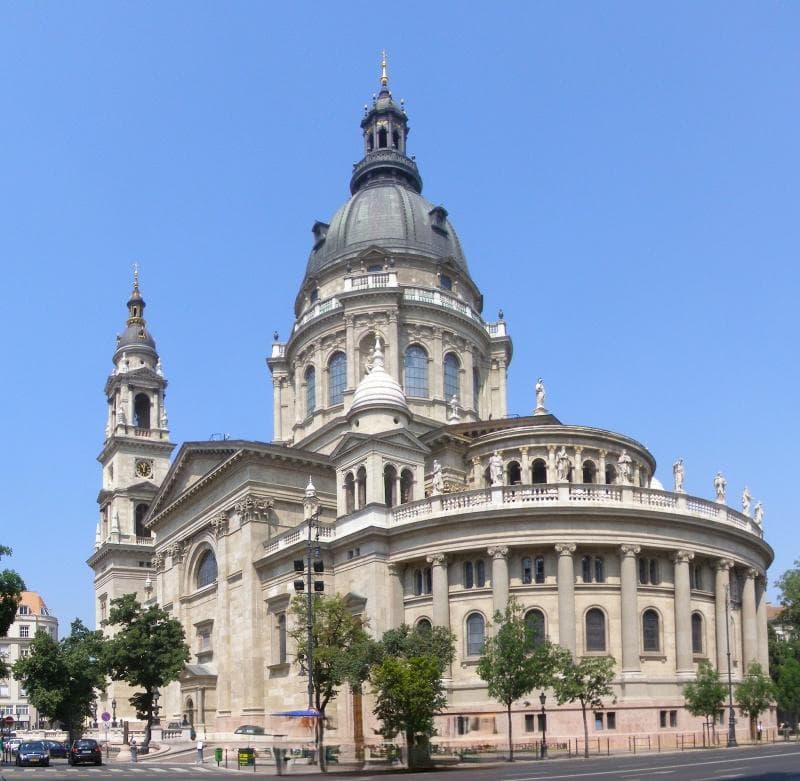
Explore Budapest's Holy Right Hand Chapel inside St. Stephen's Basilica, home to the mummified right hand of King Saint Stephen of Hungary.
Overview
Nestled within the grandeur of St. Stephen's Basilica in Budapest, Hungary, lies a profound and revered space known as the Holy Right Hand Chapel. This chapel is not merely an architectural feature, but a sacred treasury, safeguarding one of Hungary's most significant historical and religious relics: the mummified right hand of its first king, Saint Stephen. The basilica itself stands as a majestic beacon in the city's skyline, its imposing neoclassical and neo-Renaissance architecture a testament to Hungarian artistry and faith. Visitors are drawn here not only by the basilica's sheer beauty and scale but also by the deep spiritual and historical resonance emanating from the Holy Right Hand Chapel, offering a unique glimpse into the nation's foundational story and enduring reverence for its patron saint.
The Holy Right Hand Chapel provides a focal point for understanding Hungary's Christian roots, connecting contemporary visitors directly to the legacy of King Stephen I, who ruled from 1001 to 1038. His unwavering dedication to establishing Christianity in the region cemented his place as a pivotal figure in Hungarian history, a legacy powerfully embodied by this remarkably preserved relic.
History & Cultural Background
The story of the Holy Right Hand begins shortly after the death of King Stephen I in 1038. Forty-five years later, in 1083, during the process of his canonization under King Ladislaus I, his tomb was opened. It was then that his right hand was discovered miraculously intact and incorrupt, while the rest of his body had decayed. This extraordinary find was immediately interpreted as a divine sign, elevating the relic to immense spiritual significance.
Over the centuries, the Holy Right Hand, or 'Szent Jobb' as it's known in Hungarian, embarked on an adventurous and perilous journey. To protect it from potential desecration during periods of political turmoil and the Ottoman occupation, the relic was often moved and hidden. A Benedictine monk named Mercurius is said to have initially safeguarded it, leading to the establishment of an abbey in its honor at a place now called Szentjobb (meaning 'Holy Right'). Later, it found its way to Ragusa (modern-day Dubrovnik) and was eventually returned to Hungary in 1771 through the efforts of Queen Maria Theresa.
The relic's travels continued even into the 20th century. During World War II, it was hidden in Austria to protect it from conflict, only to be returned to Hungary in 1945 by the American army. Since 1987, it has been proudly displayed in a specially designed chapel within St. Stephen's Basilica, making it accessible for public veneration.
What Makes It Special
The Holy Right Hand Chapel is special primarily because it houses the mummified right hand of Saint Stephen, the founding father of the Hungarian state and its first Christian king. This relic is not merely a historical artifact; it is a profound national and religious symbol that encapsulates a thousand years of Hungarian history and faith.
The miraculous preservation of the hand, along with its tumultuous history of concealment, theft, recovery, and epic journeys across Europe, imbues it with an almost mythical quality. It stands as a tangible link to Hungary's earliest days as a Christian nation and serves as a powerful emblem of national identity and resilience. The chapel itself, while perhaps less ornate than the main basilica, is designed to respectfully honor the relic, creating an atmosphere of quiet contemplation and deep reverence.
Stories, Fun Facts & Local Details
One of the most captivating local traditions associated with the Holy Right Hand is the annual procession held every August 20th, Saint Stephen's Day. On this national holiday, the relic is solemnly carried through the streets of Budapest, drawing crowds of faithful and curious onlookers alike. This tradition, which has survived centuries of change, is a vibrant testament to the enduring significance of Saint Stephen and his relic in Hungarian culture.
It's interesting to note that the construction of St. Stephen's Basilica itself took over 50 years, from 1851 to 1905, and was overseen by three different architects, József Hild, Miklós Ybl, and József Kauser. A significant setback occurred in 1868 when the dome collapsed, requiring substantial rebuilding. Despite these challenges, the basilica was finally completed, rising to a height of 96 meters, symbolically matching the height of the Hungarian Parliament Building to signify the equal importance of spiritual and governmental authority.
Visitor Perspective
Visiting the Holy Right Hand Chapel within St. Stephen's Basilica offers a unique and deeply moving experience. Upon entering the basilica, visitors are greeted by an awe-inspiring space filled with opulent mosaics, intricate marble work, and gilded details. The chapel itself is usually dimly lit, with the reliquary housing the Holy Right Hand often illuminated, drawing respectful attention to the ancient relic.
Even for those without a religious affiliation, encountering a thousand-year-old mummified hand that has played such a central role in a nation's history can be a striking and thought-provoking moment. It is a quiet encounter with profound history, inviting reflection on faith, power, and the passage of time. While entry to the main basilica is often free, there might be a small fee to access certain exhibition areas, including the chapel. Visitors are encouraged to dress modestly out of respect for the sacred space. Beyond the chapel, the basilica offers an opportunity to ascend to its dome, providing panoramic views of Budapest, making the entire visit a rich blend of cultural, historical, and scenic exploration.
Coordinates: 19.053889, 47.500833
View on Google Maps💬 How Travelers Describe This Place
Based on community votes
Interesting
826Beautiful
800Unique
387Photogenic
242Must See
90
Traveler Stories
Discover memorable experiences shared by travelers who have visited this place.
No traveler stories yet.
Be the first traveler to share what made this place memorable.

Tour
By
Spot
Discover amazing places around the world. Your journey starts here.
Explore
© 2026 TourBySpot. All rights reserved.