Historical Maps
Tashkent, Uzbekistan
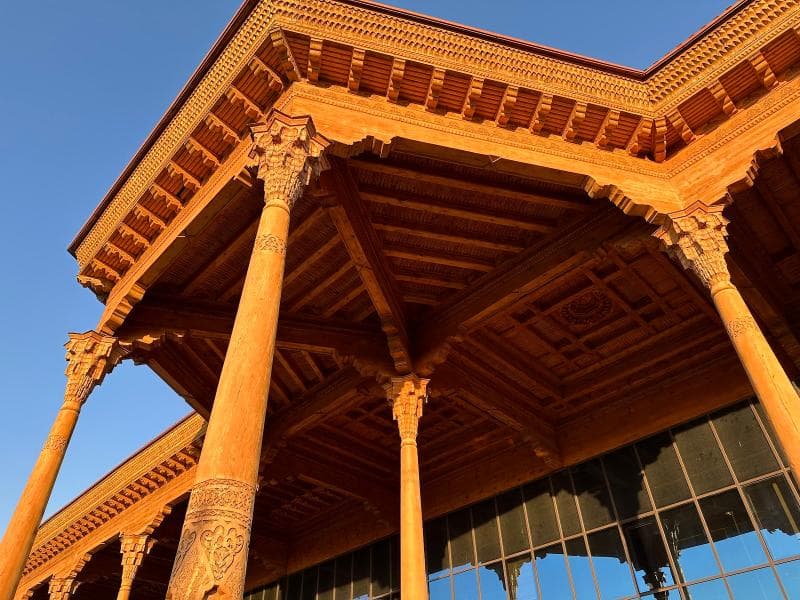
Explore Uzbekistan's historical geography at the State Museum of the History of Uzbekistan in Tashkent, through ancient artifacts, documents, and Silk Road narratives.
Overview
The State Museum of the History of Uzbekistan, located in the vibrant city of Tashkent, stands as a cornerstone of Central Asian historical preservation. Established in 1876, it is one of the oldest and most significant museums in the region, housing a vast collection that chronicles Uzbekistan's rich past from the Stone Age to the present day. While there isn't a specifically designated sub-spot named 'Historical Maps' within the museum's public exhibits, the institution's comprehensive displays provide invaluable insights into the historical geography and evolving understanding of this pivotal Silk Road region. Visitors can explore archaeological finds, ancient coins, rare manuscripts, and historical documents, all of which contribute to a profound appreciation of how the land was perceived and represented throughout different epochs.
The museum's impressive collection, boasting over 250,000 artifacts, includes a significant number of archaeological, numismatic, and ethnographic items. These exhibits collectively paint a picture of ancient civilizations that thrived along the Silk Road, illustrating the economic, cultural, and technological exchanges that shaped the region. The museum itself occupies a building constructed in 1970, an example of modernist architecture that reopened in July 2026 after renovations.
History & Cultural Background
Uzbekistan has always been at the crossroads of civilizations, a land where diverse cultures met, traded, and often clashed. This geographical reality made the accurate understanding and depiction of its terrain crucial for rulers, merchants, and scholars alike. From ancient trade routes to medieval empires, the need to map and understand the land was paramount. Early forms of cartography, though perhaps not maps as we recognize them today, were embedded in oral traditions, travel accounts, and administrative documents. The museum's exhibits on the Bronze Age, the formation of early statehoods, and the Timurid Empire showcase periods where geographical knowledge would have been essential for governance, military campaigns, and trade networks.
Historical records show that the Central Asian region, including what is now Uzbekistan, was referred to by various names such as 'Usbek' or 'Turkestan' on Western European maps from the 16th to 18th centuries. These early cartographic representations highlight the changing geopolitical landscape and the evolving understanding of the region by external powers. The museum's numismatic collections, featuring coins from the Achaemenids, Alexander the Great, and various medieval dynasties, offer a unique perspective on the territories and spheres of influence at different times, essentially serving as a form of economic and political mapping.
What Makes It Special
What makes the exploration of 'Historical Maps' special within the State Museum of the History of Uzbekistan is not a singular exhibit, but rather the cumulative effect of its diverse collections. The museum acts as a powerful lens through which visitors can interpret the historical geography of a region vital to global history. The vast array of archaeological finds, from primitive tools to intricate jewelry, provides clues about early human settlements and their spread. The collection of ancient ceramics and fabrics further reveals trade routes and cultural diffusion, effectively tracing connections across vast distances.
The museum's focus on the Silk Road legacy vividly illustrates how trade networks formed intricate pathways across the continent, necessitating a practical understanding of distances, terrain, and political boundaries. While explicit maps might be rare given their perishable nature, the 'historical documents and photographs' preserved within the museum could include elements that convey geographical information or administrative divisions of past eras. The sheer breadth of the museum's narrative allows for an immersive understanding of how the concept of 'Uzbekistan' as a geographical and political entity developed over millennia.
Stories, Fun Facts & Local Details
Imagine ancient caravanners, traversing the arid deserts and towering mountains of Central Asia. Their 'maps' were often verbal traditions, astronomical observations, and the knowledge passed down through generations. These early travelers relied on landmarks, water sources, and the wisdom of local guides to navigate the vast Silk Road. The museum's artifacts, from ancient pottery to intricate textiles, tell silent stories of journeys undertaken and connections forged, acting as tangible markers of these historical routes. Each coin from a distant land found in Uzbekistan signifies a trading journey, an exchange that implicitly mapped out economic connections.
A fun fact to consider is how the region's names changed on maps over time. What we now know as Uzbekistan was once broadly referred to as 'Turkestan' by some European cartographers after the Russian invasion, while older maps often used terms like 'Usbek Bucharia' or 'Usbek Chowaresmia', showcasing a dynamic history of geographical naming and political shifts. The museum also features calligraphic works and regal edicts from the Tamerlane dynasty, which, while not maps themselves, demonstrate the administrative reach and territorial claims of powerful empires, essentially 'mapping' their domains through decrees and artistic expressions.
Visitor Perspective
For a curious traveler, a visit to the State Museum of the History of Uzbekistan offers an unparalleled opportunity to journey through time and space. While you may not encounter a dedicated gallery of historical maps, the museum's expansive exhibits will allow you to piece together the geographical narrative of Uzbekistan. As you move through sections detailing prehistoric life, early state formations, the Golden Age of Islam, and the Timurid Renaissance, you'll naturally connect the dots of how trade, conquest, and cultural exchange shaped the physical and political landscapes.
The artifacts, from tools that mark early human presence to the sophisticated art of later periods, implicitly reveal the movements and interactions of people across the land. The numismatic displays are a particularly fascinating way to trace the economic geography and influence of various ruling powers. Engaging with the diverse collection invites a deeper contemplation of how ancient peoples understood their world, navigated its challenges, and conceptually 'mapped' their existence. It's a journey not just through history, but also through the historical imagination of a land that has truly been at the heart of the world.
Coordinates: 69.2693, 41.3115
View on Google Maps💬 How Travelers Describe This Place
Based on community votes
Must See
948Beautiful
913Photogenic
499Unique
337Interesting
94
Traveler Stories
Discover memorable experiences shared by travelers who have visited this place.
No traveler stories yet.
Be the first traveler to share what made this place memorable.

Tour
By
Spot
Discover amazing places around the world. Your journey starts here.
Explore
© 2026 TourBySpot. All rights reserved.